
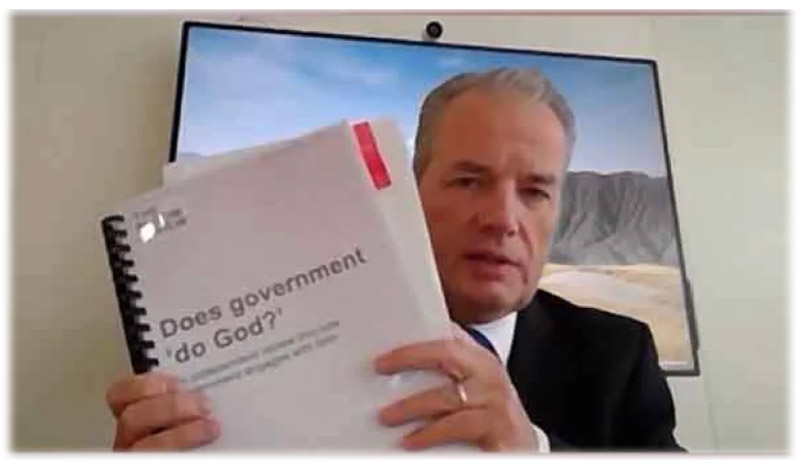
The aims of this review included identifying what the government can do to recognize and support the contribution of faith organizations within communities, how best to break down barriers and promote acceptance between faith groups, the steps the government can take to promote shared values and tackle cultures and practices that are harmful and how the government can promote, in parallel to freedom of religion, the values of freedom of speech, democracy, the rule of law and equality?
The parts in the report on Khalistan extremism in the UK have sparked a firestorm of controversy, as it rightly should. It is a critique that strikes at the heart of the British Sikh community, painting an unsettling picture that has led many Sikhs to express anger and frustration, feeling misrepresented and unjustly stigmatized.
A group of Sikh lawyers in Britain has dismissed the Bloom Review, the UK government-commissioned independent review into how it should engage with people of faith, saying its chapter on “faith-based extremism”, which devotes 13 pages to Sikhs, is “colonialist”.
The heart of the issue lies in the perceived broad-brush approach of the report. The claim that a small minority of Sikhs involved in Khalistani extremist activities somehow represents the entire Sikh community is a gross mischaracterization. The overwhelming majority of Sikhs are peaceful, law-abiding citizens who have little to no connection with extremism.
Granted, the Bloom Report does acknowledge this peaceful majority, yet its emphasis on the extremist minority raises concerning implications. But in no way can the report’s findings be dismissed. The issue here is a handful of fringe elements in the Sikh diaspora come forward claiming to be the representatives of the community at large. That is misleading, at the same time dangerous, since Khalistan extremists have been involved in several aggressive and violent acts.
According to the report, many politicians, academics, and officials have been threatened by aggressive Sikh activists who abuse or threaten anyone who criticizes them. The report has expressed concern that the UK government is not able to differentiate between the extremist agenda of the regime and the mainstream Sikh communities.
A question must be posed here: Is the Bloom Report wholly wrong? Despite its glaring issues, it would be hasty to dismiss it entirely. It raises valid concerns about the presence of a small, yet potent, extremist faction within the Sikh community, a problem that cannot be brushed under the carpet.
One of the most troubling aspects highlighted by Colin Bloom in the report is the manipulation of young, impressionable minds by Khalistani separatists. It underscores a more insidious dimension of the extremist issue: the exploitation of the innocent.
This indoctrination of young Sikhs, under the guise of promoting cultural heritage and freedom, in reality, is a clandestine maneuver to incite them with separatist agendas. The danger lies not only in the propagation of extremist ideology but also in the potential long-term damage to these young minds and the social fabric of our communities. It’s critical that we, as a community, protect our youth, fostering an environment of balanced understanding and respect for our shared heritage and values, without fuelling divisive ideologies. This requires vigilance, education, and most importantly, open dialogues about the complexities of our history and the perils of radicalization.
The Bloom Report should be seen as a wake-up call. It underscores the need to confront and tackle extremism within our midst. Educating the youth about the perils of extremism, emphasizing the tenets of peace and tolerance that Sikhism firmly espouses, collaborating with authorities to root out extremism, and vocally denouncing extremist tendencies whenever we encounter them – these should be our immediate responses.
The Kanishka flight bombing, attacks on Indian embassies and consulates in countries such as Canada, US, Australia, the UK, the plans to bomb targets in London, the scheme to attack a Birmingham police station – these are sobering reminders that the extremist issue is real and far from being negligible.
Lord Indarjit Singh of Wimbledon’s recent remarks underlines the urgency of the issue. “People have been threatened and beaten up,” he says. Such instances of violence and intimidation cannot be tolerated.
Albeit not perfect, the Bloom Report offers a valuable starting point for initiating a much-needed conversation on extremism within the Sikh community. It is not an indictment but an invitation to introspection, a call to action. Let’s not dismiss it outright. Instead, let us leverage this as an opportunity to learn, grow and foster a stronger, more cohesive and tolerant community, living true to the Sikh principles of equality, peace, and mutual respect.
(Image and text credit: Khalsavox.com)