
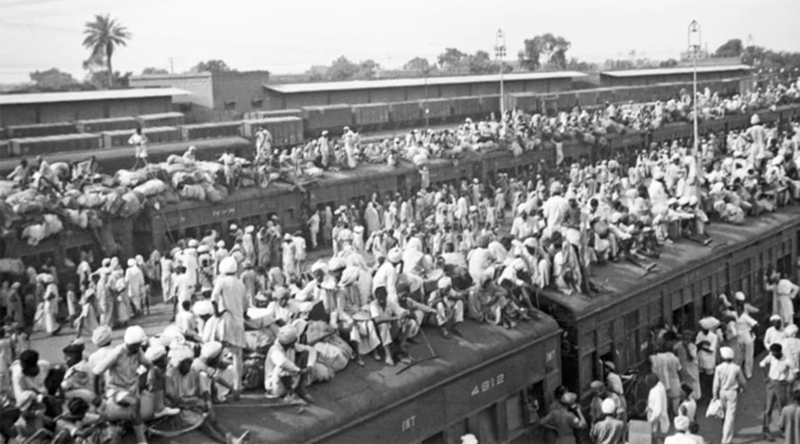
As it is well known the Indian subcontinent was cruelly ripped into two parts; India and Muslim-majority Pakistan.
Thus began one of the greatest migrations in human history, as countless Muslims trekked to West and East Pakistan while millions of Hindus and Sikhs headed in the opposite direction.
It seems unbelievable that communities that had co-existed for years and centuries, attacked each other in such a spine-chilling wave of communal violence – a genocide… which was inhumane and unprecedented.
The carnage along the borders of Punjab and Bengal was terrifying; massacres, forced conversions, arson, mass abductions, savage sexual assaults, and cold-blooded murders. The violence against women was especially gruesome as around seventy-five thousand women were raped, and many others were disfigured or dismembered.
Here we will talk about one such tragedy involving 22 women. Some catastrophes are just so tragic to come to grips with! On the morning of 8th March 1947, near Kahuta (Rawalpindi), such an incident took place. Narrahee was a small isolated village (now in West Pakistan Punjab, Pakistan) which was inhabited mainly by Khatri and Sahajdhari Sikhs who lived peacefully and cordially with a few Muslim families around.
As the first train reached Amritsar with dead and mutilated bodies of migrants arrived, mayhem broke loose, leading to gruesome madness on both sides of the borders. On March 6th, radical Muslims came out on the streets looting, killing, and abducting Sikh and Hindu women and setting homes, with people in them, on fire. Thereafter, they set sight towards Narrahee and encircled the village by evening. The following morning, the Muslims took out a huge procession on the streets, shouting obscenities and threatening inhabitants to convert to Islam by doing ‘Khatna’ and ‘Nikah’ of women to Muslim men, otherwise, they would face harsh consequences. The deadline that was given was 10 a.m. on March 8th.
The 13 – 14 families of Gursikhs gathered in the village Gurdwara and a unanimous decision was reached that they would face the wrath of their tormentors with bravery and faith. The Devout Sikhs did not have any weapons other than their ‘Kirpans’ but what they did possess was a lineage of sacrifices, veneration, and valour which were unsolicited, yet deeply embedded as intrinsic values. It was out of the question for them to concede to the demands of the Muslims so it was mutually decided that all women, 22 of them, both married and unmarried, would be sacrificed by their husbands or fathers before the arrival of the invaders and then the men would fight to their last breath but would never change their religion.
Thus, on the 8th March morning, 1947, 22 brave women were sacrificed unflinchingly amidst the recitation of ‘Gurbani’. It must have been horrifying for all involved. The extreme courage and tolerance required to kill your kin, your loved ones, is inexplicable, yet it was done.
‘Ardas’ was placed for the peace and salvation of the departed souls. What followed was pandemonium! Loud cries of ‘Jo bole so nihaal’ were answered by even louder ‘Allah-hu-Akbar’!! Sikh men with blood-stained ‘Kirpans’ charged toward the Muslim mob, blood flowed like undying rivers, and the atmosphere reverberated with tension and conflicting energies. When the Muslims saw the crimson, blood-spattered corpses of the 22 women, they realized the iron will of the Sikhs and lost their nerve. They thought better than to fight the grit and determination of the Sikh men and withdrew from the village.
It was later that Captain Daler Khan arrived on the scene and was deeply shocked and dismayed at the course of events. Under his protection, the surviving men were escorted to Kahuta where the last rites of the women were performed as per Sikh rituals. A protection part of 15 armed men led by Captain Khan was organized to escort the Sikhs to the ‘Dak Bangla’ in Kahuta.
There is no parallel to the sacrifice of the 22 women, no actions as valiant as their men who sacrificed them to safeguard their honour, and no kindness as shown by the captain who helped them unconditionally and heroically.
By 1948, the migration drew to a close, but more than 15 million people had been uprooted and about 2 million died. This partition is the identity of the present Indian subcontinent. The stones of pain and suffering are uncountable, just as the tales of heroism and compassion.
Ayesha Jalal writes, “a defining moment that is neither beginning nor end, the partition continues to influence how the peoples and states of postcolonial South Asia envisage their past, present and future”.
(Image and Text Credit: Khalsavox.com)