
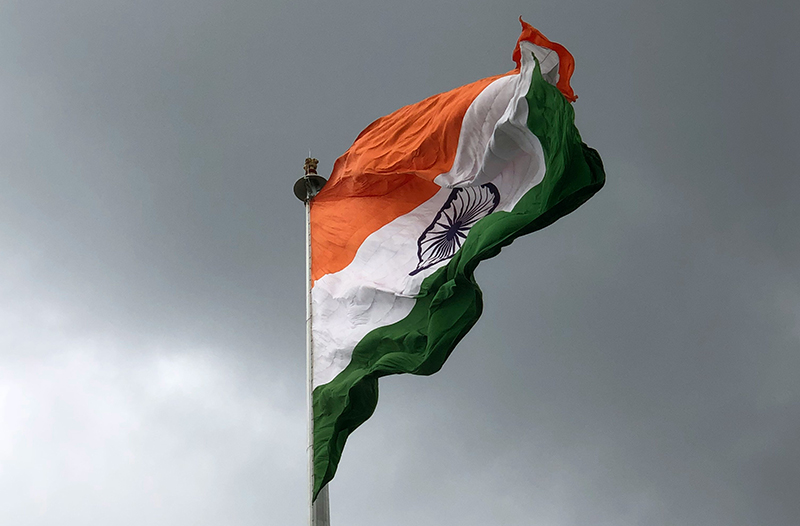
The changing contours of global diplomacy, marked by India’s assertive stance in recent years, especially in the wake of the Ukraine conflict, underscore a transformative period in international relations. EAM Dr. S. Jaishankar, transitioning from the diplomat known for his suavity to the voice of a new India, personifies this shift. His approach—clear, consistent, and backed by the tangible metrics of national power—reflects a broader strategic recalibration. This is not about eschewing India’s historical ethos of non-alignment and pacifism but about redefining it in the context of contemporary global dynamics.
The UNSC, envisioned as a guardian of international peace and security, has increasingly been critiqued for its anachronistic power structure, dominated by the P-5 (China, France, Russia, the United Kingdom, and the United States). This critique, as articulated by Jaishankar, challenges the monopolistic hold of the P-5 over global governance, highlighting the need for a more representative and equitable international order. The divisions sown by the Cold War may have blurred, but new fissures, influenced by regional and global politics, demand a reevaluation of the UNSC’s composition and mandate.
The push for UNSC reform is not new. Nations like India, Japan, Germany, and Brazil have long advocated for an expansion of the council’s permanent membership to reflect the geopolitical realities of the 21st century. The case for including countries from Latin America, West Asia, and Africa is compelling, underscoring the need for a Security Council that truly represents the global community. This is about more than rectifying regional imbalances; it’s about infusing the UNSC with fresh perspectives and approaches to tackling international challenges.
Jaishankar’s critique extends beyond the UNSC to the broader mechanisms of the UN, highlighting instances where powerful nations have disregarded international consensus and legal judgments. These actions not only undermine the UN’s authority but also highlight the limitations of a system that allows certain countries to flout international norms without consequence.
The path to UNSC reform is fraught with challenges. Past efforts have been stymied by the vested interests of the P-5, who are reluctant to dilute their power. The proposal to expand the council without extending veto powers to new members has been rightly criticized as a half-measure that fails to address the underlying issues of representation and equity.
However, there is an alternative pathway through the General Assembly, where a two-thirds majority could potentially force a breakthrough in the reform process. Such a move would not only challenge the dominance of the P-5 but also amplify the voices of the Global South, reflecting a more democratic and inclusive approach to global governance.
India’s strategy could also involve leveraging its candidacy for key positions within the UN system, including the Secretary-General’s office. Electing a diplomat from India, particularly a woman, to this role could represent a historic shift, signaling the UN’s willingness to embrace change and diversify its leadership.
As we stand at this crossroads, it’s clear that the quest for a permanent seat at the UNSC is about more than national ambition. It’s a reflection of India’s broader vision for a reformed, relevant, and responsive United Nations. This is not just about securing a place at the top table but about reshaping the table itself to reflect the diversity and dynamism of our global community. The journey ahead will require persistence, diplomacy, and strategic alliances, but the goal is within reach. It’s time for India, and the world, to embrace this moment of transformative potential and work towards a UN that truly represents the aspirations and challenges of all its members.
(Text courtesy: Khalsavox.com)