
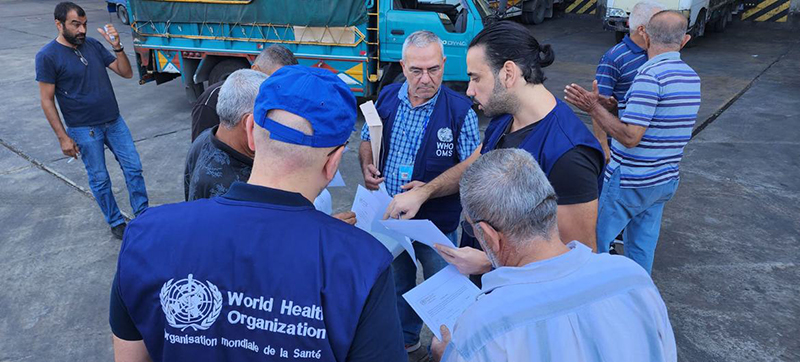
“The map is under threat (from cholera) everywhere,” said Dr. Philippe Barboza, from the World Health Organization, speaking in Geneva, via Zoom.
Available data points to cases of infection in around 30 countries, whereas in the previous five years, fewer than 20 countries reported infections, on average.
Reversing recent successes
“The situation is quite unprecedented, for not only we are seeing more outbreaks, but these outbreaks are larger and more deadly than the ones we have seen in past years,” said Dr. Barboza, WHO Team Lead for Cholera and Epidemic Diarrhoeal Diseases.
“This increasing number of cholera outbreaks is occurring after several years of regular reduction in the number of cases and deaths.”
Dr. Barboza explained that all the “usual factors” had played their part in the global uptick of cholera in 2022, not least conflict and mass displacement.
Added to this was the “very visible impact” of climate change, he insisted.
“Most of these larger outbreaks and the fact that they are simultaneously occurring - which makes the situation much more complex - is a direct impact of the increase in adverse climate troubles.”
The cholera crisis has been playing out across the Horn of Africa and the Sahel accompanied by “major floods, unprecedented monsoons (and) a succession of cyclones”, the WHO cholera expert said.
Pakistan floods focus
Many other countries have also been affected, including Haiti, Lebanon, Malawi and Syria, where there are large outbreaks.
In Pakistan, where previous years have seen only sporadic cases of cholera, there have been more than 500,000 reported cases of watery diarrhoea this year after devastating summer floods, but “less than a few thousand” laboratory-confirmed cases of cholera.
Triple La Nina threat
Equally worrying is the WHO assessment that the situation is “not going to change quickly” in 2023, because meteorologists have forecast that the La Nina climatic phenomenon is likely to persist for a third successive year.
Natural disasters associated with La Nina are prolonged droughts and rains and an increase in cyclones, “so we are very likely to see (a) similar situation that we saw at the beginning of 2022”, Dr. Barboza said, indicating that the worst-hit areas were likely to be in Eastern and Southern Africa, the Caribbean and Asia.
Shortages worldwide
Although cholera is preventable, a global shortage of vaccines persists, with sole producers South Korea and India, already at “maximum production” of a reported 36 million shots per year.
A South African initiative to produce the vaccines there is underway, but this could take “a few years” to materialize, Dr. Barboza said. He explained that vaccines are so scarce, the International Coordinating Group (ICG) had to decide in October to reduce its global vaccination strategy from two doses to one, to tackle cholera outbreaks.
Despite vaccine shortages, the WHO official stressed that cholera “is easy to treat” in comparison with other illnesses which require ventilators or specialised intensive care units, but only if patients can be given intravenous fluids or antibiotics quickly.
Disease of poverty
According to WHO, every year, there are 1.3 to four million cases of cholera, and 21,000 to 143,000 deaths worldwide from the disease. The disease is an acute diarrhoeal infection caused by eating or drinking food or water that is contaminated with the bacterium Vibrio cholerae.
“Very clearly, cholera is a disease of poverty, of vulnerability, it’s the most fragile part of the population in any given country which are most at risk and for a very simple reason: it’s just because they don’t have access to safe water and to basic sanitation,” said Dr. Barboza.