
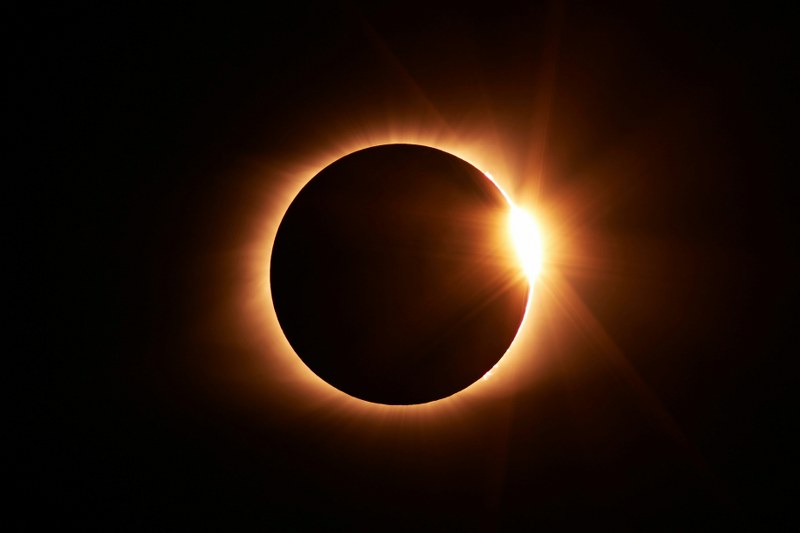
NASA shares safety guidelines for viewing April 8 total Solar Eclipse
NASA on Sunday said a total solar eclipse will cross North America, passing over Mexico, the United States, and Canada on November 8.
When does a total eclipse happen?
A total solar eclipse happens when the Moon passes between the Sun and Earth, completely blocking the face of the Sun.
The sky will darken as if it were dawn or dusk.
Safety is the number one priority
Except during the brief total phase of a total solar eclipse, when the Moon completely blocks the Sun’s bright face, it is not safe to look directly at the Sun without specialized eye protection for solar viewing, read the NASA website .
Viewing any part of the bright Sun through a camera lens, binoculars, or a telescope without a special-purpose solar filter secured over the front of the optics will instantly cause severe eye injury, the website said.
Suggesting people the way to observe the event, NASA said: "When watching the partial phases of the solar eclipse directly with your eyes, which happens before and after totality, you must look through safe solar viewing glasses (“eclipse glasses”) or a safe handheld solar viewer at all times. You can also use an indirect viewing method, such as a pinhole projector."
The total solar eclipse will begin over the South Pacific Ocean and will cross North America, passing over Mexico, United States, and Canada.
IBNS
Senior Staff Reporter at Northeast Herald, covering news from Tripura and Northeast India.
Related Articles

UN issues dire warning: Asia faces rising cyclones and flooding like never before
Across southeast Asia, record-breaking rains and flooding caused by back-to-back tropical storms have claimed hundreds of lives and brought devastation and displacement upon entire communities, UN agencies said on Tuesday.

Hidden mental health cost of birth control pills? Study finds shocking link
A new study has suggested that the use of contraceptive pills may have a hidden cost: impaired mental health.

Stunning drop! India reports 49% fall in annual new HIV cases
The Indian government has announced that the country recorded a nearly 49 per cent decline in annual new HIV infections between 2010 and 2024.

WHO describes obesity as a 'chronic disease', backs wider use of weight-loss medicines
The UN World Health Organization (WHO) has issued its first guideline on the use of a new class of weight-loss medicines, marking a significant shift in global health policy as obesity rates continue to rise.
Latest News

Mosque in the middle of Kolkata airport? Centre confirms flight risks, BJP fires at Mamata

Prime Minister Mark Carney to attend FIFA World Cup 2026 Final Draw in Washington

Germany arrests two Iraqi nationals over suspected Islamic State links

Spanish tourist stabbed at Berlin Holocaust Memorial testifies in terror trial

