
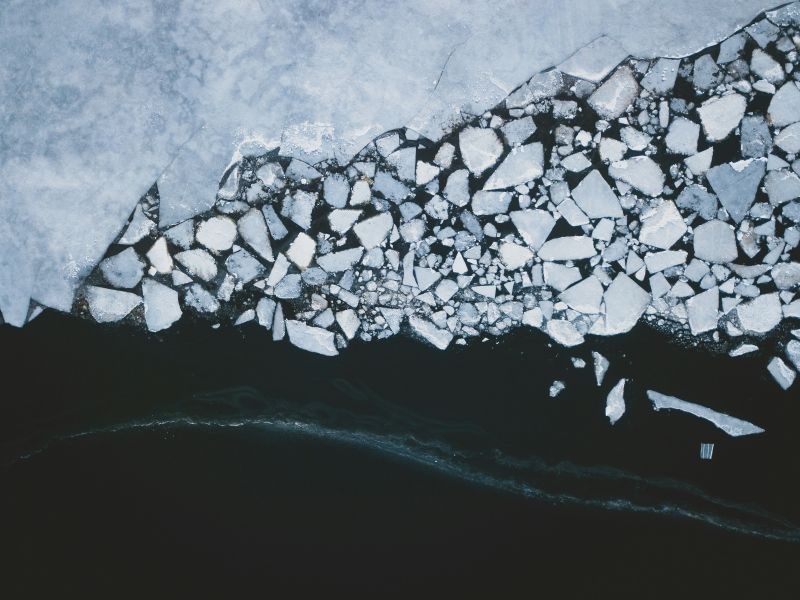
New study shows 1.5°C target too high for polar ice sheets and sea level rise
Efforts to limit the global temperature increase to 1.5°C under the Paris Climate Agreement may not go far enough to save the world’s ice sheets, a new study revealed.
The revelation was made during a new study led by Professor Chris Stokes in our Department of Geography.
The research suggests the target should instead be closer to 1°C to avoid significant losses from the polar ice sheets and prevent a further acceleration in sea level rise.
Global sea levels
The team reviewed a wealth of evidence to examine the effect that a 1.5°C rise would have on the ice sheets in Greenland and Antarctica.
The mass of ice lost from these ice sheets has quadrupled since the 1990s and they are currently losing around 370 billion tonnes of ice per year.
According to the Intergovernmental Panel on Climate Change, current warming levels are around 1.2°C above pre-industrial temperatures.
The researchers argue that further warming to 1.5°C would likely generate several metres of sea level rise over the coming centuries as the Greenland and Antarctic ice sheets melt in response to both warming air and ocean temperatures.
This would make it very difficult and far more expensive to adapt to rising sea levels, causing extensive loss and damage to coastal and island populations and leading to widespread displacement of hundreds of millions of people.
"Limiting warming to 1.5°C would be a major achievement and this should absolutely be our focus. However, even if this target is met or only temporarily exceeded, people need to be aware that sea level rise is likely to accelerate to rates that are very difficult to adapt to – rates of one centimetre per year are not out of the question within the lifetime of our young people," says Professor Chris Stokes, Department of Geography.
Professor Stokes has attended each of the last three COP meetings and suggests that policymakers and governments need to be more aware of the effects a 1.5°C rise in temperatures could have on ice sheets and sea levels.
Currently, around 230 million people live within one metre of sea level and melting ice represents an existential threat to those communities, including several low-lying nations.
IBNS
Senior Staff Reporter at Northeast Herald, covering news from Tripura and Northeast India.
Related Articles

Mumbai to Shanghai in real time: Kokilaben Hospital performs India’s first cross-border Robotic Surgeries!
Kokilaben Dhirubhai Ambani Hospital, Mumbai, has achieved a historic national milestone by successfully performing India’s first international remote robotic surgeries on two patients in Mumbai, with the operating surgeon located in Shanghai—over 5,000 kilometres away.

Village panic after funeral feast: 200 get rabies shots over ‘infected’ buffalo milk raita
Nearly 200 residents of a village in Uttar Pradesh were administered rabies vaccine shots after it emerged that raita—a curd-based Indian dish they had consumed—was prepared using milk from a buffalo that later died after being bitten by a dog.

Stop taking pills without advice! PM Modi flags rising antibiotic resistance
Indian Prime Minister Narendra Modi on Sunday urged citizens to refrain from self-medicating, especially with antibiotics, during his monthly Mann Ki Baat radio address.

Climate disaster shock: Heatwaves, fires and floods cost world $120 billion in 2025 , claims report
Heatwaves, wildfires, droughts and storms caused more than $120 billion in economic losses worldwide in 2025, according to a new Christian Aid report, Counting the Cost 2025. The findings highlight the escalating financial and human toll of climate change, with fossil fuel expansion identified as a central driver of the crisis.
Latest News

IOA to host India’s first National Athletes’ Forum in Ahmedabad on Jan 10

'Artistic freedom': India pushes back after China slams Salman Khan starrer Battle of Galwan

India-Pakistan armed conflict possible in 2026, US think tank flags ‘moderate risk’

Mumbai to Shanghai in real time: Kokilaben Hospital performs India’s first cross-border Robotic Surgeries!

