
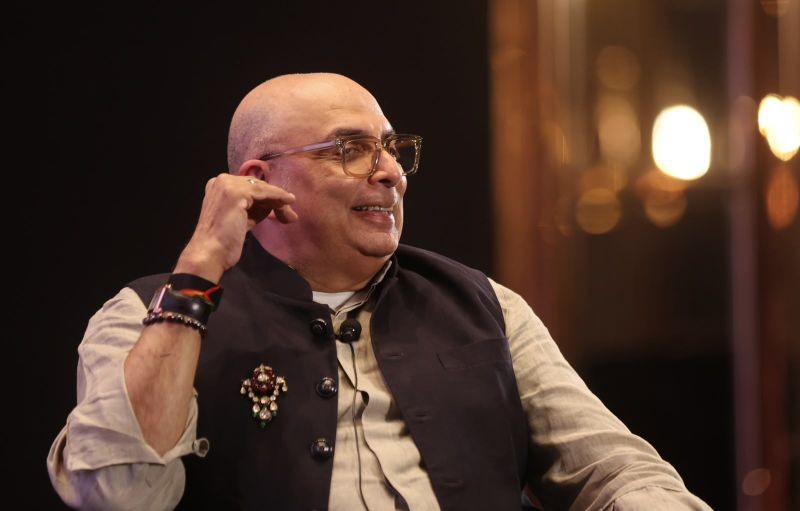
Titled ‘India Modern: A Spin on Tradition’, the session featured presentations on historical clothing, royal styles and jewellery traditions from different periods.
The designers shared how those eras have influenced their work and how elements of India's design heritage can be adapted to contemporary aesthetics.

Fashion designer Tarun Tahiliani said, "Over the past six years, as we have become more adept at construction, draping and pattern-making, we have begun incorporating techniques that were not traditionally part of the Indian design vocabulary into contemporary fashion."
Tahiliani discussed the influence of royal fashion, particularly the styles associated with Maharani Gayatri Devi, on the evolution of modern Indian dressing.
He spoke about how exposure to European fashion and changing lifestyles influenced the way Indian women dressed, while also highlighting the importance of retaining traditional Indian elements. According to him, contemporary clothing needs to offer comfort and freedom of movement without losing its cultural identity.

"I think it is not just young women, even people my age want to dance all night without feeling restricted or uncomfortable. Life and lifestyles have changed, and fashion needs to evolve accordingly. These are some of the variations I have developed over the years, and to me, they are as timeless as a saree. I can bring them back again and again, and there is a growing demand for these styles," Tahiliani added, presenting his timeless designs to the audience.
Tahiliani also recalled presenting Indian-inspired designs in Milan in 2002, where he incorporated miniature paintings and digital printing into contemporary creations. His design approach draws on traditional garments, textiles and draping techniques, adapting them through modern construction and pattern-making. He even noted that a single fabric can take on different forms of attire, depending on how it is draped and worn.

"Looking at family members wearing traditional clothes and jewellery, I began reflecting on how these styles could be reinterpreted. When I returned from Europe, where I had lived in Antwerp and travelled extensively, I wondered how I could bring the influences and aesthetics that fascinated me there into the Indian context. My first assignment after returning was to study jewellery in Jaipur", said jewellery designer Raj Mahtani.
Jewellery designer Raj Mahtani explored the historical evolution of jewellery, taking the audience through design traditions from ancient Egypt, Rome, the Byzantine and medieval periods to the Victorian era.
He highlighted how broad collars, textured gold, enamel work, cabochon stones and rose-cut diamonds continue to influence contemporary jewellery collections.
Mahtani added, "I felt that the designs had remained largely unchanged for years and began thinking about how I could transform them and give them my own interpretation."

Mahtani also discussed the historical connection between global jewellery traditions and Indian craftsmanship, particularly the influence of stone-foiling techniques on polki jewellery. Referring to the styles of royal women and their distinctive jewellery choices, he emphasised how traditional ornaments can be styled in individual ways to suit modern preferences.
The session highlighted how Indian designers continue to draw inspiration from historical references while developing contemporary interpretations of fashion and jewellery, keeping traditional craftsmanship relevant to changing tastes and lifestyles.
The discussion was followed by a curated showcase of signature couture and jewellery pieces by Tahiliani and Mahtani, for a fashion-forward audience.
(Reporting by Aaheli Chakraborty, Photos by Avishek Mitra/IBNS)