
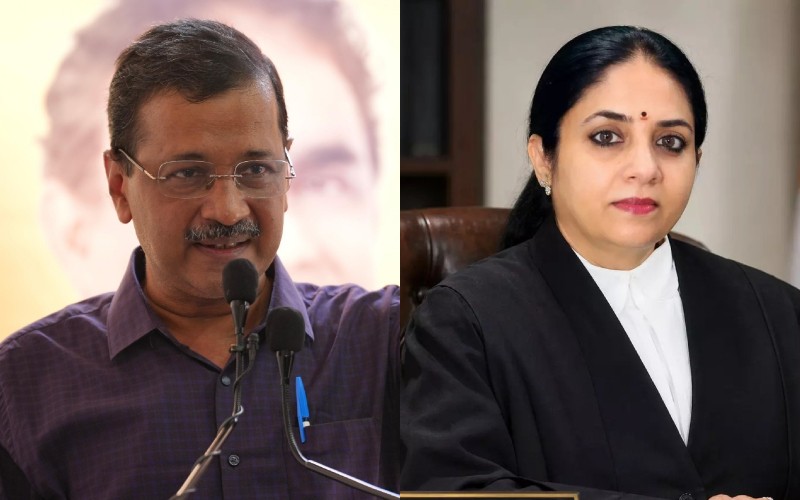
The decision follows the judge’s refusal to recuse herself from the case, despite objections raised by Kejriwal.
In a letter addressed to Justice Sharma, Kejriwal said he would not pursue the matter before her court, either personally or through legal representation.
In all humility and with complete respect for judiciary, I have written the following letter to Justice Swarna Kanta Sharma, informing her that pursuing Gandhian principles of Satyagraha, it won’t be possible for me to pursue this case in her court, either in person or through a… pic.twitter.com/HmyOyNYug8
— Arvind Kejriwal (@ArvindKejriwal) April 27, 2026
He cited adherence to Gandhian principles and stated that the proceedings did not meet the standard that justice must both be done and be seen to be done.
He also indicated that he may challenge the decision before the Supreme Court, keeping legal options open despite his decision to boycott the proceedings at the High Court level.
Recusal plea rejected
The development comes after Justice Sharma declined Kejriwal’s request to step aside from the case.
In her order, she emphasised judicial independence and stated that decisions would be made without bias or external pressure.
The court underlined that allegations of prejudice must be supported by substantive evidence and noted that such evidence had not been established in this instance.
जस्टिस स्वर्णकान्ता शर्मा जी से न्याय मिलने की मेरी उम्मीद टूट चुकी है।
— Arvind Kejriwal (@ArvindKejriwal) April 27, 2026
अपनी अंतरात्मा की आवाज़ सुनते हुए, गांधी जी के सिद्धांतो को मानते हुए और सत्याग्रह की भावना के साथ, मैंने फ़ैसला किया है कि मैं इस केस में उनके सामने पेश नहीं हूंगा और कोई दलील भी नहीं रखूँगा। pic.twitter.com/vhTSEZabqa
Allegations of conflict of interest
Kejriwal had sought recusal on grounds of alleged conflict of interest, claiming that the judge’s family members, who serve as panel lawyers for the central government, had professional associations with Solicitor General Tushar Mehta, who is appearing in the case.
He also raised concerns regarding the judge’s alleged association with certain legal forums. However, the court rejected these claims, stating that no direct connection to the case had been demonstrated.
Legal implications of non-appearance
Legal experts have indicated that failure to appear in court proceedings could lead to consequences under procedural law.
They noted that an accused person, after being granted relief, is typically required to comply with court directives during appeal proceedings.
Non-compliance may prompt the court to issue warrants to ensure attendance, beginning with bailable warrants and potentially escalating further.
Delhi excise policy case
The case originates from a challenge filed by the Central Bureau of Investigation (CBI) against a trial court order that had earlier discharged Kejriwal and others in the Delhi excise policy matter.
The High Court had taken note of certain findings in the lower court’s ruling and initiated further proceedings after issuing notice on the agency’s plea.
Kejriwal’s decision to abstain from the proceedings marks a significant shift in the case’s trajectory, as the matter continues before the High Court in his absence.