
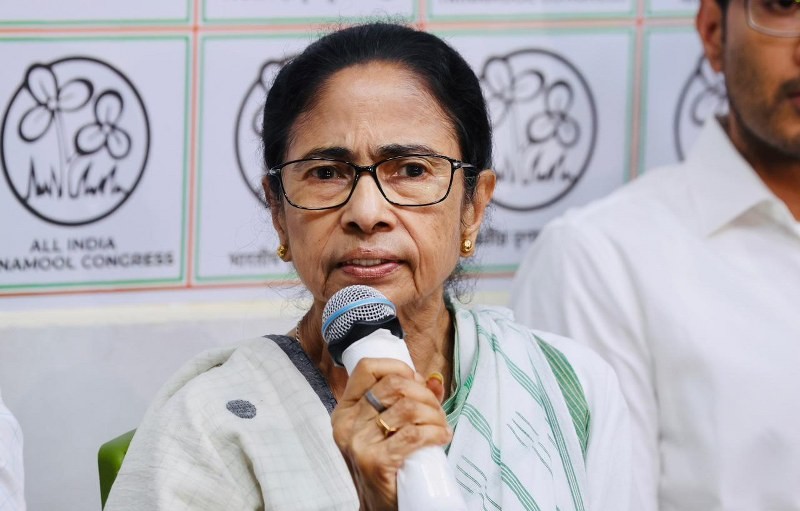
In contrast, the All India Trinamool Congress suffered a major setback, winning only 80 seats.
Chief Minister Mamata Banerjee also lost the Bhabanipur seat to Suvendu Adhikari, adding to the political implications of the result.

A day after defeat, Mamata Banerjee held a presser at her Kolkata residence on Tuesday and claimed the elections were not conducted fairly, accusing the BJP of undue interference and using the central forces to ‘capture’ the elections 'forecefully'.
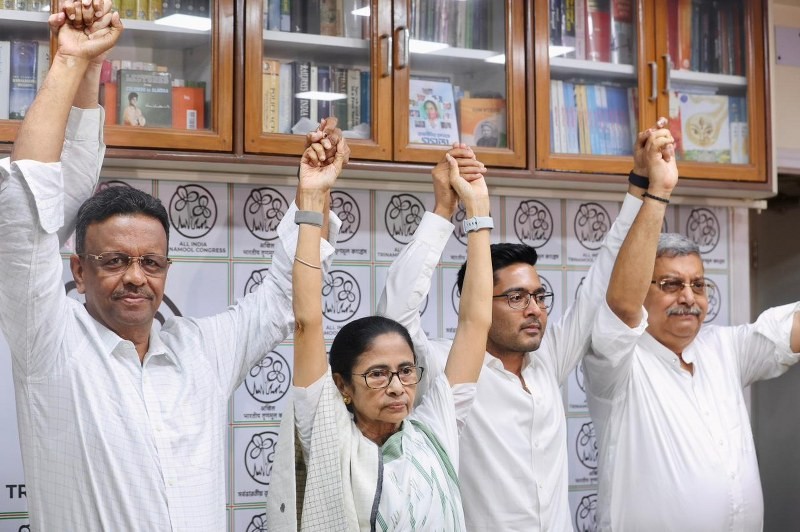
Bannerjee asserted that TMC would challenge the results and continue its political fight.
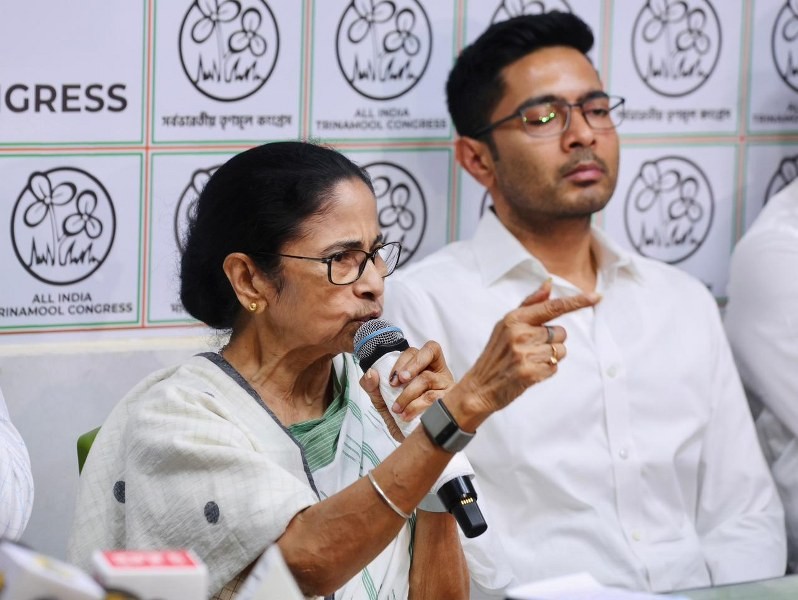
“No question of me resigning, we were defeated not by public mandate but by conspiracy,” Mamata told the media.
In a parliamentary democracy, the government is expected to reflect the mandate of the people.
However, if a Chief Minister does not resign despite losing majority, the Constitution provides mechanisms to address the situation.
Governor’s powers under the Constitution
Under Article 164 of the Indian Constitution, the Chief Minister holds office at the pleasure of the Governor.
The Governor appoints the Chief Minister and has the authority to act if the incumbent loses majority support.
If a Chief Minister refuses to resign after losing the election or majority in the Assembly, the Governor can dismiss the government.
This can be done through an official order, effectively ending the tenure of the Council of Ministers.

Floor test and confidence motion
Before taking such a step, a constitutional convention generally requires the Governor to ask the Chief Minister to prove a majority on the floor of the Assembly.
The Governor may summon a special session where a confidence or no-confidence motion is tested.
If the Chief Minister fails to secure the required numbers, they are expected to resign immediately.
In a situation where the electoral verdict clearly shows a lack of majority, the outcome of such a floor test is often decisive.
{image_5}
What if CM still refuses?
If the Chief Minister continues in office despite failing to prove a majority or refuses to step down, it may be treated as a breakdown of constitutional machinery.
In such cases, the Governor can send a report to the central government recommending action under Article 356 of the Constitution.
This provision allows for the imposition of President’s Rule in the state.
Once President’s Rule is imposed, the state administration comes under the direct control of the Centre, and the powers of the Chief Minister and the Council of Ministers cease.
Legal and constitutional position
The resignation of a Chief Minister after losing majority is not merely a political convention but a constitutional necessity.
A leader who no longer commands majority support in the Assembly does not have the legal authority to continue governing.
The Governor plays a key role in ensuring that democratic principles are upheld and that the mandate of the electorate is respected.
Through constitutional provisions, the system provides clear remedies to address such a situation and maintain the integrity of governance.