
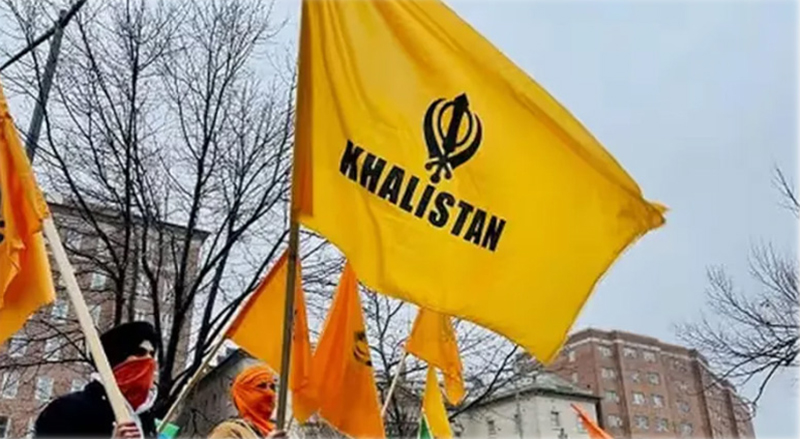
This upswing in activity since 2022 appears to be externally instigated, with elements associated with the Pakistani ISI calling for a ‘referendum’ on Khalistan.
The Khalistani groups abroad have resorted to violent acts, primarily targeting Indian interests, especially in Punjab. Diplomatic missions have been vandalized, temples defaced, and past incidents of Khalistan terror in India glorified.
A concerning incident occurred in July 2023 when the Indian Consulate in San Francisco was set on fire by Khalistan separatists belonging to the newly formed group ‘Sikhs for Justice.’
This organization further escalated the situation by calling for the ‘killing’ of Indian diplomats stationed in Canada, the US, the UK, and Australia.
In various countries, these separatists conducted ‘referendums’ for a separate Khalistan, attracting significant participation from the Sikh community.
Additionally, incidents of communal violence between Khalistan supporters and pro-India groups were reported in places like Canada and Australia.
What’s alarming is that these subversive activities abroad are accompanied by violent actions within India itself.
Khalistan elements were found to have infiltrated the farmers’ agitation in 2020, and instances of violence, such as the Red Fort incident on January 26, 2021, have occurred, raising further concerns about the revival of terror in Punjab.
Canada, which provided sanctuary to notorious Khalistan terrorists in the past, has been identified as a hub for Khalistan sympathizers, with some political support from Prime Minister Trudeau’s administration. Indian authorities have expressed concern over Canada’s failure to act on this matter due to perceived ‘vote bank politics.’
The revival of the Khalistan movement is viewed as Pakistan’s desperate attempt to revive the terror profile of the 1980s in Punjab, after India made progress in controlling cross-border terrorism in Kashmir following the abrogation of Article 370.
The situation necessitates a proactive approach from policymakers and the national security establishment to address the growing threat. Diplomatic, political, and police measures must be implemented to prevent further deterioration in Punjab. Additionally, efforts should be made to counter pro-Pakistan lobbies internationally, supported by China, and promote unity among Punjabis based on the values taught by Guru Nanak.
To address the situation effectively, it is advisable to appoint a Governor with a national security background to guide the state and educate the state government on the developing security challenges. Punjab needs to be handled with a mature approach, in coordination with the national security set-up, and requires a smooth Centre-State relationship to advance the larger interests of the state and the nation.
This resurgence of the Khalistan movement must be seen in the context of India’s national security horizon, marked by rising external threats endangering internal security. The strategic advantage gained by Pakistan over India in Afghanistan due to the return of the Taliban Emirate, increased collaboration between Pakistan and China, and the use of social media for ‘information warfare’ and radicalization of terrorists are major security concerns.
China and Pakistan are actively working together to exploit opportunities to destabilize India through clandestine funding, weapon supply, and drug trafficking via drones. The situation in Punjab, therefore, demands urgent attention and robust measures to counter the growing threat of Khalistan militancy.
(Image and text credit: Khalsavox.com)