
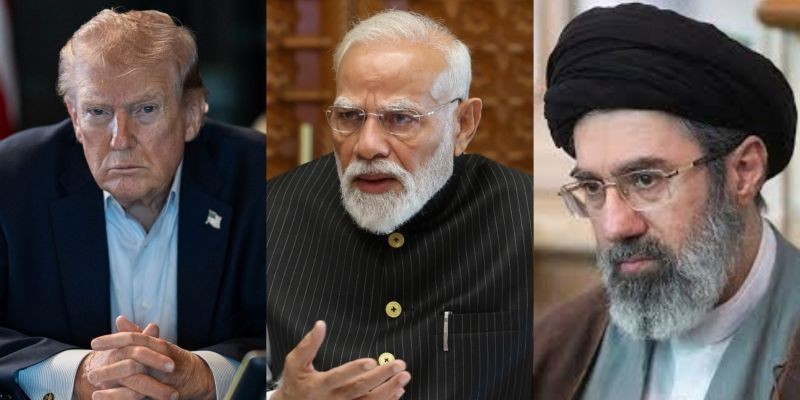
Trump declared what he called an “ECONOMIC D-DAY” against Iran, warning the country of severe economic consequences.
The US President said Washington would launch the “most crushing economic operation ever taken against any country”, targeting Iran’s oil smuggling, financial transactions, exchange houses, ship registries and front companies.
Trump warns Iran’s trading partners
Trump warned that any country, company, financial institution, airport or government entity providing a “lifeline” to Iran could face “tremendous economic consequences.”
He accused Tehran of failing to accept a deal and reiterated that Iran “will never have a nuclear weapon.”
US Treasury Secretary Scott Bessent has separately announced plans for what he described as the “toughest sanctions in history.”
Washington is also pressing China and other countries to help isolate Iran, adding to uncertainty over global trade, energy markets and investor sentiment.
Will India’s trade with Tehran come under US pressure?
India’s direct trade with Iran is relatively small, but sectors such as rice, tea, sugar, pharmaceuticals and other exports, along with strategic interests such as Chabahar Port, could face complications if Washington expands secondary sanctions.
Reuters estimates that India-Iran goods trade fell to around $1.63 billion in 2025-26, with most of the trade involving humanitarian goods.
Trump has warned that countries, companies and financial institutions providing an economic “lifeline” to Iran could face “tremendous economic consequences.”
Bessent has also indicated that secondary sanctions against countries and businesses dealing with Iran could be part of the next phase.
What this means for India
Trade exposure: India’s trade with Iran has already declined sharply due to US sanctions. Reuters puts 2025-26 bilateral trade at around $1.63 billion.
Indian exporters: Indian shipments of rice, tea, sugar, fruits and pharmaceuticals to Iran could face payment, banking and logistical difficulties if sanctions are tightened.
Chabahar Port: India’s strategic investment in Iran’s Chabahar Port makes the issue more sensitive. The port provides India with an important connectivity route towards Afghanistan and Central Asia.
Oil: India is also vulnerable indirectly through global crude prices. Brent crude was around $93.55 a barrel on Friday, as the US-Iran conflict disrupted supplies and shipping through the Strait of Hormuz.
US-India balancing act: New Delhi could face a difficult diplomatic balancing act between maintaining its strategic relationship with Washington and protecting its long-standing economic and connectivity interests involving Tehran.
What lies ahead?
The immediate impact on India will depend largely on how aggressively Washington enforces secondary sanctions and whether exemptions are provided for humanitarian trade and strategic projects such as Chabahar.
For New Delhi, the challenge will be to safeguard its economic and strategic interests with Iran while avoiding measures that could strain its increasingly important relationship with the United States.