
The proposed tariff could be lowered to 17 per cent if India reaches a trade agreement with the US, according to a list released by the Office of the US Trade Representative (USTR).
The proposal outlines two tariff rates for each economy — a lower rate aligned with existing trade agreements or frameworks and a higher rate that Washington considers justified by the country's trade policies.
A senior US trade official said the proposed rates would broadly reflect agreements on reciprocal trade, frameworks and joint statements already reached with various countries.
He warned that higher tariffs could be considered if negotiations stall or existing agreements fall apart.
Tariffs will not stack with existing 10% duty
The proposed excess-capacity tariff will not be added to the existing 10 per cent duty imposed on Indian goods under a separate Section 301 investigation into forced-labour imports. Importers will instead pay whichever of the two rates is higher.
At the proposed 17 per cent rate, the tariff burden would increase by seven percentage points for most Indian goods currently subject to the 10 per cent duty.
Public hearings and submissions are expected to begin shortly, and the proposed tariffs are unlikely to take effect before January, the US official said.
India gets lower rate than several Asian rivals
The proposed 17 per cent tariff for India is lower than the 18 per cent rate outlined in the framework for an interim trade agreement announced by the two countries in February.
Several other Asian economies face higher proposed rates. Vietnam could face tariffs of up to 35 per cent, or 20 per cent under a trade agreement, while Bangladesh, Cambodia, Indonesia, Malaysia and Thailand face proposed rates of 18 per cent.
The European Union, Japan, South Korea, Taiwan and Switzerland face a 15 per cent rate, while Singapore faces 10 per cent. China could face up to 40 per cent, the highest rate among the economies listed.
An Indian government official said New Delhi was examining the details of the proposal. The commerce ministry has not yet issued a response.
India-US interim trade deal yet to be signed
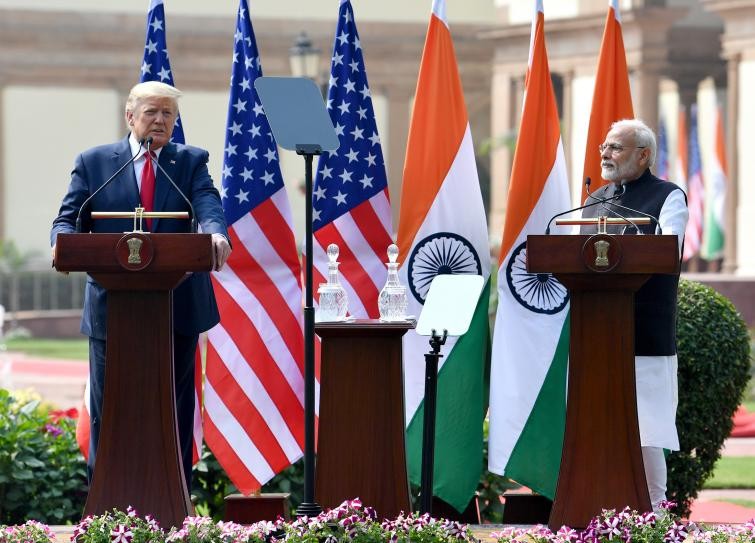
India and the US have yet to formally sign their interim trade agreement. Prime Minister Narendra Modi is expected to meet US President Donald Trump on the sidelines of next month's G20 summit in Florida, as both sides work towards finalising the deal.
The US official said Washington expected the summit to provide an opportunity for further agreements, adding that the proposed tariffs were not expected to create tensions at the meeting.
Why Washington flagged India's manufacturing capacity
The USTR launched the investigation on March 11, 2026, under Section 301 of the Trade Act of 1974, which allows the US to impose trade measures against practices it considers unreasonable or discriminatory and harmful to American commerce.
In its investigation, Washington cited India's $58 billion trade surplus with the US in 2025 and alleged excess capacity in sectors including solar modules, petrochemicals and steel.
It also pointed to India's global trade surplus in textiles, healthcare, construction goods and automotive products.
The USTR argued that India's solar module manufacturing capacity was nearly three times its annual domestic demand.
India rejected the allegations in its submission to the USTR on April 15, calling for the investigation to be terminated.
At the G20 Trade Ministers' Meeting in Milwaukee in October, Commerce and Industry Minister Piyush Goyal reiterated that India did not have structural excess capacity in the sectors identified by the G20 Presidency.
Tariff dispute has seen several reversals
The latest proposal marks another turn in the India-US trade dispute that escalated after the Trump administration took office.
In April 2025, Washington announced a 26 per cent reciprocal tariff on India. By August, a 25 per cent tariff had taken effect, followed by an additional 25 per cent penalty linked to India's purchases of Russian oil, bringing the overall tariff burden to 50 per cent for affected goods.
The tensions eased in February 2026, when the two countries announced a framework for an interim trade agreement. Washington agreed to revoke the Russian-oil penalty and bring the reciprocal tariff rate down to 18 per cent.
Under the framework, India agreed to eliminate or reduce tariffs on US industrial goods and a range of agricultural and food products.
New Delhi also indicated its intention to purchase $500 billion worth of US energy products, aircraft, technology goods and other products over five years.
The latest excess-capacity proposal comes amid continuing negotiations to formalise the trade arrangement.