
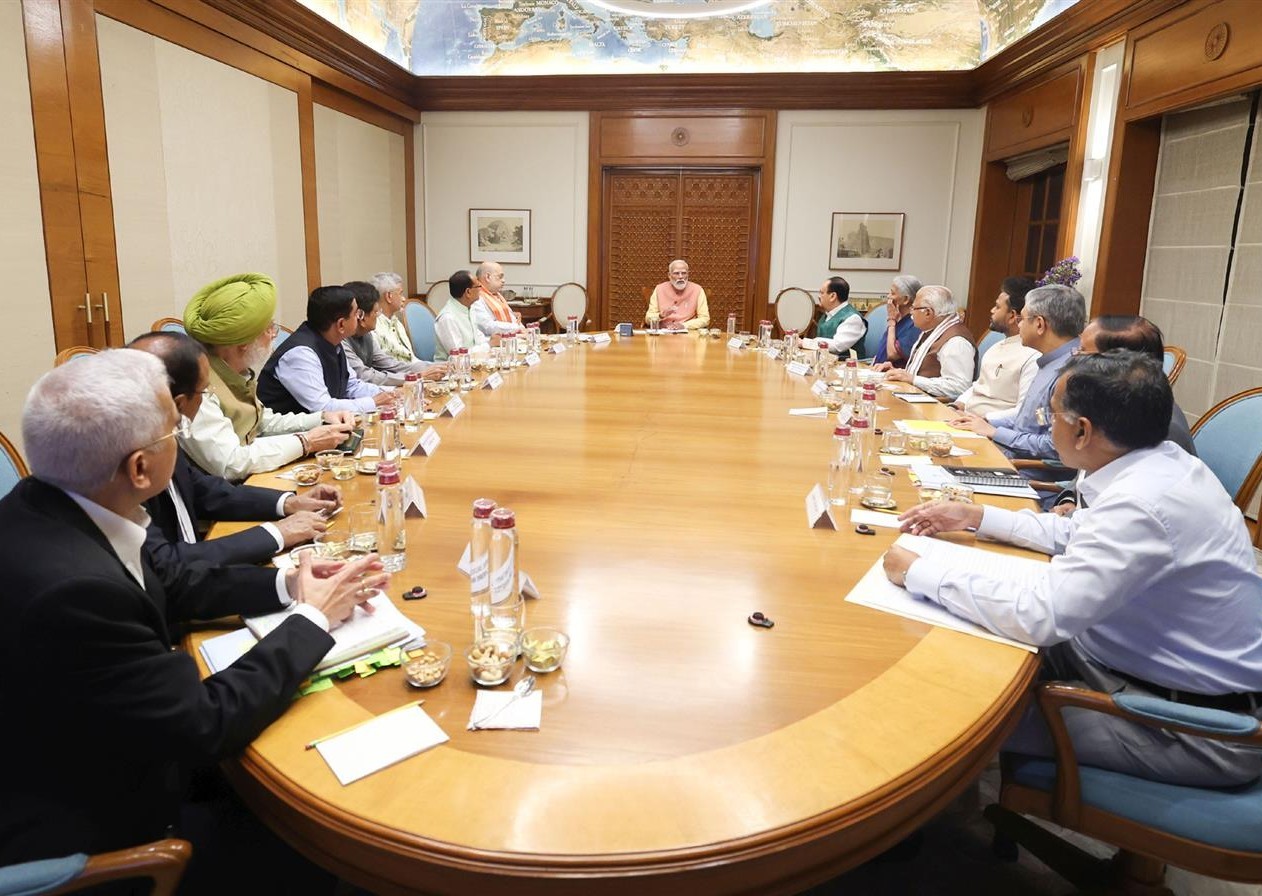
The directive came during a high-level meeting of the Cabinet Committee on Security (CCS), where the government reviewed preparedness across key sectors amid the escalating tensions involving Iran.
Why it matters
The conflict is already disrupting global supply chains—especially energy—raising concerns about fuel prices, fertiliser availability, and overall economic stability.
The government is aiming to prevent shortages and shield ordinary citizens from price shocks and supply disruptions.
Focus on energy and essentials
Officials briefed the meeting on steps taken to ensure uninterrupted supply of LPG, LNG, and electricity across the country.
Efforts are underway to diversify import sources, bringing in fuel supplies from multiple countries to reduce dependence on any single region.
The government is also expanding access to Piped Natural Gas (PNG) to strengthen domestic supply networks.
Crackdown on hoarding and black marketing
State governments have been instructed to closely monitor the supply of fertilisers and essential goods.
Measures include daily surveillance, raids, and strict action against hoarding, black marketing, and diversion of supplies to ensure fair availability.
Wider sector impact under review
The meeting also reviewed challenges facing sectors such as agriculture, aviation, shipping, and logistics—areas likely to feel the strain of global disruptions.
Ensuring smooth operations in these sectors is seen as critical to maintaining economic stability.
What’s next
The government is stepping up global outreach to diversify supply chains and support international efforts to keep key trade routes like the Strait of Hormuz open and secure.
Officials have been asked to remain on high alert and respond quickly to emerging challenges as the situation evolves.