
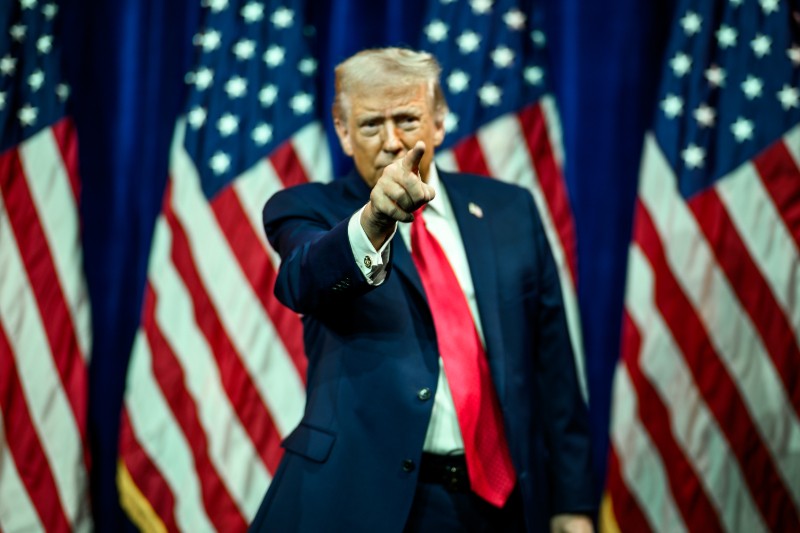
However, Trump’s explanation has found few takers globally.
Many analysts believe the intervention was aimed at engineering a regime change in Caracas to serve American strategic and commercial interests, particularly Venezuela’s vast oil reserves.
Venezuela’s oil wealth and production struggles
Venezuela possesses over 300 billion barrels of proven oil reserves, making it the largest holder globally, far ahead of Saudi Arabia, Canada, the United States and Russia.
Despite this enormous resource base, the country has struggled to maintain production levels.
Following US sanctions during Trump’s previous presidency, Venezuela’s output plunged to around one million barrels per day.
In contrast, during the early 2010s, production had exceeded two million barrels daily.
Complicating matters further, much of Venezuela’s crude is extra-heavy, making it expensive and environmentally challenging to process.
Reports indicate that the state-owned oil giant Petróleos de Venezuela (PDVSA) lacks both capital and technical capacity to significantly boost production. Currently, US energy major Chevron accounts for roughly a quarter of Venezuela’s total oil output.
With potential political changes in Caracas, Washington is widely believed to be eyeing deeper involvement in Venezuela’s energy sector, including expanded production and exports.
Limited impact on India’s crude imports
For India, experts say the developments in Venezuela are unlikely to have any immediate or significant impact.
Crude oil imports from Venezuela have already dwindled sharply since US sanctions were imposed in 2019.
In FY25, Venezuela ranked only as India’s 18th-largest oil supplier.
So far in FY26, it has slipped further to the 21st position, with imports valued at just $300 million between April and October 2025.
Given the current geopolitical uncertainty, future shipments from Venezuela remain unpredictable.
Trump’s oil claim and market reaction
Trump recently claimed that Venezuela would hand over up to 50 million barrels of oil to the United States, valued at approximately $2.8 billion.
The statement triggered a sharp reaction in global markets, sending oil prices lower.
Brent crude was trading at $60.6 per barrel on January 7, slightly below the previous session’s close.
Trump also stated that the oil would be sold at market rates and predicted that the US energy sector would be fully operational in Venezuela within 18 months, with significant investments flowing into the country.
India’s diplomatic balancing act
India’s measured response to the US-led action against Maduro reflects New Delhi’s careful diplomatic calibration.
The government is keen to avoid friction with Washington at a time when bilateral trade talks are underway, and India is seeking relief from penalties imposed over its purchases of Russian crude.
Although India has gradually reduced Russian oil imports, Russia remained its largest supplier in FY25, exporting oil worth $56.9 billion.
In FY26 so far, Russian shipments have already touched $23.7 billion.
Meanwhile, US oil exports to India have been rising steadily.
The US supplied crude worth $14.3 billion in FY25 and $8.3 billion so far in FY26.
Price advantage and future outlook
One of the key attractions of Venezuelan crude has historically been its low price.
According to Madan Sabnavis, Chief Economist at Bank of Baroda, India paid about $496 per tonne for Venezuelan oil in FY25, compared to an overall average of $586 per tonne.
However, he notes that imports have since become even less significant.
If Washington’s plan for Venezuela materialises, global oil supplies could rise marginally, potentially easing prices.
Sabnavis adds that India sources crude from multiple countries at varied price points, meaning the overall cost structure is unlikely to change substantially.
Bottom line for India
Despite the geopolitical drama surrounding Venezuela, India’s diversified import basket and growing supplies from the US and the Middle East ensure that Trump’s move is unlikely to push New Delhi onto a slippery oil turf.
Economists said, for now, India’s energy security remains firmly insulated from the turbulence in Caracas.