
What did the court say?
Justice Joymalya Bagchi flagged concerns over the SIR process, stressing the need for a robust appellate tribunal to hear appeals against deletions from around 60 lakh adjudicated cases.
He noted that the Election Commission of India deviated from procedures followed in other states by introducing a category of “logical discrepancy” in West Bengal.
The judge also pointed out inconsistencies with the Bihar SIR, where voters listed in the 2002 electoral roll were not required to submit documents.
“Please see your written submissions in the Bihar case. You had said the 2002 electorate need not give documents,” Justice Bagchi was quoted as saying.
‘100% accuracy not possible’
Justice Bagchi observed that judicial officers verifying lakhs of cases under tight deadlines cannot be expected to deliver 100 percent accuracy.
He noted that even 70 percent accuracy would be “excellent” for someone handling nearly 1,000 cases a day under pressure.
The court also flagged concerns over potential electoral impact if significant numbers of voters are unable to cast their votes due to deletions.
Scale of deletions
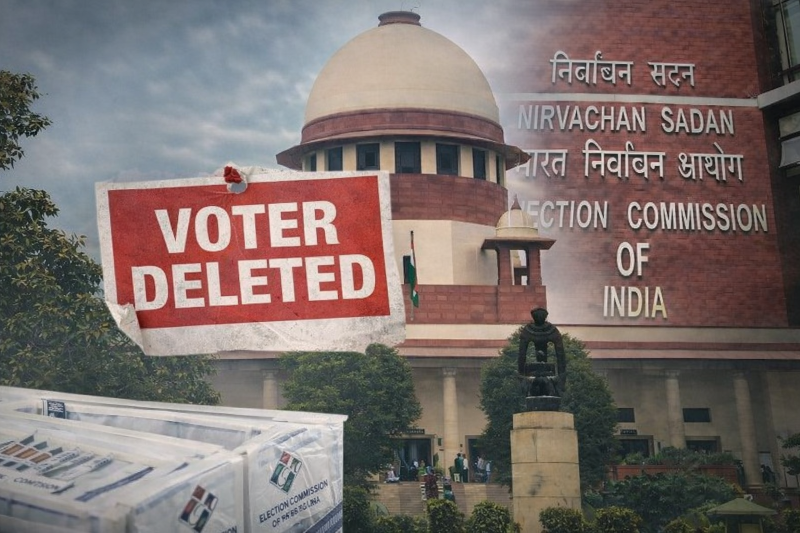
Nearly 91 lakh voters have been dropped from the rolls during the controversial SIR exercise.
- Over 27 lakh names deleted from 60 lakh adjudicated cases
- In addition to 63 lakh already removed earlier
The Muslim-majority district of Murshidabad recorded the highest deletions, with around 4.5 lakh names struck off from 11 lakh adjudicated cases.
What does it mean for voters?
The Supreme Court had earlier directed the formation of appellate tribunals to hear appeals against deletions.
However, these are unlikely to conclude hearings before polling begins.
- Phase 1: April 23
- Phase 2: April 29
The court also clarified that interim inclusion of voters who failed verification cannot be permitted.
Why it matters
West Bengal is among five poll-bound states where the SIR exercise is underway—the first large-scale revision since 2002.
With elections just days away, the deletion of nearly 91 lakh voters could significantly impact political strategies and electoral outcomes across the state.