
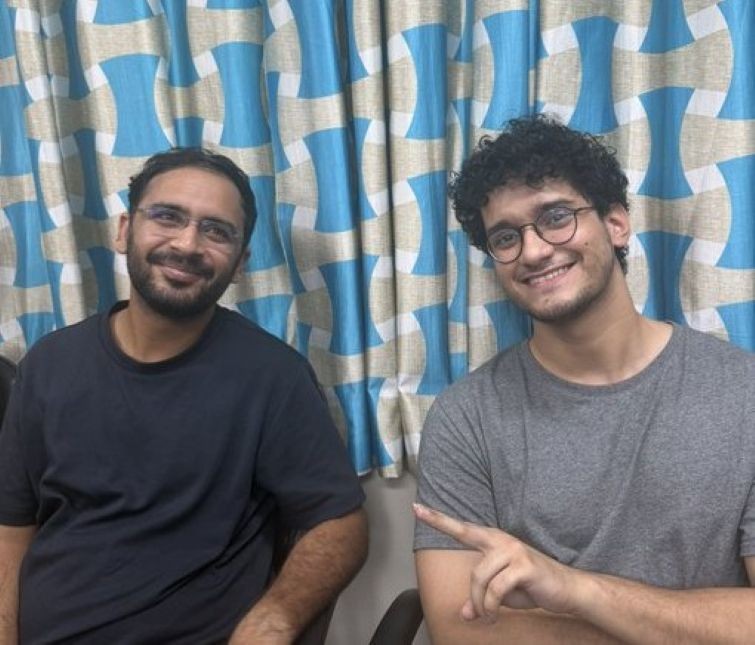
“Truth has triumphed,” Das said as the two leaders were being taken away following the release order.
All smiles ❤️✌️ https://t.co/LeTLoFtf92
— Ratna Singh (@whattalawyer) October 21, 2026
Das and Ranka had been in judicial custody since October 14 after allegedly scaling the locked gates of Jantar Mantar and waving national flags on October 13 to protest the denotification of the site as a designated protest venue.
The Delhi Police had sought a further three days of judicial custody for the two spokespersons during Wednesday's proceedings. After hearing both sides, the magistrate reserved the order before directing their release after 6 pm.
Why were the CJP leaders arrested?
The two CJP spokespersons were detained on October 10 and had signed peace bonds following their detention.
According to the prosecution, their subsequent entry into Jantar Mantar and the waving of national flags on October 13 violated the conditions of those bonds.
They were produced before the Special Executive Magistrate on October 14 and initially remanded to judicial custody for five days. Their custody was subsequently extended by two days on Monday.
The CJP, founded by Abhijeet Dipke, alleged that the proceedings were being deliberately prolonged to prevent the leaders from being released. The party also approached the Delhi High Court challenging the extension of their custody.
What did the Delhi High Court say?
The Delhi High Court heard the leaders' petition on Wednesday and raised concerns about the alleged breach of the peace bond.
The bench observed that protesters breaking barricades could encourage others to follow, potentially leading to situations that organisers might struggle to control.
Referring to violent protests in other countries without naming any, the court noted that demonstrations could escalate into incidents involving arson and the burning of buildings.
The court also questioned the nature of the CJP's recent protests, noting that the party had previously mobilised around paper leaks, including the NEET controversy, but was now demanding the resignation of Chief Election Commissioner Gyanesh Kumar over alleged irregularities in the Special Intensive Revision (SIR) of electoral rolls.
The bench also discussed the ages of the two leaders, who were identified as 27 and 31, questioning whether the current agitation could be compared with earlier student-led protests.
Peace bonds accepted, inquiry to continue
In its order, the magistrate noted that Das and Ranka had undertaken not to breach the peace and had expressed faith in the judiciary and its institutions.
They also undertook not to call for protests at Jantar Mantar until the site is denotified in accordance with the law, and committed to ensuring that any future demonstrations remain within the constitutional framework.
The court accepted their sureties and directed them to furnish personal bonds and surety bonds of Rs 50,000 each.
However, the release does not bring the proceedings to an end, as the inquiry will continue.
The next hearing in the matter is scheduled for Friday.
CJP's campaign against SIR
The custody case comes amid escalating protests by the CJP and opposition groups against the SIR exercise and CEC Gyanesh Kumar.
The CJP has accused the Election Commission of irregularities in the voter revision process and alleged that eligible voters risk being excluded from electoral rolls.
It has also demanded the CEC's resignation, intensifying its campaign over electoral transparency.
The controversy surrounding Jantar Mantar has added another dimension to the agitation, with protesters challenging restrictions on the use of the site for demonstrations.