
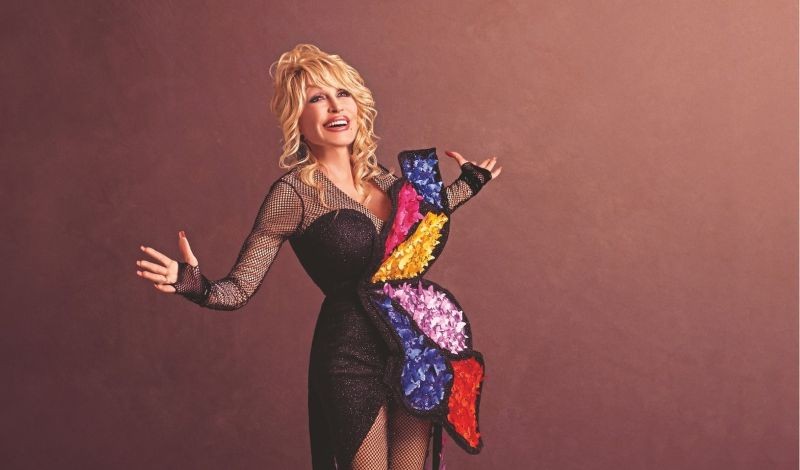
Parton died peacefully in Nashville, Tennessee, after what her team described as a brief battle with cancer, surrounded by loved ones. The news came not as a press release but as something closer to a family goodbye—her nephew, Bryan Seaver, appearing in a recorded video to tell the world what he called an honour "mixed with absolute pride and great sadness."
Her publicist confirmed it soon after. And then, almost immediately, the tributes began—from Nashville to Hollywood to the White House—because it seemed everyone, somewhere, had a Dolly Parton story of their own.
A life that began with almost nothing, and gave almost everything
Born on January 19, 1946, in Sevier County, Tennessee, Parton was the fourth of twelve children raised in a home with more love than money. She would later turn that upbringing into the raw material of a legend—a one-room cabin transformed, decades on, into songs, stories, and an entire theme park bearing her name.
She began singing as a child and left for Nashville the day after finishing high school, arriving with a guitar and a certainty that never seemed to waver. What followed was one of the most remarkable ascents in American music: a rhinestone-covered, big-haired, small-town girl who became, unmistakably, the Queen of Country.
Her catalogue reads like a national songbook—"Jolene," "9 to 5," "Coat of Many Colors," "I Will Always Love You." That last one, written in a single night, would travel further than even Parton could have imagined, becoming a generation-defining hit for Whitney Houston. Few songwriters can say they gave the world two anthems in one; Parton did, and made it look effortless.
She carried that same presence into film—9 to 5, The Best Little Whorehouse in Texas, Steel Magnolias—collecting Grammys and a place in both the Country Music Hall of Fame and the Rock & Roll Hall of Fame along the way. And yet for all the honours, what people kept returning to, in the hours after her death, wasn't the trophy case. It was her heart.
The quiet, enormous work of giving back
Long before "philanthropist" became a fashionable word for celebrities to claim, Parton was quietly living it.
Through her Imagination Library, she sent free books to children by the hundreds of millions, believing—simply and without pretension—that a child with a book was a child with a chance. She gave to disaster relief, to healthcare, to education, to research, often without asking for recognition. It was, in the truest sense, unconditional.
The last, honest chapter
Parton had spent her final year telling fans the truth in the same plain-spoken way she told everything else. In September 2025, a kidney infection kept her from Dollywood. In October, after a worried post from her sister sent fear rippling through her fanbase, she recorded a video to reassure everyone she was fine — and admitted, with characteristic candour, that she had let her own health slide while caring for her husband, Carl Dean, who had died that March after nearly sixty years of marriage.
By May 2026, she spoke of an immune and digestive system that had gone "out of whack," but said she was responding to treatment. In August, dizziness and dehydration kept her grounded on doctor's orders.
And then, just four days before she died, in an interview with PEOPLE published on August 21, she plainly said she was moving through "hard times" — health problems she hadn't paid enough attention to while loving and losing Carl. Even then, she said she was still working.
It reads now less like a health update and more like a woman quietly making her peace, in public, the way she had done everything else in her life — without artifice, without complaint, and without ever once losing her sense of humour.
A chorus of grief, from Nashville to the world
Taylor Swift, speaking to USA TODAY, said a world without Dolly Parton didn't feel "possible, real or right," even as she insisted her legacy would be "an everlasting one."
She remembered a woman who could deliver life's hardest lessons "gently and honestly, simultaneously, and oftentimes hilariously"—offering the world both mystery and full transparency, in exactly the places that mattered.
Miley Cyrus, her goddaughter, mourned her with the ache of someone who had lost family—because she had. Miley's father, Billy Ray Cyrus, recalled a friendship that spanned decades, writing that "like every little boy, I grew up loving Dolly Parton," a presence so constant she felt woven into the furniture of American living rooms.
Reba McEntire wrote simply that there would "never ever be another" Dolly—a sentence that needed no embellishment. Elton John called her "a giant of an artist," unique and irreplaceable, with the kindest of hearts.
And Anne Hathaway, in a tribute as tender as it was theatrical, imagined heaven reclaiming one of its own, thanking Parton for the melodies, the laughter, and "so many shining examples of how to be a treasure of humanity"—signing off, fittingly, in Parton's own words: I will always love you.
Even President Donald Trump paused to mark the moment, ordering the American flag lowered for a week and writing that there had "never been anyone like her, and never will."
It is a strange kind of grief—mourning someone who felt, in some sense, un-losable. Dolly Parton was joy without cynicism, ambition without cruelty, faith without judgment. She turned a hard childhood into generosity, contradiction into charm, and stardom into something that never stopped being kind.
The songs remain. The Imagination Library remains. Dollywood remains. But the woman who stitched all of it together with rhinestones and warmth is gone — and country music, and the wider world it touched, is smaller for it.
As she once sang, and as so many are now singing back to her: I will always love you.