
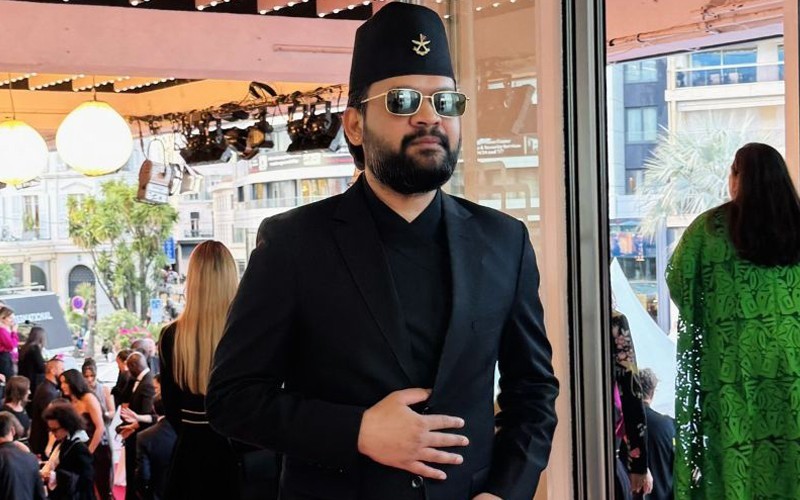
The RSP has emerged as a powerful political force among young voters in Nepal, particularly after a massive Gen Z–led protest movement last year that forced former prime minister K. P. Sharma Oli to step down.
According to early trends on Friday, vote counting showed the RSP leading in at least 44 seats.
Shah — popularly known as Balen Shah — is currently leading in Jhapa 5 against K. P. Sharma Oli, the president of the Communist Party of Nepal (Unified Marxist–Leninist) (CPN-UML) and a former prime minister.
Meanwhile, Rabi Lamichhane is leading in Chitwan 2, while Sobita Gautam is ahead in Chitwan 3 against Renu Dahal, the daughter of former prime minister Pushpa Kamal Dahal, according to The Himalayan Times.
Quoting the District Election Office, the newspaper reported that Shah had secured 6,090 votes, while Oli had received 2,087 votes as of 10:00 am.
Popular among young voters, Shah attracted massive crowds during the election campaign.
Nepal’s 275-member House of Representatives elects 165 members through direct elections, while the remaining 110 seats are allocated through proportional representation.
Major political forces contesting the election include the Communist Party of Nepal (Unified Marxist–Leninist) led by K. P. Sharma Oli, the Nepali Congress headed by Sher Bahadur Deuba, and the Communist Party of Nepal (Maoist Centre) led by Pushpa Kamal Dahal.
Nepal’s Gen Z revolt: How a social media ban shook the nation
It began with silence. One September morning, young Nepalis woke up to find their digital world suddenly quieter. Major social media platforms including Facebook, YouTube, WhatsApp, and X had gone dark.
The government said the platforms had “failed to register” under new regulations. But for a generation that lives, learns, and organizes online, the move felt like something far more serious — censorship.
Within hours, the streets of Kathmandu came alive. University students, job seekers, artists, and influencers poured into public spaces, raising slogans against corruption, nepotism, and a political elite they accused of living in luxury while ordinary citizens struggled.
What began as a protest against the social media ban soon transformed into a broader movement demanding systemic change.
“Enough is enough!” became the rallying cry.
Videos recorded before the blackout — and later circulated when access returned — showed crowds marching through the capital, holding placards that read “Gen Z for Change.”
The violence that followed shocked the country. Ironically, the very platforms the government tried to silence became channels of global outrage, as protesters used VPNs and other workarounds to share images of injured demonstrators.
International criticism mounted quickly.
Facing mounting pressure, the government eventually reversed its decision. Within three days, the social media ban was lifted — a rare victory achieved through youth mobilization.
But by then, the protests had evolved into something much larger.
Demands grew louder for greater accountability, an end to corruption, and fresh elections.
Political elites, long accustomed to fragile coalitions and behind-the-scenes power deals, suddenly appeared powerless in the face of an energized and politically active generation.
The movement ultimately compelled former prime minister K. P. Sharma Oli to resign, marking one of the most significant youth-driven political upheavals in Nepal’s recent history.