
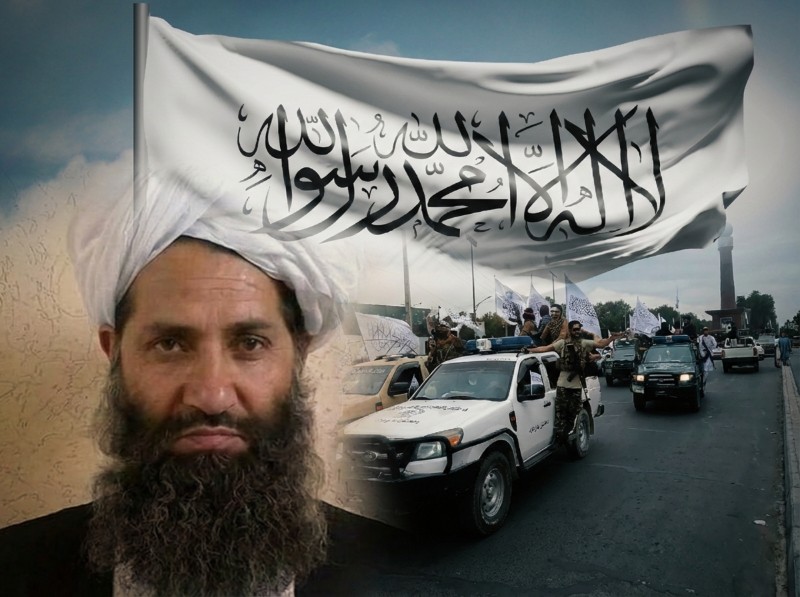
The speech, delivered at a madrassa in Kandahar in January 2025, captured Akhundzada warning that infighting among Taliban officials could ultimately destroy the Islamic Emirate.
In the recording obtained by the BBC, Akhundzada cautioned Taliban members that internal disputes could prove more dangerous than external threats.
“As a result of these divisions, the emirate will collapse and end,” he warned, marking one of the clearest acknowledgements of discord at the top of the regime since the Taliban returned to power in 2021.
Two power centres: Kabul vs Kandahar
A year-long BBC investigation, based on more than 100 interviews with current and former Taliban members, local sources, experts and diplomats, mapped out two distinct power blocs within the movement.
One faction is based in Kandahar and loyal to Akhundzada, who rules largely from the shadows and is driving Afghanistan toward an isolated, ultra-conservative Islamic Emirate.
His allies control key security, religious and administrative institutions, enforcing rigid interpretations of Islamic law and restricting women’s education and employment.
The rival faction operates primarily from Kabul and is led by influential figures, including Interior Minister Sirajuddin Haqqani, former deputy leader Yaqoob Mujahid and senior Taliban co-founder Abdul Ghani Baradar.
While still committed to strict Islamic governance, this group supports limited engagement with the international community, economic revival and easing restrictions on women’s education.
Insiders describe the divide as “the Kandahar house versus Kabul,” reflecting the growing resentment among Kabul-based leaders over what they see as excessive centralisation of power by Akhundzada.
Internet shutdown triggers open defiance
Tensions came to a head in late September when Akhundzada ordered a nationwide shutdown of internet and phone services, effectively cutting Afghanistan off from the outside world.
The blackout, initially imposed in provinces controlled by his allies, was later expanded nationwide.
Three days later, connectivity was abruptly restored without any official explanation.
Taliban insiders told the BBC that senior ministers in Kabul had defied the supreme leader’s order, arguing that prolonged shutdowns would cripple governance and commerce.
The reversal was reportedly authorised by Prime Minister Mullah Hassan Akhund after intense pressure from Baradar, Haqqani and Yaqoob.
For Taliban observers, the move was unprecedented. The group is historically known for rigid discipline and absolute obedience to its leadership.
Experts described the decision to reverse Akhundzada’s order as nothing short of internal rebellion.
Akhundzada’s grip on power tightens
Akhundzada, who became Taliban leader in 2016, initially sought consensus leadership.
However, after the Taliban seized Kabul in 2021, he sidelined key figures and consolidated authority around loyal hardliners.
Former deputies Haqqani and Yaqoob were demoted to ministerial roles, while Baradar was appointed deputy prime minister instead of prime minister, as many had expected.
From Kandahar, Akhundzada has issued sweeping decrees without consulting Kabul-based ministers, particularly on women’s rights.
The ban on girls’ education beyond primary school remains a major source of tension, according to a UN monitoring report submitted to the Security Council in December.
Akhundzada has also relocated sensitive departments, including weapons distribution, to Kandahar and reportedly issues orders directly to local police units, bypassing ministers in Kabul.
UN monitors noted his consolidation of security forces under Kandahar’s direct control.
Taliban officials maintain that ministers retain their authority, but admit that from a religious perspective, Akhundzada holds absolute power and answers only to Allah.
Kabul faction gains public profile
While reluctant to openly challenge the supreme leader, the Kabul faction has increasingly sought public visibility.
Sirajuddin Haqqani, once known solely as a militant commander responsible for major attacks during the war, has rebranded himself as a statesman.
He has appeared publicly at official ceremonies and was interviewed by the New York Times in 2024.
The FBI quietly removed the $10 million bounty on Haqqani’s head, boosting his international profile.
Meanwhile, Yaqoob Mujahid has gained popularity among younger Taliban members, becoming a frequent subject of social media videos and merchandise.
Analysts say these figures are attempting to project pragmatism, acknowledging public grievances while avoiding direct confrontation with Akhundzada.
Crackdown on dissent
Despite internal disagreements, dissent remains dangerous.
In February 2025, Deputy Foreign Minister Sher Mohammad Abbas Stanikzai fled Afghanistan after publicly criticising the leadership over the ban on girls’ education.
UN reports also confirm the arrest of Taliban figures who questioned Akhundzada’s decrees in mid-2025.
Even so, insiders say the internet shutdown crossed a line.
While leaders had previously tolerated unpopular policies, cutting off digital connectivity threatened governance, commerce and the personal influence of Kabul-based ministers.
Competing messages emerge
In December, signs of internal tension surfaced again.
Haqqani warned during a public address in Khost that any government that betrays the trust of its people “is not a government.”
On the same day, Akhundzada loyalist and Higher Education Minister Neda Mohammad Nadem declared that true Islamic governance requires one leader and absolute obedience, warning that multiple power centres would ruin the state.
These competing messages underscored the widening ideological gap between Kandahar hardliners and Kabul pragmatists.
Uncertain future for Taliban unity
While Taliban officials continue to publicly deny any split, acknowledging only “differences of opinion,” analysts say internal cracks are becoming increasingly visible.
UN observers note that some member states have downplayed the dispute as a family matter, but the leaked audio and the internet standoff suggest deeper structural tensions.
Whether these divisions will lead to meaningful change or open confrontation remains uncertain.
For now, the Taliban leadership projects unity, but behind closed doors, the struggle between Kandahar and Kabul appears to be reshaping the future of Afghanistan’s ruling regime.