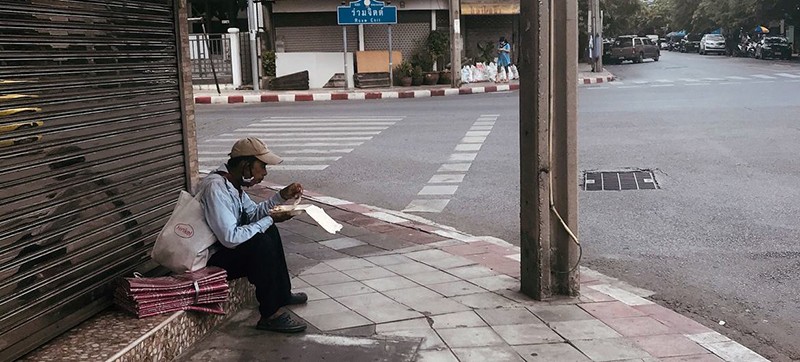
According to the World Social Report 2025 launched on Thursday, the sobering sentiment indicates a widespread lack of confidence in the future.
Despite people living longer, being better educated and more connected than ever before, many believe that life today is worse than it was 50 years ago.
Close to 60 per cent of people surveyed on life satisfaction reported that they were “struggling” with a further 12 per cent describing themselves as “suffering”, the report notes.
Financial insecurity everywhere
According to the report, economic instability is no longer limited to the world’s poorest regions.
Even in high-income countries, rising job uncertainty, gig work and the digital transition are contributing to this trend.
These jobs may offer flexibility but often come at the cost of security and rights – reducing workers to mere service providers in a commodified labour market.
The insecurities are further compounded by an alarming rise in informal employment. In many low and middle-income countries, jobs with no safety net remains the norm, locking workers into cycles of low pay, instability, and zero benefits.
Even those who manage to enter formal employment face significant risks of being pushed back into the informal sector, especially during downturns.
For over 2.8 billion people living on less than $6.85 a day – the threshold for extreme poverty – “even a small shock can send people into extreme poverty and any escapes from poverty are often temporary,” the report warns.
The situation is further complicated by rising climate change impacts and worsening conflicts, further undermining local economies and deepening inequality, especially in the developing world.
Collapse of trust
As financial pressures mount and stability erodes, public confidence in institutions – and in one another – has also taken a severe hit, particularly among young people.
Over half the world’s population (57 per cent) now expresses low levels of confidence in government. Among those born in the 21st century, trust levels are even lower – raising concerns about long-term civic disengagement and political instability.
People’s trust in one another is also eroding. Fewer than 30 per cent of people in countries with available data believe that most others can be trusted, undermining social cohesion and complicating efforts for collective action.
“The spread of misinformation and disinformation, facilitated by digital technologies, is reinforcing divisions and fuelling distrust,” the report says, warning of abuse and misuse of digital platforms and social media to spread deceit and hate speech, and stoke conflicts.
“Often, users find themselves immersed in virtual and siloed ‘echo chambers’ where they are exposed to news and opinions that align with and may even radicalize their views.”
Platform algorithms facilitate the creation of such echo chambers and reward more extreme content and engagement with higher visibility, the report adds.
Time for bold policies
To reverse these damaging trends, the report calls for a bold shift in policymaking – one grounded in equity, economic security and solidarity.
It urges governments to invest more in people through expanding access to quality public services – such as education, healthcare, housing and robust social protection systems.
These investments are not discretionary, the report stresses, but essential to promote resilience and inclusive growth.
It also highlights the need to rebuild trust through inclusive and accountable institutions. At the same time, power and wealth needs to become less concentrated at the very top of society.
Collective solutions
As momentum builds toward the Second World Summit for Social Development, which will be held in Doha in November, global leadership will be key to driving transformative change.
UN Secretary-General António Guterres stressed the need for unity and decisive action in a foreword to the report.
“The global challenges we face demand collective solutions,” he wrote.
“Now more than ever, we must strengthen our resolve to come together and build a world that is more just, secure, resilient and united for each and every one of us.”
New UN report warns fear of job loss or struggle to find work is surging worldwide
Billions of people around the world are living in fear of job loss or struggling to find work, as economic instability, conflict, and climate shocks combine to erode global security, a new UN report has warned.
IBNS
•