
According to Pakistan's leading newspaper Dawn, sources in the Ministry of National Heritage and Culture said UNESCO conveyed the warning during a recent meeting with senior government officials.
The agency reportedly reminded Pakistan that it had previously removed a World Heritage Site in Germany from its prestigious list and would not hesitate to take similar action against Taxila if the "unnecessary interventions" compromising the site's integrity and authenticity were not reversed.
The controversy first surfaced in March after a third party shared photographs and information with Pakistan's Permanent Delegate to UNESCO in Paris, highlighting reconstruction work carried out by the Punjab Archaeology Department at the Mohra Moradu Buddhist monastery and the ancient city of Sirkap.
The complaint alleged that the newly constructed sections could undermine the authenticity and integrity of the archaeological remains. Photographs reviewed by Dawn reportedly showed fresh masonry replacing portions of ancient walls.
What is Taxila?
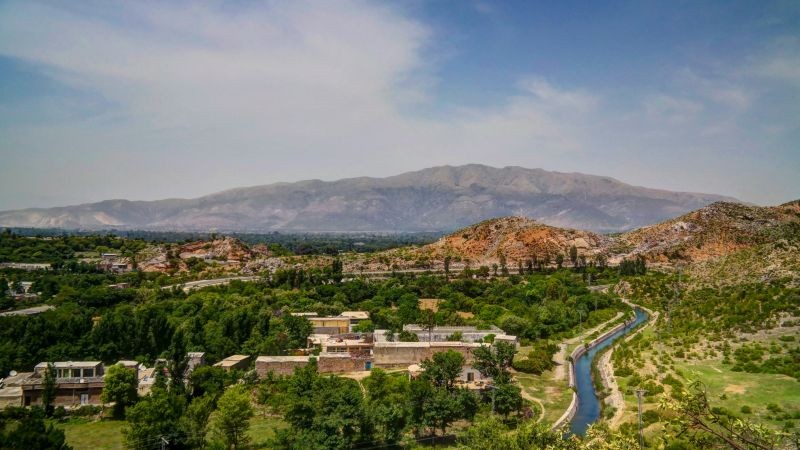
According to UNESCO, Taxila, located in Pakistan's Rawalpindi district of Punjab province, is a vast archaeological complex comprising a Mesolithic cave, the remains of four ancient settlement sites, Buddhist monasteries, and a Muslim mosque and madrassa.
Strategically situated on a branch of the Silk Road connecting China with the West, Taxila flourished between the 1st and 5th centuries CE. Today, it is regarded as one of Asia's most significant archaeological sites and remains a major symbol of the region's ancient cultural and religious heritage.
UNESCO seeks detailed documentation
Amid the controversy, a joint technical mission comprising officials from UNESCO, Pakistan's Department of Archaeology and Museums (DOAM), and the Ministry of National Heritage and Culture visited the Taxila Museum and surrounding heritage sites on June 12, Dawn reported.
During the visit, the Punjab Archaeology Department reportedly made a presentation defending the restoration work carried out at the sites.
UNESCO has since requested detailed documentation relating to the conservation and restoration efforts at Mohra Moradu and Sirkap. According to Dawn, the agency sought heritage impact assessment reports, comprehensive photographic records of the archaeological structures before and after restoration, and technical drawings of the proposed interventions within both the core and buffer zones of Mohra Moradu.
"The Punjab Archaeology Department has not responded yet," an official told Dawn.
The official added that using cement and reconstructing walls at World Heritage sites constitutes a serious violation of UNESCO's conservation guidelines for archaeological monuments.
"This weakens Pakistan's position, which has been seeking UNESCO World Heritage recognition for 24 additional historical sites since 1997," the official said.
Punjab archaeology department Director General Malik Zaheer Abbas said that characterising the ongoing work at Sirkap and Mohra Moradu as “reconstruction” was not accurate.
“The interventions being undertaken are conservation measures based on internationally accepted conservation principles, with the primary objective of stabilising vulnerable archaeological remains, preventing further deterioration, and preserving the authenticity and integrity of these World Heritage properties,” the senior official told Dawn News.