
In a statement, the Union Ministry of Environment, Forest and Climate Change (MoEF&CC) said it has issued directions to all concerned states to impose an immediate prohibition on new mining leases in the Aravallis, describing the move as a major step towards conservation of one of India’s oldest mountain systems.
The ban applies uniformly across the entire Aravalli landscape, stretching from Delhi and the National Capital Region (NCR) to Gujarat, and is aimed at preserving the geological and ecological integrity of the range.
The government said the directions are intended to curb illegal and unregulated mining and safeguard the Aravallis as a continuous ridge acting as a natural barrier against desertification.
The decision follows the Supreme Court’s November 20 order in the long-running TN Godavarman Thirumulpad vs Union of India case, in which the court directed that no new mining leases be granted until a comprehensive Management Plan for Sustainable Mining (MPSM) is finalised.
The plan is to be prepared by the MoEF&CC through the Indian Council of Forestry Research and Education (ICFRE).
As part of the latest directive, the Centre has also asked ICFRE to identify additional areas across the Aravalli range where mining should be prohibited, over and above zones already under restriction.
These areas are to be identified based on ecological sensitivity, geological features and landscape-level considerations.
For mines that are already operational, the MoEF&CC said state governments must ensure strict compliance with environmental safeguards and adhere fully to the Supreme Court’s directions.
Existing mining activities will be subject to stringent regulation to ensure sustainability, the ministry said.
The Supreme Court, while recognising the Aravallis’ critical role as a “green barrier” against the eastward spread of the Thar desert, had rejected a blanket ban on mining across the range, warning that such a move could encourage illegal operations.
Instead, it called for a science-based management plan, modelled on conservation frameworks used in other fragile ecosystems such as Saranda forests in Jharkhand.
The Centre’s announcement comes amid heightened public concern and social media campaigns alleging that the court-approved scientific definition of the Aravalli hills, based on elevation and clustering criteria, could leave large parts of the range vulnerable to mining.
Environmental groups and Opposition parties have argued that the definition excludes smaller hillocks that play a crucial role in ecological connectivity and groundwater recharge.
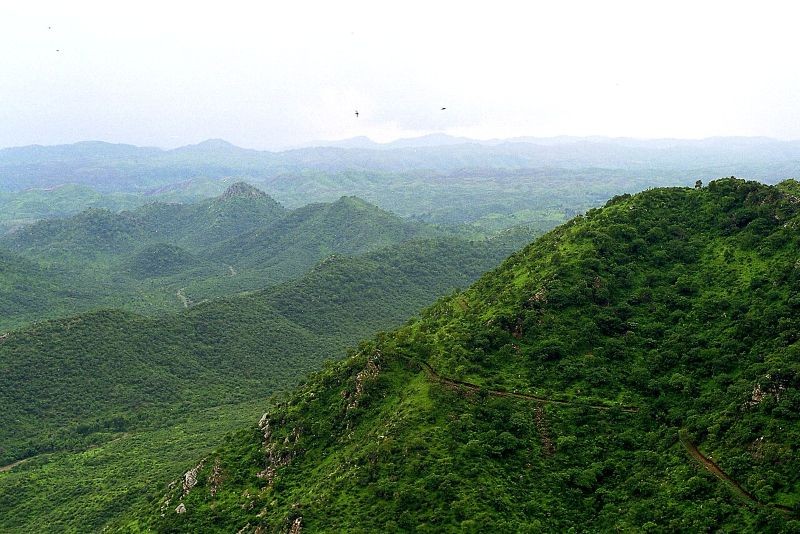
The Aravallis, among the world’s oldest mountain ranges, run through Delhi, Haryana, Rajasthan and Gujarat, and are considered vital for biodiversity conservation, groundwater replenishment and climate resilience in northwestern India.