
The researchers identified ECG recordings containing extra heart beats which are usually benign but, if they occur frequently, are linked to conditions such as heart failure and arrhythmia (irregular heartbeats).
They found that people with an extra beat in this short recording (one in 25 of the total) had a twofold risk of developing heart failure or an irregular heart rhythm (atrial fibrillation) over the next 10 years.
The ECG recordings analysed were from people aged 50 to 70 who had no known cardiovascular disease at the time.
Heart failure is a situation where the heart pump is weakened. It cannot often be treated.
Atrial fibrillation happens when abnormal electrical impulses suddenly start firing in the top chambers of the heart (atria) causing an irregular and often abnormally fast heart rate.
It can be life-limiting, causing problems including dizziness, shortness of breath and tiredness, and is linked to a fivefold increased risk in stroke.
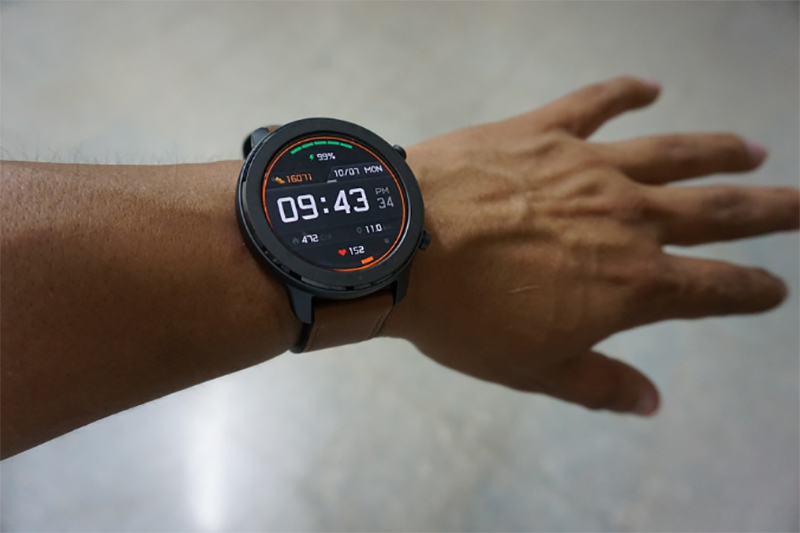
Lead author Dr Michele Orini (UCL Institute of Cardiovascular Science) said: “Our study suggests that ECGs from consumer-grade wearable devices may help with detecting and preventing future heart disease.
“The next step is to investigate how screening people using wearables might best work in practice.
“Such screening could potentially be combined with the use of artificial intelligence and other computer tools to quickly identify the ECGs indicating higher risk, as we did in our study, leading to a more accurate assessment of risk in the population and helping to reduce the burden of these diseases.”
Senior author Professor Pier D. Lambiase (UCL Institute of Cardiovascular Science and Barts Heart Centre, Barts NHS Health Trust) said: “Being able to identify people at risk of heart failure and arrhythmia at an early stage would mean we could assess higher-risk cases more effectively and help to prevent cases by starting treatment early and providing lifestyle advice about the importance of regular, moderate exercise and diet.”
In an ECG, sensors attached to the skin are used to detect the electrical signals produced by the heart each time it beats. In clinical settings, at least 10 sensors are placed around the body and the recordings are looked at by a specialist doctor to see if there are signs of a possible problem. Consumer-grade wearable devices rely on two sensors (single-lead) embedded in a single device and are less cumbersome as a result but may be less accurate.
For the new paper, the research team used machine learning and an automated computer tool to identify recordings with extra beats. These extra beats were classed as either premature ventricular contractions (PVCs), coming from the lower chambers of the heart, or premature atrial contractions (PACs), coming from the upper chambers.
The recordings identified as having extra beats, and some recordings that were not judged to have extra beats, were then reviewed by two experts to ensure the classification was correct.
The researchers first looked at data from 54,016 participants of the UK Biobank project with a median age of 58, whose health was tracked for an average of 11.5 years after their ECG was recorded. They then looked at a second group of 29,324 participants, with a median age of 64, who were followed up for 3.5 years.
After adjusting for potentially confounding factors such as age and medication use, the researchers found that an extra beat coming from the lower chambers of the heart was linked to a twofold increase in later heart failure, while an extra beat from the top chambers (atria) was linked to a twofold increase in cases of atrial fibrillation.
The study involved researchers at UCL Institute of Cardiovascular Science, the MRC Unit for Lifelong Health and Ageing at UCL, Barts Heart Centre (Barts Health NHS Trust) and Queen Mary University of London. It was supported by the Medical Research Council and the British Heart Foundation, as well as the NIHR Barts Biomedical Research Centre.