
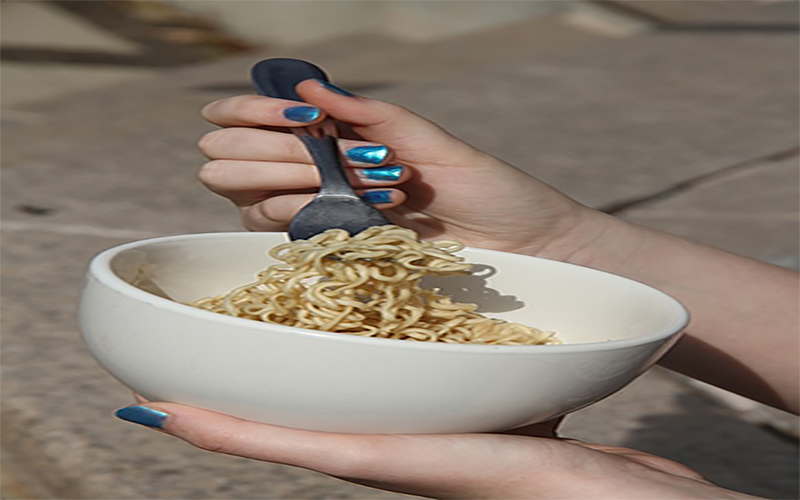
The research team at UChicago Medicine’s Burn Center, which cares for both adults and children, reviewed the cases of all pediatric patients who were admitted with scald injuries caused by hot liquids between 2010 and 2020.
Data collected included patient demographics, medical history, length of hospital stay, complications and procedures performed, among other metrics.
“Anecdotally, it felt like every other child we were consulted on for a burn was injured by instant noodles, so we wanted to dive into the data to see what the trend really was,” said senior author Sebastian Vrouwe, assistant professor of surgery at UChicago Medicine. “Our hope is to develop the groundwork for future burn prevention programming, as essentially all childhood burns are in some way preventable.”
Of the 790 total cases reviewed by the team, 31% were attributed to instant noodles.
Instant noodles, which contain starchy liquid among their solid components, have been shown to lead to different patterns of burns than hot water alone. While slightly less severe than some other types of scald burns, instant noodle injuries are still dangerous and can lead to hospitalizations. Sometimes the burns can require surgery, including skin grafting.
“We were surprised by the sheer magnitude of the problem, which confirmed that focused effort and awareness on these types of burns could have a significant impact in the communities that our burn center serves,” said Vrouwe.
Despite prevention initiatives and caregiver education, an estimated 100,000 children in the United States each year suffer scald burns from food and beverages alone.
Unsupervised children faced higher risk: 40% of instant noodle burns occurred when children were reported to be alone during the time of injury.
“Direct caregiver supervision is one important step in burn prevention,” said Vrouwe. “The amount of heat contained in these noodles can easily cause second- and third-degree burns in anyone, but young children are particularly vulnerable due to their relatively smaller bodies and thinner skin.”
Black/African American children and children who lived in areas with lower Childhood Opportunity Index scores were more likely to suffer these scald burns than their peers.
Even though the study only examined data from the South Side academic health system, researchers believe the statistics speak to a larger national issue given the prevalence of instant noodles, which are a low-cost, easy-to-prepare food.
While the UChicago Medicine study itself did not explore exact circumstances of instant noodle burn injuries, Vrouwe said the burn team has observed common patterns such as inadvertent spills when removing containers from the microwave, along with spills while eating due to the narrow bases of instant noodle cups.
“Our hope is to develop the groundwork for future burn prevention programming, as essentially all childhood burns are in some way preventable.”
Vrouwe hopes that raising awareness will encourage more primary care providers to discuss burn prevention in the home, advocating for simple measures that can help keep kids safe.
“Lowering hot water heaters to 120 degrees Fahrenheit is one established way to prevent burns in the home. If these reminders come from a trusted source, such as a child’s pediatrician, we feel this might change behaviors over time and reduce the probability of sustaining burns,” he said.
In terms of preventing noodle burns, Vrouwe said caregivers should always have an adult remove noodles from the microwave and keep them out of reach until sufficiently cooled. Eating at a table, he said, is another way to reduce burn risk.