
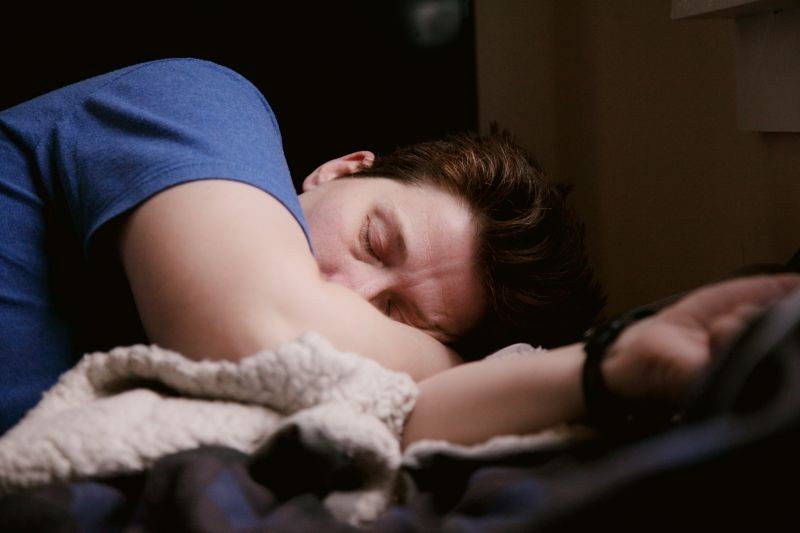
The study, published on Tuesday in the journal SLEEP Advances, suggests that insufficient sleep is strongly linked to shorter life expectancy, emerging as one of the most significant behavioral predictors of longevity — second only to smoking.
Researchers analysed a vast nationwide dataset, comparing county-level life expectancy figures with comprehensive survey data collected by the US Centers for Disease Control and Prevention (CDC) between 2019 and 2025.
The findings showed that sleep duration had a stronger association with life expectancy than diet, exercise or loneliness, surprising even the scientists involved.
“I didn’t expect it to be so strongly correlated to life expectancy,” said Andrew McHill, PhD, the study’s senior author and an associate professor at the OHSU School of Nursing, the OHSU School of Medicine, and OHSU’s Oregon Institute of Occupational Health Sciences. “We’ve always thought sleep is important, but this research really drives that point home.”
McHill stressed that people should aim for seven to nine hours of sleep per night, if possible — the amount recommended by the American Academy of Sleep Medicine and the Sleep Research Society.
The research was conducted primarily by graduate students at OHSU’s Sleep, Chronobiology and Health Laboratory, who found that the impact of insufficient sleep outweighed diet and exercise as a predictor of life expectancy.
“It’s intuitive and makes sense, but it was still striking to see how strongly it showed up in all of our models,” McHill said. “Even as a sleep physiologist, the strength of the association was remarkable.”
While earlier studies have linked sleep deprivation to higher mortality risk, this research is the first to demonstrate consistent year-to-year correlations between sleep sufficiency and life expectancy across every US state.
For the analysis, the CDC defined sufficient sleep as at least seven hours per night. Researchers observed clear correlations in nearly all states and across each year studied.
Although the study did not explore the biological mechanisms behind the link, McHill noted that sleep plays a critical role in cardiovascular health, immune function and brain performance.
“This research shows we need to prioritise sleep just as much as what we eat or how we exercise,” he said. “We often treat sleep as something we can postpone or catch up on later.”
“Getting a good night’s sleep doesn’t just improve how you feel,” McHill added. “It may also help determine how long you live.”