
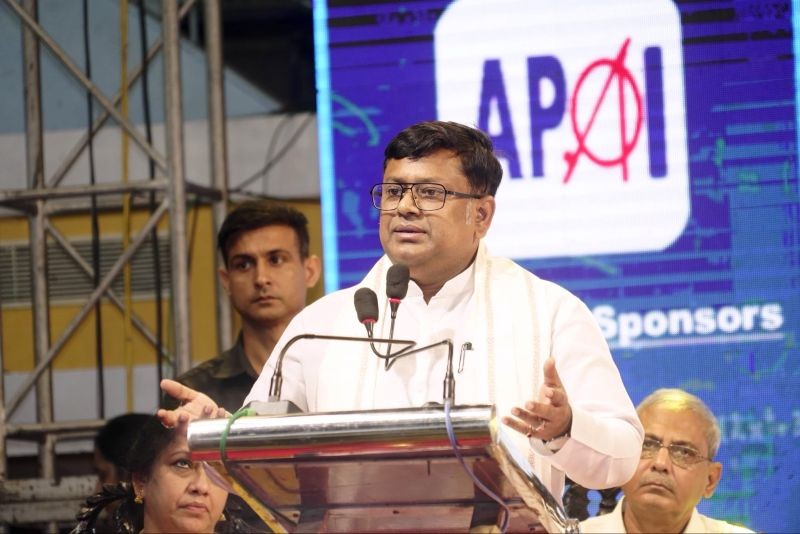
The Association of Professional Academic Institutions, West Bengal (APAI,WB) on Friday organised an education fair bringing together students, parents, educators and policymakers to discuss the changing landscape of higher education and career opportunities.
Majumdar said, "To realise the vision of Viksit Bharat, India's schools, colleges and universities must become globally competitive. Institutions like APAI, are playing an important role by strengthening quality higher education, fostering innovation and preparing our youth to compete with the best."
The exposition reflected a shift that India's education system has been steadily embracing.
As universities move towards multidisciplinary learning and industry-oriented curricula, the conversation is gradually moving beyond conventional degrees to one centred on employability, innovation and lifelong learning.
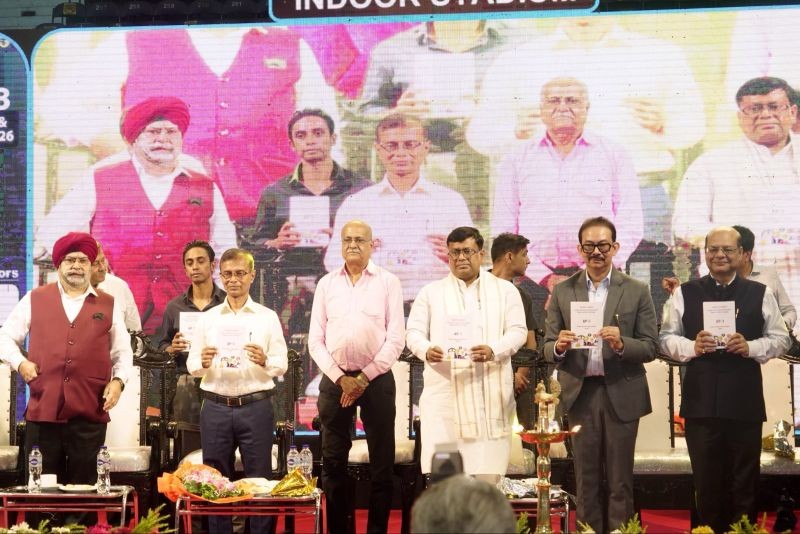 Photo: Sukanta Majumdar/X
Sardar Taranjit Singh, president of Association of Professional Academic Institutions, West Bengal, said, "Choosing the right academic pathway lays the foundation for a successful future.
"Through the APAI,WB Pre-Counselling & Education Fair, we aim to equip students and parents with credible information, expert guidance and the confidence to make well-informed decisions about higher education and career opportunities."
Among the changes shaping this transition, is the growing emphasis on experiential education and flexible academic pathways.
From the introduction of the Academic Bank of Credits to increasing opportunities for interdisciplinary study, students are being encouraged to build educational journeys that are both personalised and aligned with the demands of an evolving global workforce.
Satyam Roychowdhury, general secretary of Association of Professional Academic Institutions, West Bengal, said, "Every student deserves access to the right guidance before making one of the most important decisions of their life."
Self-financed universities and higher education institutions showcased programmes spanning engineering, technology, pharmacy, management, architecture, computer applications, hospitality management and several other industry-relevant disciplines, while highlighting research opportunities, innovation-driven learning and robust placement support.
(Reporting by Aaheli Chakraborty)