
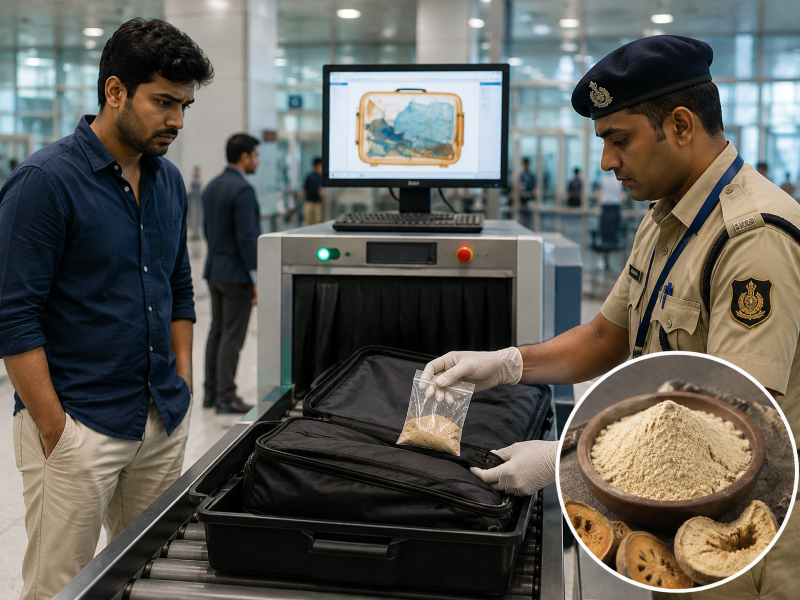
The incident dates back to 2010, when Ajay Singh arrived at Raja Bhoj Airport in Bhopal to board a flight to Delhi.
During a routine security screening, airport detection equipment flagged his luggage. Security personnel found a powdery substance inside the bag and suspected it to be a banned narcotic.
Relying on the machine alert, authorities took Ajay Singh into custody and booked him under serious narcotics-related charges.
Forensic test revealed it was amchur powder
Ajay Singh remained in jail for 57 days before a forensic examination confirmed that the substance was ordinary amchur powder — dried mango powder commonly used in cooking.
Following the report, he was released from custody.
16-year legal battle ends in relief
After his release, Ajay Singh approached the court, arguing that he had been wrongly imprisoned because of a flawed investigation and excessive reliance on machine-generated alerts.
After a legal battle spanning 16 years, the High Court ruled in his favour.
Forensic test revealed it was amchur powder
Ajay Singh remained in jail for 57 days before a forensic examination confirmed that the substance was ordinary amchur powder — dried mango powder commonly used in cooking.
Following the report, he was released from custody.
16-year legal battle ends in relief
After his release, Ajay Singh approached the court, arguing that he had been wrongly imprisoned because of a flawed investigation and excessive reliance on machine-generated alerts.
After a legal battle spanning 16 years, the High Court ruled in his favour.
A single-judge bench observed that keeping an innocent citizen behind bars for nearly two months amounted to a violation of his fundamental rights.
The court directed the Government of Madhya Pradesh and the concerned department to pay Rs 10 lakh as compensation.
Court questions blind reliance on machines
While delivering the verdict, the High Court raised concerns over investigative procedures and the unchecked dependence on technical systems.
Court questions blind reliance on machines
While delivering the verdict, the High Court raised concerns over investigative procedures and the unchecked dependence on technical systems.
The court noted that machines can make errors and said authorities cannot rely solely on automated alerts without conducting proper verification.
It further observed that flaws in systems or investigative processes should not result in innocent individuals losing their liberty.