
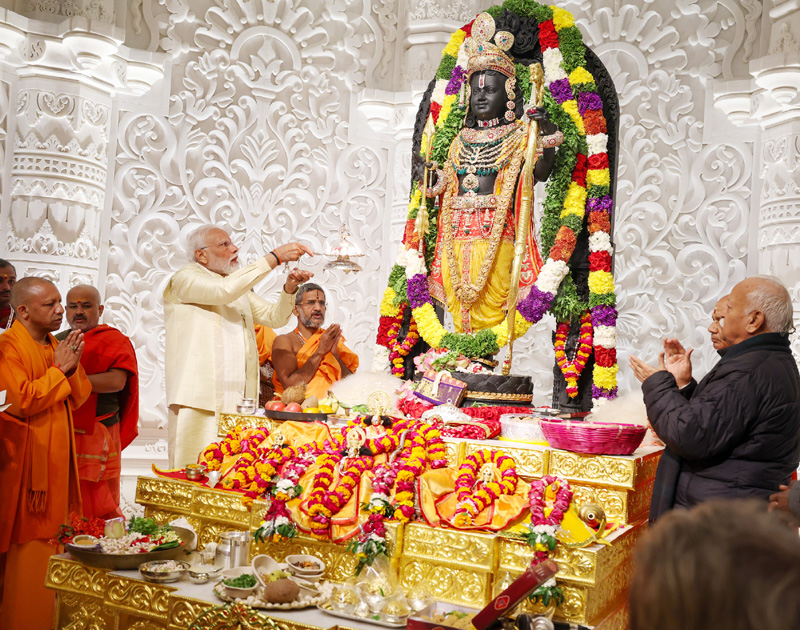
Celebrities joined Prime Minister Narendra Modi who participated in the consecration ceremony and led the country in the celebration on Monday.
Also Read: Ayodhya Ram Temple: Entry closed amid huge rush for darshan
At the centre of the consecration ceremony and the celebration was the Ram Lalla idol crafted by Mysore-based sculptor Arun Yogiraj.
Meanwhile, the Indian government has shared reasons that make the idol 'extraordinary'.
MyGovIndia, the citizen engagement platform of the Government of India, posted on X: "22 January marked a historic moment as PM @narendramodi performed the Pran Pratishtha of Ram Lalla in Ayodhya. Ever wondered what makes Ram Lalla's idol extraordinary? Discover the significance now."
22 January marked a historic moment as PM @narendramodi performed the Pran Pratishtha of Ram Lalla in Ayodhya.
— MyGovIndia (@mygovindia) January 24, 2024
Ever wondered what makes Ram Lalla's idol extraordinary?
Discover the significance now.#RamMandir #Ayodhya#JaiShriRam#ShriRamJanmbhoomi#RamMandirPranPratishtha pic.twitter.com/0C80GbWdfU
In the first tweet on the thread, the Indian government wrote in the firstpost: "Sunlight Blesses Ram Lalla's Idol on Ram Navami! Every Ram Navami at noon, mirrors and lenses systems align to focus sunlight on Ram Lalla's idol's forehead. An eco-friendly spectacle with no electricity or batteries needed."
Describing the idol as a 'timeless wonder', the government said the statue was carved from a 2.5 billion-year-old black granite rock.
The special black granite was brought from Karnataka.
Giving details about the crown which the deity is wearing, the Indian government's post said: "Facts about Ram Lalla's crown or ‘mukut’ are fashioned from yellow gold, Weighs ~1.7 kilos, Adorned with 75 carats of diamonds, and the Sun at the center symbolizes the Suryavanshi logo."
"Ram Lalla's tilak boasts a central 3-carat natural diamond, surrounded by smaller diamonds totaling approximately 10 carats. Natural Burmese rubies are used to adorn the Ajana Chakra," the post said about the tilak.