
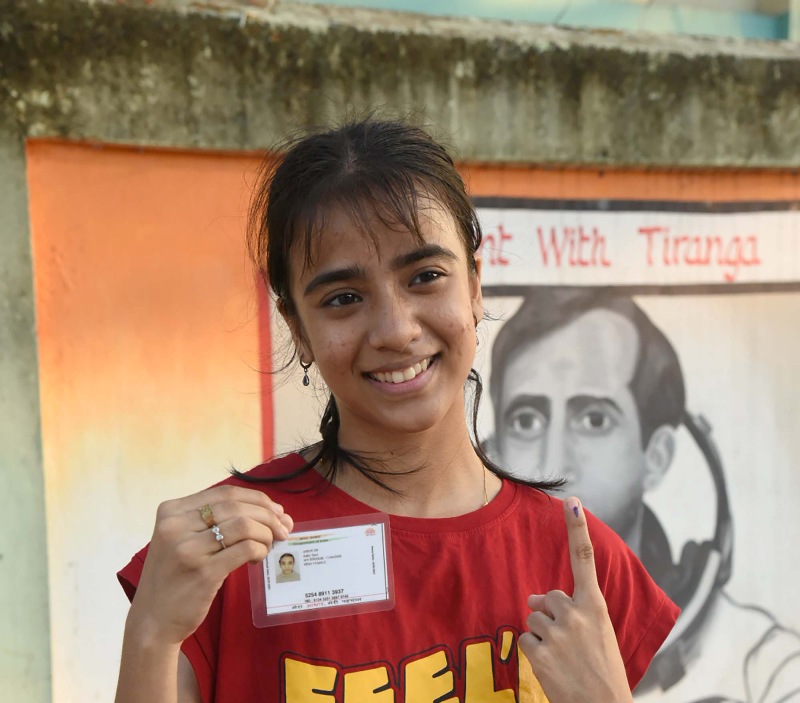
While domestic issues largely dominate the electoral milieu, the last two elections have also included foreign policy as a strong variable.
Over the last decade, India's stature has grown not only in Asia but in the world as India's interests have a greater influence on the functioning of the international order.
This was evident in India's G-20 presidency where it emerged as a leader of the Global South and an indispensable power in negotiating a global consensus of issues of critical concern.
As a consequence, Indian elections are closely watched by the great powers, particularly the policy circles in Washington which have not shied away from commenting on India's domestic political affairs.
In March 2024, the State Department issued a strong statement following the arrest of Delhi's Chief Minister over corruption charges. The tenor of the statement appeared to admonish the Indian government and dictate how India's elections were to be held.
New Delhi was quick to react by summoning a senior American diplomat and directing the American establishment to refrain from commenting on Indian democracy. Foreign Affairs Minister S Jaishankar termed such statements unfortunate and called on the western nations to exercise restraint when commenting on their allies.
Such attitudes reveal a deep bias within Washington's policy circles and these biases remain unchanged for decades. While bilateral relations remain firm, the US has repeatedly questioned India's democratic record under Prime Minister Modi's leadership.
These grievances go back to 2015 when Modi was newly elected and welcomed President Obama to India. In their joint address, while Prime Minister Modi highlighted the strong foundation of bilateral relationship and called for the Indian diaspora to intensify its efforts to bolster US-India cooperation, President Obama expressed his concerns on India's ability to uphold its democratic traditions.
In the subsequent years, the United States Commission on International Religious Freedom issued alarming statements on the state of religious freedoms in India with an agenda to influence the domestic political trends.
These patterns reveal a dichotomous trend where, on the one hand the US defines India as a democratic country when it seeks allies to address threats from China and on the other hand, it makes disparaging remarks on India. Such a stance has a discouraging effect on bilateral ties.
Further, despite commitments by West-led alliances and the QUAD members towards sovereignty and rules based order, the attacks on Indian elections erode the international confidence in the West's sincerity.
While the State Department is busy criticizing American allies, it seems to overlook the grave human rights violations taking place in American Universities. Frustrated with Washington's doublespeak on the recent Israel-Palestine crisis, faculty members and students across America's leading universities organized mass protests.
In response, the authorities unleashed unforseen brutality, assaulting and detaining women and young students.
According to latest reports, around 700 students have been detained across universities in the US. Such incidents are a stark reminder that American domestic politics is beset with severe challenges and rather than shaming its allies in the times of elections, American policymaking needs to introspect its interventionary policies.
It turns out that the Western interference is more than notional.
Several Western countries, including the US are home to exiled members of terrorist organizations.
Nevertheless, rather than using its state institutions to call out American policies, New Delhi has conveyed its concerns in closed-door meetings and bilateral talks to prevent any misinterpretations or disinformation campaigns by inimical forces. Free and Fair elections constitute the bedrock of a healthy democracy but it is equally crucial for like-minded allies to avoid sensational comments that could potentially influence voters and run the risk of de-stabilizing bilateral ties.