
While Masood Azhar, the chief of Jaish-e-Mohammad, remains at large, his operational freedom has been severely curtailed.
Once able to function openly in Pakistan, Azhar is now believed to be in hiding, communicating only through sporadic audio messages.
India’s aggressive retaliation posture has effectively eroded Pakistan’s long-assumed status as a safe haven for anti-India terror outfits.
An attack that changed the rules
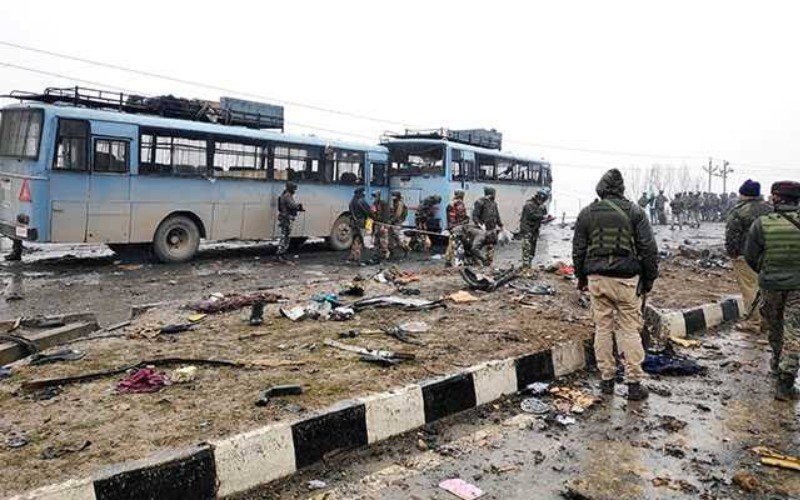
On February 14, 2019, a suicide bombing in Pulwama claimed the lives of 40 Central Reserve Police Force (CRPF) personnel.
The attack was carried out by 22-year-old Adil Ahmad Dar, a Jaish recruit, who rammed an explosive-laden SUV into a CRPF convoy.
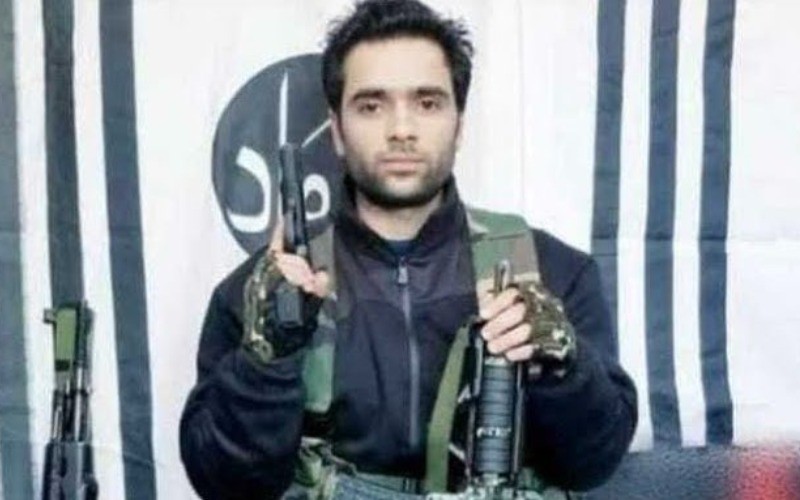 Adil Ahmad Dar, a 22-year-old Kashmir resident, was the suicide attacker of Pulwama. File photo
The scale and audacity of the bombing shocked the nation and triggered a fundamental reassessment of India’s counter-terror thresholds.
Military planners point out that the groundwork for this shift had already been laid after the Uri attack.
Pulwama, however, cemented the resolve to respond with overt and punitive force rather than strategic restraint.
From restraint to retaliation
Within days of the Pulwama bombing, the Indian Air Force carried out airstrikes on a Jaish training facility in Balakot, deep inside Pakistani territory.
The strike marked the first time since 1971 that Indian combat aircraft crossed the Line of Control (LoC) for a direct offensive, signalling a new doctrine of calibrated but unmistakable retaliation.
According to retired Lieutenant General RJ Reen, the attacks at Uri and Pulwama together underscored India’s willingness to strike back decisively, sending shockwaves through terror leadership structures operating from across the border.
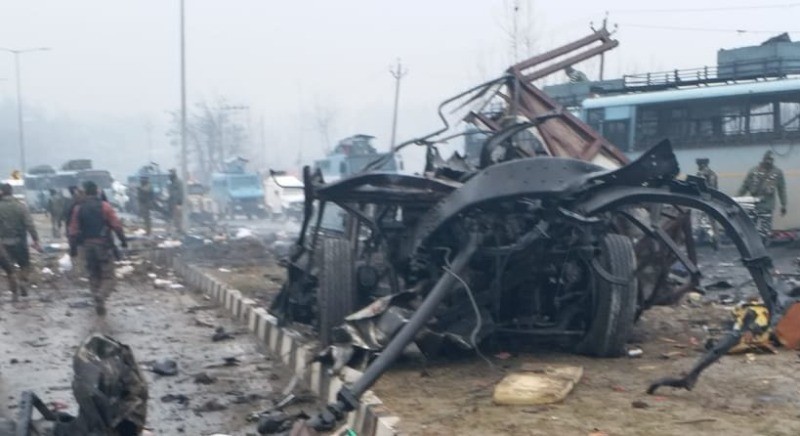 File photo
Escalation and expansion of the doctrine
India’s response did not remain limited to Balakot. Subsequent attacks, including the Pahalgam incident last year, prompted further military action.
Precision cruise missile strikes targeted Jaish headquarters in Bahawalpur and Lashkar-e-Taiba facilities in Muridke, reinforcing the message that attacks on Indian civilians or security forces would invite direct consequences.
These operations reportedly forced senior leaders of both Jaish and Lashkar into deeper concealment, disrupting command-and-control networks and limiting their ability to coordinate large-scale attacks.
Pulwama and the Kashmir reset
The Pulwama bombing also proved to be a political and administrative inflection point.
In the months that followed, Prime Minister Narendra Modi led the move to abrogate Article 370, ending Jammu and Kashmir’s special status.
The decision was framed as a step toward dismantling the terror-support and separatist ecosystem that had thrived for decades under the cover of political ambiguity.
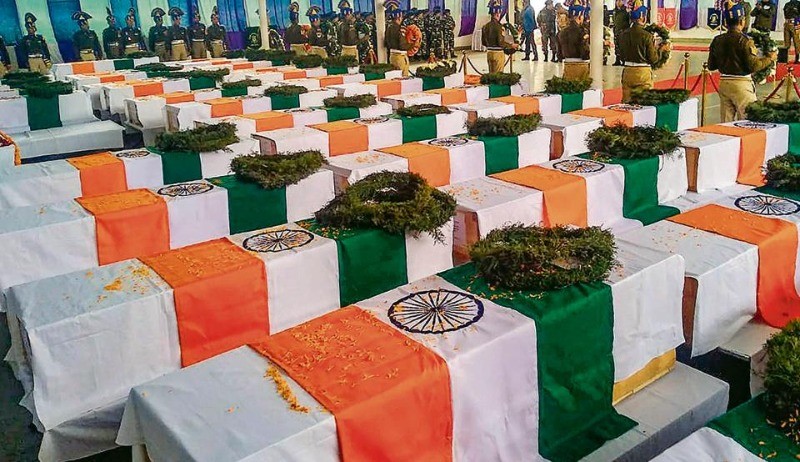 File photo
Inside the Pulwama conspiracy
Investigations revealed that the Pulwama attack was not an isolated act but a meticulously planned operation involving Masood Azhar, his brother Abdul Rauf Asghar, and at least 17 other conspirators, with logistical and ideological backing from Pakistan-based handlers.
Several key planners underwent training in Afghanistan, while a network of local overground workers in Kashmir provided shelter, reconnaissance, and supplies.
A central figure in the plot was Mohammad Umar Farooq, Azhar’s nephew and the son of hijacker Ibrahim Athar.
Trained in Afghanistan between 2016 and 2017, Farooq infiltrated India in April 2018 and assumed command of the Pulwama module, coordinating both Pakistani terrorists and local recruits.
NIA chargesheet and local network
The National Investigation Agency filed its chargesheet in 2020, around 18 months after the attack.
It detailed how Farooq, along with Pakistani operatives Kamran, Ismail and Qari Yasir, prepared the bombing with assistance from locals, including Sameer Dar and Adil Dar.
Others provided critical logistical support. Shakir Bashir conducted reconnaissance along the Jammu–Srinagar highway, while Insha Jan, Peer Tariq Ahmad Shah, and Bilal Ahmad Kuchey arranged safe houses.
Gelatin sticks were sourced locally, while RDX was smuggled in by Pakistani handlers.
A Maruti Eeco vehicle was procured specifically for the suicide attack, and aluminium powder was ordered to enhance the explosive’s lethality.
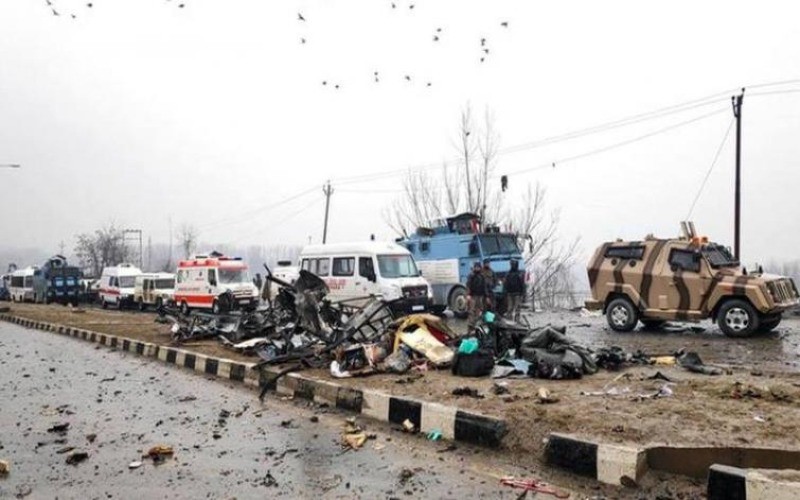 File photo
The mobile phone breakthrough
For investigators, the case initially appeared to have hit a dead end.
The turning point came from the recovery of two damaged mobile phones—an iPhone and a Samsung S9 Plus—belonging to Mohammad Umar Farooq, who was killed in an encounter days after the bombing.
Despite their condition, forensic analysis yielded critical data.
Images showed pre-attack preparations, including the explosive-laden vehicle parked at Shakir Bashir’s residence.
A selfie featuring three men with silver-coated faces led investigators to identify Idrees Bhai, establishing the first concrete link between key conspirators and the bomber.
Digital trails and confessions
Experts recovered multiple versions of Adil Dar’s propaganda video and photographs linking the terrorists to their local facilitators.
One image showed Insha Jan posing with Idrees Bhai and a firearm.
Initially in denial, she later admitted that she and her father were Jaish overground workers.
Further scrutiny of the video revealed a distinctive almirah and a sealed Amazon package.
Tracking the consignment number led investigators to Waiz-ul-Islam, who had purchased aluminium powder, batteries, and other components used in the IED.
Location-tagged videos pointing to a Jaish training camp in Afghanistan’s Helmand province provided additional confirmation of cross-border involvement.
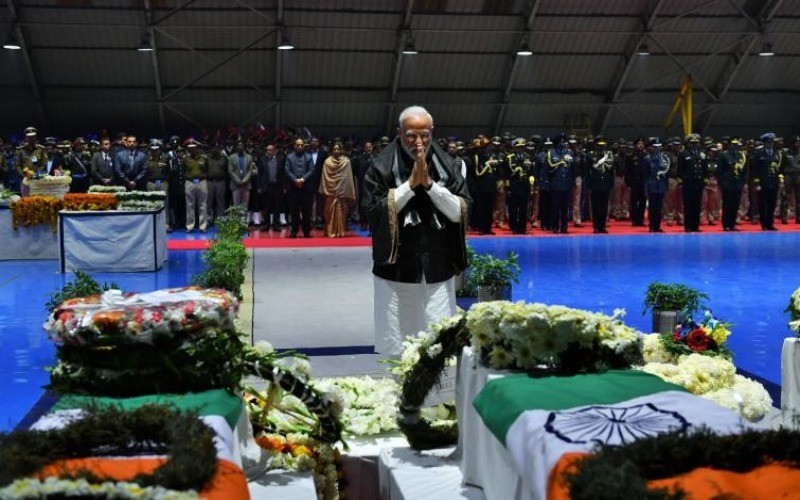 PM Narendra Modi pays tributes to martyrs of Pulwama attack. Photo: PIB
Cracking the case, redefining the response
The arrests of Bilal Kuchey, Waiz-ul-Islam, and Shakir Bashir ultimately helped the NIA piece together the full conspiracy.
Seven years on, Pulwama stands not only as a tragedy but as the catalyst for a far more assertive Indian counter-terror doctrine—one that has narrowed the operating space for terror groups and fundamentally altered the cost calculus for those who sponsor them.