
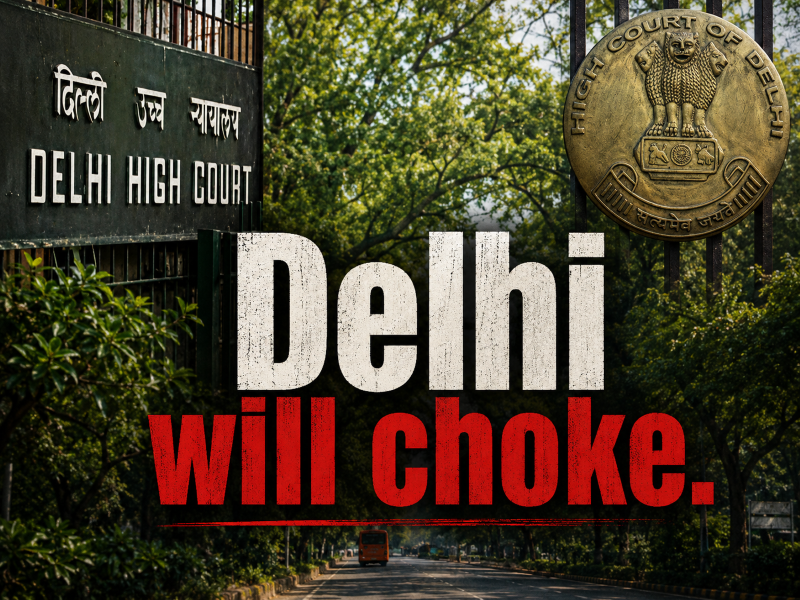
Hearing a petition filed by the IPA against an eviction notice, Justice Neena Bansal Krishna remarked that Delhi's open areas were already dwindling and questioned the impact of further construction in the New Delhi Municipal Council (NDMC) zone.
"Delhi will choke. God save us all if this is how you want Delhi to live," the court observed, highlighting concerns over environmental sustainability and urban congestion.
Eviction notice challenged by Indian Polo Association
The petition was filed after the IPA received an eviction notice for its grounds located opposite the prime minister's official residence. The Centre has said the land is required to strengthen defence infrastructure and serve other critical public security purposes.
During the hearing, the court questioned whether the government intended to replace green spaces with high-rise structures.
"We have a little breather in the NDMC area. It is also going away and all of us are going to suffocate and die," the court said.
The high court eventually disposed of the petition and directed the trial court to consider the IPA's plea seeking a stay on the eviction notice. The matter is expected to be heard on Wednesday.
Centre cites defence and public interest needs
Appearing for the Centre, advocate Ashish Dixit defended the government's decision, arguing that the land was required for public and defence-related purposes.
He told the court that central Delhi has limited available land, but government functions and strategic requirements must continue to operate from the area.
The IPA, established in 1892 and registered under the Societies Registration Act, is among the oldest sporting institutions in the country.
Gymkhana Club also faces government takeover
The Centre's move comes amid a similar dispute involving the historic Delhi Gymkhana Club.
In that case, the government argued that the land occupied by the club was needed to meet "urgent institutional needs, governance infrastructure, and public-interest projects", along with the resumption of adjoining government properties.
Founded in 1913 during the British era, the club is regarded as one of India's most prestigious social institutions and has traditionally served as a gathering place for senior bureaucrats, diplomats, military officers and prominent public figures.
Debate over heritage versus redevelopment
The dispute has reignited a broader debate over balancing security and infrastructure requirements with the preservation of heritage institutions and green spaces in the heart of the capital.
The court's remarks reflect growing concerns about the rapid loss of open areas in Delhi, particularly within Lutyens' Delhi, a zone known for its expansive avenues, gardens and low-density development that has historically acted as the city's environmental buffer.