
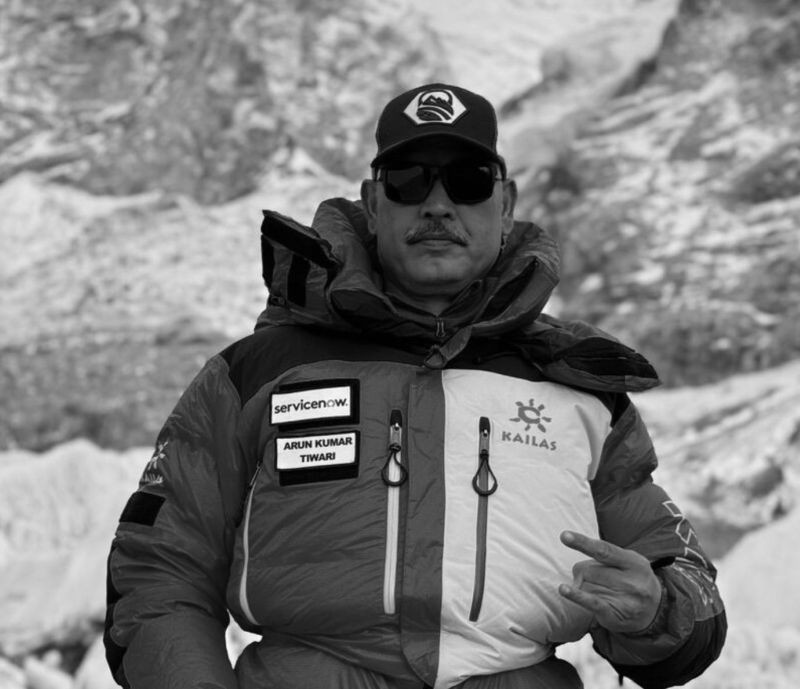
Tiwari, a 53-year-old tech professional and experienced climber from Telangana, reportedly fell ill near the Hillary Step, just below Everest’s summit, while descending after completing his climb.
According to Nepal-based expedition organiser Pioneer Adventures, he was being assisted by four Sherpa climbers at the time of his death.
'He is in Lord Shiva’s abode'
Speaking to PTI, Tiwari’s brother-in-law Sudhir Upadhyaya said the family believed it was appropriate to let him rest permanently on Everest.
“He is in Lord Shiva's abode. The process of bringing the body... it would have been very badly damaged by the time it reaches us. Such operations there are also not known to be successful,” he said.
Family members stressed that the decision was not solely based on the massive costs involved in retrieval missions, but also reflected what they believed Tiwari himself would have wanted as a climber deeply connected to the Himalayas.
Experienced climber had attempted Everest earlier
Tiwari was an accomplished mountaineer who had previously climbed peaks such as Mount Elbrus, Denali, and Aconcagua.
He had also attempted Everest in 2025 but turned back at around 7,200 metres after facing health concerns.
This year, he returned to complete what family members described as his lifelong dream.
He is survived by his wife and two daughters.
Another climber also died during expedition
Another climber, Sandeep Are, also died during the same Everest expedition after reportedly suffering snow blindness and severe exhaustion.
Unlike Tiwari, Are died near Camp III, which allowed Sherpa teams to bring his body down to Camp II for helicopter evacuation.
Why are Everest recovery missions so dangerous?
Recovering bodies from Everest is considered one of mountaineering’s most dangerous operations due to the extreme conditions in the “Death Zone” — areas above 8,000 metres where oxygen levels are critically low.
Near the summit, including the Hillary Step, rescuers face severe risks such as:
- Extreme exhaustion
- Frostbite
- Avalanches
- Altitude sickness
- Freezing temperatures
- Dangerous ice terrain
Recovery missions often require eight to twelve highly experienced Sherpas carrying oxygen cylinders and specialised equipment through steep, icy routes.
Such operations can take several days and reportedly cost over $75,000.
Because of these risks, many families choose to leave deceased climbers on the mountain rather than endanger additional lives during recovery attempts.