
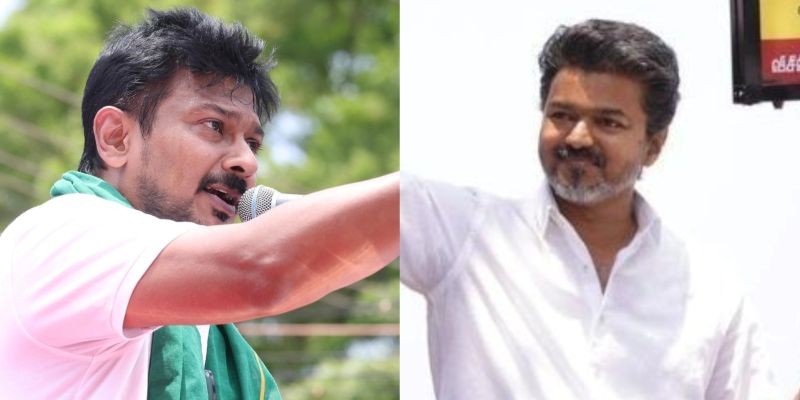
The two leaders traded barbs as Stalin questioned the state government's approach to preventing the construction of the dam, while Vijay defended his administration's handling of the issue.
Stalin questions government's stand
Raising the issue in the Assembly, Stalin accused the government of not doing enough to stop the Mekedatu dam project.
He also questioned why the Tamil Nadu government had not convened an all-party meeting, pointing out that Karnataka had held a similar meeting on the issue.
Vijay rejects demand for all-party meeting
Responding to the criticism, Vijay said his government would take all necessary steps to safeguard Tamil Nadu's interests and noted that the Assembly had already passed a resolution opposing the Mekedatu dam.
"There is no need to convene an all-party meeting. Please do not play politics on the Mekedatu dam issue," Vijay was quoted as saying by India Today.
Row over proposed Bengaluru visit
Stalin also criticised Vijay's reported plan to visit Bengaluru for talks with the Karnataka government.
"The government first leaked the Chief Minister's plan to visit Bengaluru. Later, when there was opposition, the Chief Minister denied it," Stalin was quoted as saying by NDTV.
According to reports, Vijay had planned to travel to Bengaluru to discuss the issue, but the visit was postponed at the request of Karnataka Chief Minister D.K. Shivakumar, who cited heightened tensions and protests surrounding the Cauvery dispute.
Shivakumar reportedly suggested that Vijay visit the drought-hit Cauvery basin at a later date.
'Ready to be humiliated for Tamil Nadu'
Defending his proposal to hold talks with Karnataka, Vijay said dialogue was necessary despite political criticism.
"When hostile countries are trying to solve issues through talks, I thought of having talks with our neighbouring state. Some asked what if we are humiliated out of such an attempt. Even if that happened, I am ready to get humiliated for the people of Tamil Nadu."
What is the Cauvery water dispute?
The Cauvery water dispute centres on the sharing of water from the Cauvery River, which originates in Karnataka's Kodagu district, flows through Tamil Nadu, and drains into the Bay of Bengal. The river is a vital source of drinking water, irrigation and hydroelectric power.
The conflict dates back to agreements signed in 1892 and 1924 between the princely state of Mysore (now Karnataka) and the Madras Presidency (now Tamil Nadu). Karnataka has long argued that these agreements disproportionately favoured Tamil Nadu.
Why does the dispute persist?
The key issues include:
- The allocation of Cauvery water, especially during years of deficient rainfall.
- Karnataka's demand for a larger share to meet the needs of its growing population and expanding agricultural sector.
- Tamil Nadu's insistence on receiving its allocated share to protect farmers in the Cauvery delta, who depend heavily on the river for irrigation.