
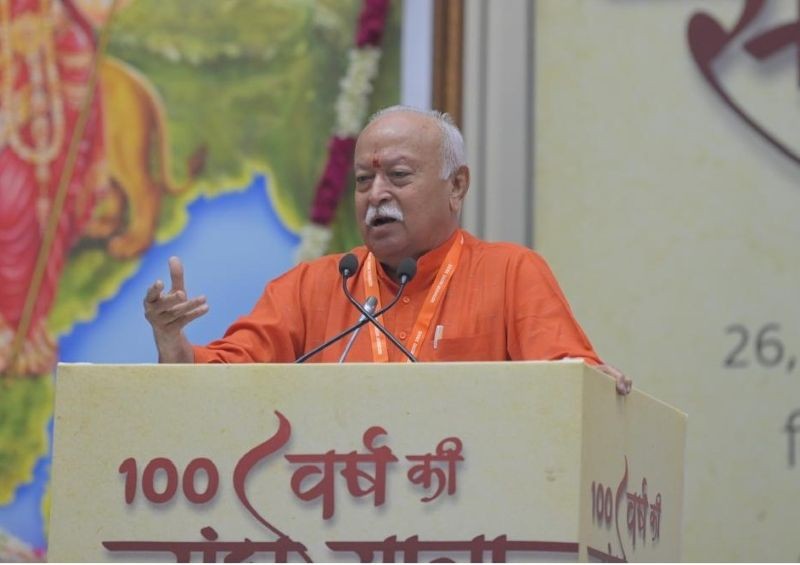
“Such things are politics… these gimmicks are made for those who are used to it,” Bhagwat said, adding that the RSS has long faced such criticism and is “used to it.”
RSS says it operates openly, not secretively
Bhagwat defended the organisation, stating that the RSS functions in the open and is not a secret body.
The RSS chief argued that many entities in India operate without formal registration and said the Hindu religion itself is not registered.
He also said that registration is typically required only for organisations seeking government funding, adding that the RSS does not fall into that category.
According to him, the government is already aware of the organisation’s existence and activities.
References to colonial era and legal history
Bhagwat noted that the RSS began during British rule as a public movement and has faced bans in the past, which were later lifted.
“The government banned us twice… and later the bans were lifted, once through court order and once through satyagraha,” he said, arguing that this history shows the state’s awareness of the organisation.
He also said the RSS had submitted its written constitution to authorities in the 1950s and has functioned openly for decades.
Priyank Kharge pushes for transparency in centenary year
Karnataka minister Priyank Kharge wrote the letter as the RSS marks its 100th year, questioning why an organisation with what he described as a large network of shakhas and mass participation should not be required to register and disclose details.
Dear Shri Mohan Bhagwat ji,
— Priyank Kharge / ಪ್ರಿಯಾಂಕ್ ಖರ್ಗೆ (@PriyankKharge) June 15, 2026
My letter will reach you shortly. However, I thought it was important to draw your attention to this matter early.
——————————-
Firstly, congratulations to the RSS on completing 100 years.
An organisation that claims over 60,000 shakhas and crores of… pic.twitter.com/IZy4oeKdMp
He argued that bodies such as NGOs, trusts, companies, and religious institutions are subject to legal compliance and asked why the RSS should be exempt.
Kharge also cited internal RSS reports on its scale of operations in Karnataka, including thousands of shakhas, events, and participants, saying the organisation should clarify its legal status, funding sources, taxation, and permissions for public activities.