
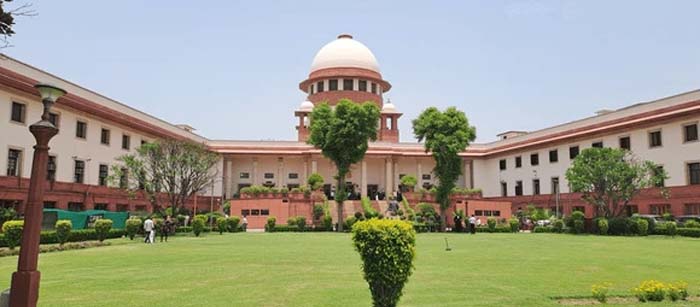
The Supreme Court on Tuesday (June 16, 2026) directed the Tripura State Election Commission (SEC) to conduct the long-pending elections to the village committees under the Tripura Tribal Areas Autonomous District Council (TTAADC) in a single phase on September 27, making it clear that no further extension of the election schedule would be allowed.
A Bench comprising Justices Joymalya Bagchi and Vipul M. Pancholi passed the order after the SEC informed the court that it was prepared to complete the entire electoral process in a single phase.
Appearing for the Election Commission, Attorney General R. Venkataramani submitted that a one-phase election would ensure smoother conduct of the polls and eliminate the need for additional deployment of Central paramilitary forces, as local security arrangements would be sufficient to maintain law and order.
Solicitor General Tushar Mehta, representing the Tripura government, supported the proposal, stating that the law-and-order situation would likely improve by September. He also noted that a single-phase election would be more practical in view of security considerations.
Agreeing with the submissions, the Bench observed that conducting the polls in one phase would reduce the burden on security personnel and facilitate the timely completion of the electoral process.
The court was hearing a petition filed by Tipra Motha founder and former royal scion Pradyot Kishore Debbarma, who alleged that the authorities had failed to hold village committee elections within the period mandated by law. According to the petition, the last elections were held in 2016, while the tenure of the village committees expired on March 7, 2021.
Under the Tripura Tribal Areas Autonomous District Council (Establishment of Village Committee) Act, 1994, fresh elections are required to be conducted before the completion of a committee’s five-year term.
Earlier, the Supreme Court had sought details from the Election Commission regarding the feasibility of holding the elections in multiple phases. In response, the Commission submitted an affidavit outlining the security requirements for both single-phase and multi-phase polling.
Taking note of the affidavit and the consensus among all parties, the court directed that the elections be conducted according to the proposed single-phase schedule.
The Bench further instructed all concerned authorities to strictly adhere to the timeline and ensure that the election process is completed without any further delay.
In his petition, Debbarma highlighted that the Tripura High Court had already ruled in July 2022 that the village committee elections were overdue and had directed the authorities to hold them. However, he alleged that the order remained unimplemented, affecting grassroots governance and delaying development initiatives in tribal areas.
The TTAADC, which covers nearly 70 percent of Tripura’s geographical area, is home to 19 indigenous tribal communities and functions through 587 village committees. Elections to these committees were due in 2021 but were postponed due to the COVID-19 pandemic. Since then, their functioning has been overseen by an administrator appointed under the Governor’s supervision.
*With Agency Inputs