
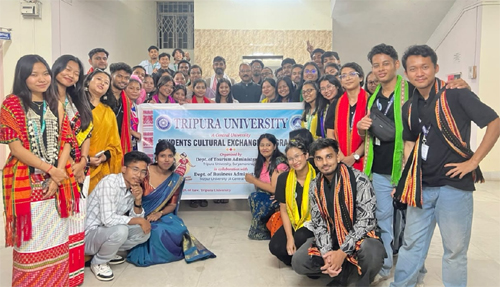
Strengthening academic engagement and promoting cultural understanding among students in the Northeast, Tripura University, in collaboration with Tezpur University, organised a Students’ Cultural Exchange and Cultural Immersion Programme, bringing together students and faculty members from the two institutions.
Tripura University Vice-Chancellor Professor Debabrata Das attended the programme, which focused on cultural interaction, academic exchange and the tourism potential of Tripura and Assam. The initiative was organised by the Department of Tourism Administration, Tripura University, under the leadership of Dr Kushal Singh, Head-in-Charge of the department.
The programme was designed to provide students with an opportunity to experience the cultural traditions and academic environments of another northeastern university. It also aimed to strengthen institutional relations and encourage greater interaction among students and faculty members.
Professor Das’s participation highlighted the university's emphasis on promoting academic collaboration and providing students with opportunities for learning beyond the classroom. The initiative brought cultural immersion and academic engagement together, with a focus on the shared regional interests of the Northeast.
As part of the programme, students from Tezpur University visited the Tripura University campus and its major academic facilities. The guided visit was followed by interactive sessions during which students and faculty members from both institutions introduced themselves and exchanged information about their universities, academic activities and campus experiences.
Cultural performances formed a key part of the exchange. Students of Tripura University's Department of Tourism Administration presented the traditional Mog Dance and other folk dances of Tripura, showcasing the state's distinctive cultural heritage.
Students from Tezpur University presented the Bihu Dance, reflecting Assam's vibrant folk traditions. The performances brought together the cultural expressions of the two neighbouring states and provided students with an opportunity to understand and appreciate each other's traditions
The cultural segment also highlighted the importance of preserving indigenous art forms and promoting awareness of the region's diverse cultural identities. By presenting their respective traditions, students were able to share aspects of their cultural backgrounds while developing a broader understanding of the Northeast.
Tourism prospects and sustainable tourism development in Tripura and Assam were among the principal subjects of the academic sessions. Students from both universities made presentations highlighting the natural attractions, historical resources and cultural assets of their respective states.
The discussions focused on the potential of the Northeast as a tourism destination and the need to develop the sector without compromising its ecological and cultural resources. Participants highlighted the importance of responsible tourism practices, environmental conservation and the involvement of local communities in tourism-related activities.
Tourism was also discussed in the context of employment generation, local entrepreneurship and regional economic development. The presentations examined how the region's natural landscapes, indigenous traditions and cultural heritage could contribute to a sustainable tourism economy.
The academic interaction offered students an opportunity to compare the tourism opportunities and challenges in Tripura and Assam. It also brought attention to the need for a balanced approach that combines infrastructure development with the protection of local traditions and natural resources.
Faculty members, including Dr Abhirupa Roy, Juwel Ghosh and Dr Rashmi Ranjan Choudhury, among others, participated in the programme. Their involvement contributed to the academic discussions and cultural interactions between the two institutions.
The programme concluded with an exchange of mementoes between the participating institutions, followed by a group photograph of students and faculty members.
The organisers expressed the expectation that the initiative would lead to stronger academic, cultural and institutional cooperation between Tripura University and Tezpur University. Further exchanges could provide opportunities for collaborative academic activities and sustained interaction among students and faculty members.
The programme also underlined the role of universities in promoting regional cooperation through education and cultural engagement. In a region characterised by diverse ethnic communities, languages and traditions, such initiatives can help students develop a broader understanding of neighbouring states and their shared concerns.
By combining cultural performances, campus exposure and discussions on sustainable tourism, the exchange sought to connect academic learning with the cultural and developmental priorities of the Northeast.