
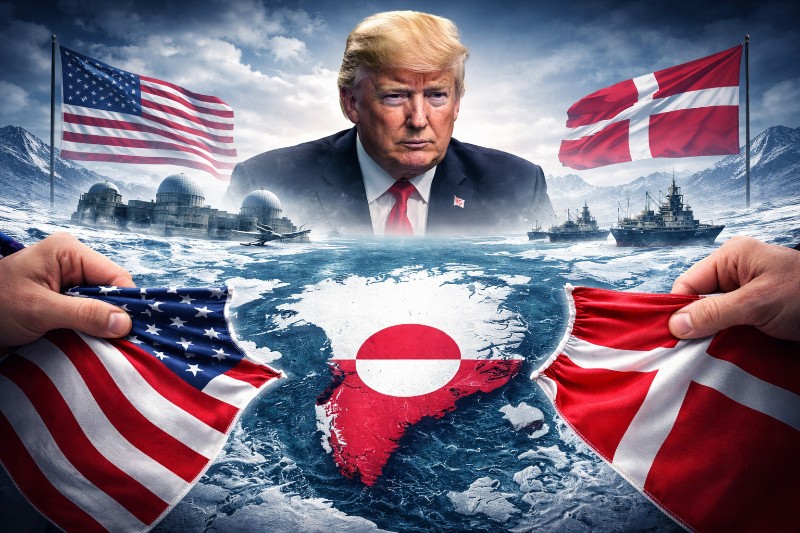
What was once a domestic debate between Greenland and Denmark is now unfolding on a global stage, creating fresh dilemmas for Greenlandic leaders and exposing historical fault lines.
Trump’s past suggestion of acquiring Greenland, revived during his current political comeback, has transformed the independence movement into what analysts describe as a strategic trap.
Greenland now finds itself balancing pressure from its former colonial ruler, Denmark, while confronting the ambitions of a far more powerful external player.
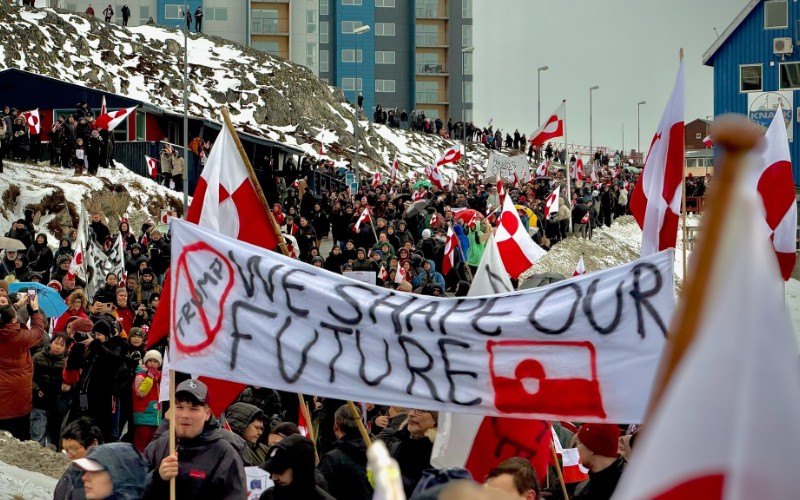 Photo: Facebook/@Jensfrederiknielsendemokraatit
Two narratives shape Greenland-Denmark relations
Greenland’s relationship with Denmark is defined by two contrasting historical narratives.
One, promoted largely by Danish political elites, highlights Greenland’s progress within the Danish kingdom.
Supporters point to the preservation of Greenlandic language, culture, and institutions, including its own parliament and education system.
They argue that integration has allowed Greenlanders to access Denmark’s welfare benefits while gradually building self-governance.
This view acknowledges colonial history but stresses democratic developments following referendums in 1979 and 2008, when Greenlanders voted to expand autonomy over internal affairs and natural resources.
Denmark, in this narrative, is portrayed as a facilitator of self-determination rather than an oppressor.
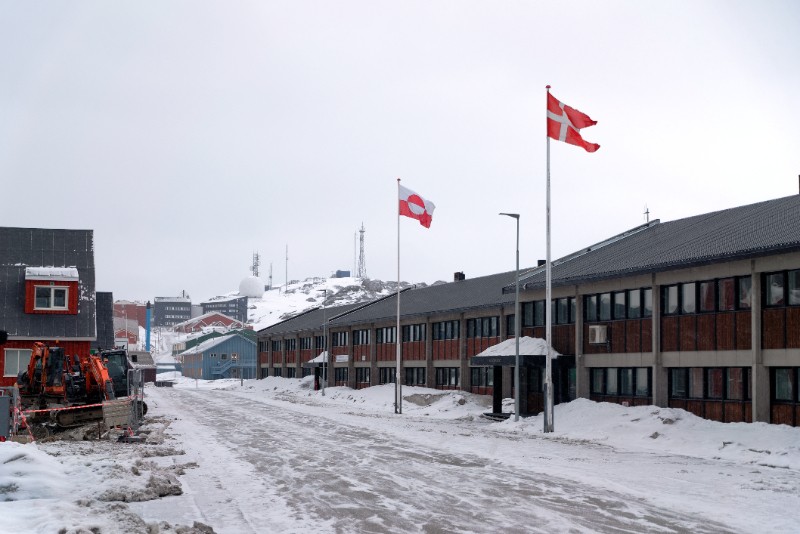 A snowy street in Nuuk, Greenland. Photo: Wikimedia Commons/Quintin Soloviev
The opposing narrative, embraced by many Greenlandic nationalists and progressives, describes recent history as an extension of colonial rule.
This perspective cites systemic inequality, racism, and past abuses, including the forced insertion of contraceptive devices into Greenlandic women in the 1960s and 1970s.
Danish authorities have formally apologised, but the episode remains a defining symbol of injustice.
Other grievances include the controversial relocation of Greenlandic children to Denmark for “re-education” and persistent social discrimination.
Supporters of independence argue these examples reveal a pattern of unequal treatment that continues to influence Danish-Greenlandic relations today.
Political divide inside Greenland
Within Greenland itself, the debate is not about whether independence should happen, but when.
Some leaders push for rapid formal autonomy, while others see it as a long-term objective.
The current coalition government has repeatedly stated it wants to remain within the Danish kingdom “for now,” describing the arrangement as temporary.
Tensions between Nuuk and Copenhagen have been visible in recent months, with Greenlandic officials insisting they are neither Danish nor American.
That stance shifted slightly when Greenland’s leader, Jens-Frederik Nielsen, said publicly that Greenland would choose Denmark over the US “here and now” if forced to decide.
Trump exploits historical divisions
Trump’s approach has added a destabilising new element.
While attacking “woke” post-colonial discourse at home, his administration has appealed to anti-colonial sentiments in Greenland, framing Denmark as an illegitimate ruler.
US officials have questioned Denmark’s authority over the territory, indirectly validating independence narratives.
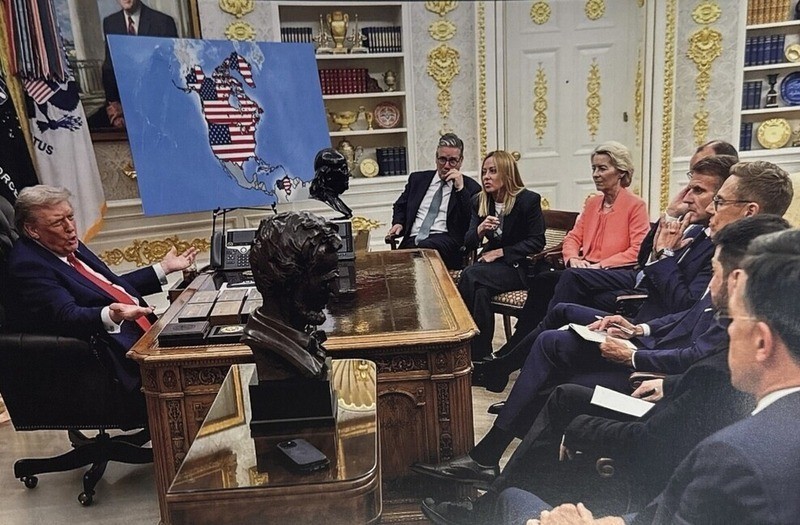 An altered image shared by Trump depicting US Control Over Canada, Greenland, and Venezuela. Photo: Truth Social/Donald J. Trump
Despite US claims, Washington already enjoys extensive military access to Greenland under a 1951 treaty and maintains a permanent base there.
Trump’s arguments that Greenland is vital for national security or rare-earth minerals have been widely challenged.
Greenland has long invited foreign investment, but infrastructure limitations and high costs have discouraged major projects.
Strategic messaging from Washington
The Trump camp has warned that an independent Greenland could fall under Chinese or Russian influence, a scenario Washington claims it must prevent.
This narrative serves two purposes. It justifies American involvement while portraying Denmark as incapable of safeguarding Arctic security.
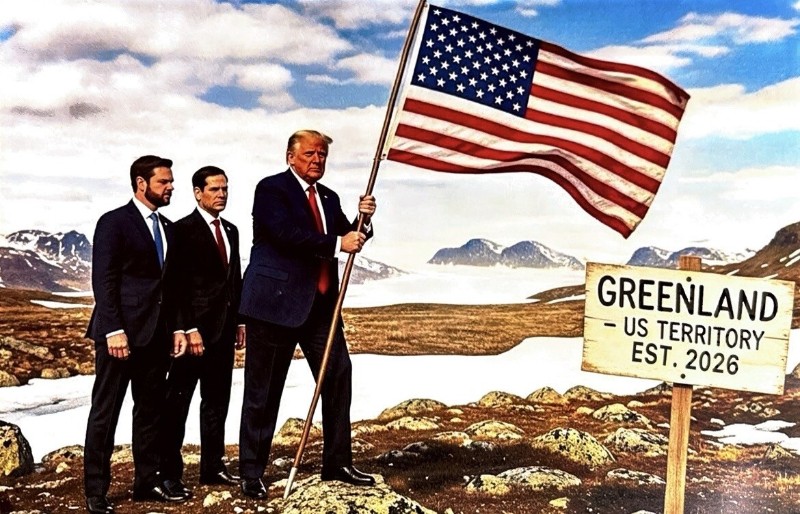 A doctored image depicts Trump, JD Vance, and Marco Rubio planting a US flag in Greenland. Photo: Truth Social/Donald J. Trump
However, this messaging has also pushed Denmark and Greenland closer together.
Joint press conferences and recent demonstrations across Denmark, where protesters waved Greenland flags, suggest growing solidarity against perceived US interference.
Greenland caught between two powers
Greenland now faces a strategic dilemma.
Its leverage over Denmark has increased because of US interest, forcing Copenhagen to address long-standing grievances, including proposals to combat anti-Greenlandic racism.
At the same time, Denmark represents Greenland’s strongest shield against potential American dominance.
This dual pressure means Greenland must decide whether to use Trump’s attention to extract concessions from Denmark or rely on Danish legitimacy to block US ambitions.
Either choice carries risks for a population of just 55,000 living in a geopolitically critical region.
Independence dream meets harsh reality
Trump’s rhetoric has increasingly focused on ownership rather than partnership, with the former president openly stating his desire to expand US territory.
His remarks have raised fears that any future deal would prioritise American interests over Greenlandic rights.
Greenlandic leaders warn that becoming part of a US geopolitical project could weaken social protections and political freedoms.
The debate has shifted from theoretical independence to tangible consequences for everyday life.
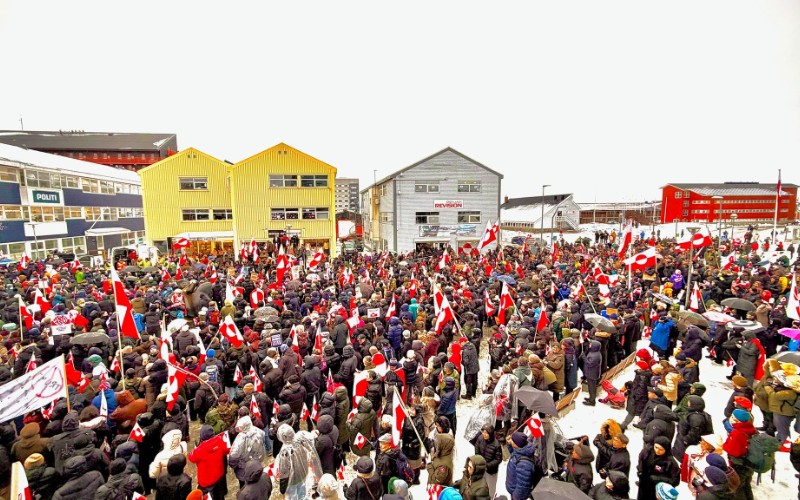 Photo: Facebook/@Jensfrederiknielsendemokraatit
A turning point for Greenland’s future
As Trump’s intentions become clearer, Greenland’s independence movement faces its most complex test yet.
What began as a struggle for dignity and recognition has evolved into a high-stakes geopolitical contest.