
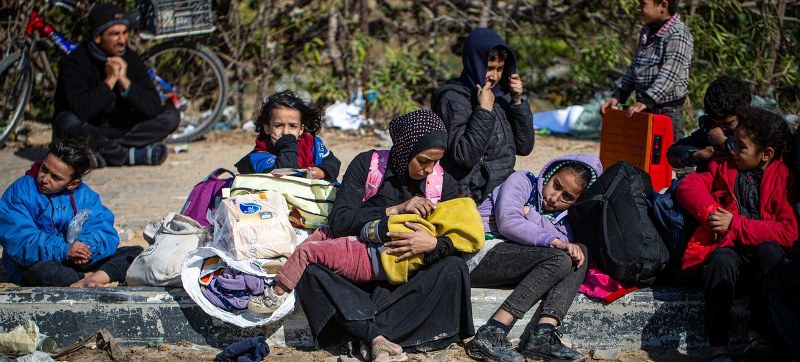
In its latest warning to the Israeli authorities not to pursue mass evacuation orders from eastern Rafah, the UN aid coordination office, OCHA, insisted that a mass evacuation on such a scale would be “impossible to carry out safely”.
“There are nine sites sheltering displaced people in the area. It is also home to three clinics and six warehouses,” OCHA said in its latest update on the emergency, which noted that more than three quarters of the Gaza Strip is under evacuation orders.
“Any escalation of hostilities resulting from a full-scale incursion into Rafah will push residents and displaced people currently living there past their breaking point.”
The warning relating to Rafah and Kerem Shalom crossings followed an urgent appeal from UN Secretary-General António Guterres late Monday to both sides “to go the extra mile” and make an agreement to end seven months of devastating conflict, his spokesperson said in a statement.
In Geneva, Jens Laerke, spokesperson for OCHA, told journalists that permission had not been granted by the Israeli authorities to reach the Rafah crossing.
“We currently do not have any physical presence at the Rafah crossing as our access to go to that area for coordination purposes has been denied by COGAT,” he said, in reference to the Israeli Government organisation overseeing relief deliveries in Gaza. “So, that means that currently the two main arteries for getting aid into Gaza have been choked off.”
Mr. Laerke further warned that existing humanitarian stocks in Gaza could be expected to last no more than about a day. He also noted that Rafah is the only entry point for fuel, without which generators, trucks and communications equipment cannot function.
“If no fuel comes in for a prolonged period of time, it would be a very effective way of putting the humanitarian operation in its grave,” he continued, noting that Rafah “is in crosshairs”. “IDF is ignoring all warnings about [what] this could mean for the humanitarian operation across the Strip.”
Famine call
Echoing those concerns, the UN Children’s Fund (UNICEF) said that a military assault on Rafah would massively complicate aid delivery.
“It is hard to see if [Rafah] closes for an extended period how aid agencies avert famine across the Gaza Strip…families' coping capacity has been smashed. Families are hanging on psychologically and physically by a thread. I do not remember meeting a single family, and I met scores, who hadn’t lost a home, a loved one or both,” UNICEF's spokesperson James Elder said.
Women bearing brunt
Meanwhile, UN humanitarians have issued new data confirming the war’s major, negative impact on women and girls sheltering in Rafah.
According to UN Women, more than nine in 10 women interviewed in the southernmost governorate reported feelings of indescribable fear, while over half said they had medical conditions needing urgent attention.
“Women and girls in Rafah, as in the rest of Gaza, are in a state of constant despair and fear already,” the UN agency said, adding that an Israeli ground invasion would have caused further suffering among Rafah’s 700,000 women and girls who have “nowhere to go to escape the bombing and killing”.
Seven months since Israeli strikes began in response to Hamas-led terror attacks, more than 10,000 women have been reportedly killed in Gaza, among them 6,000 mothers. Some 19,000 children have been orphaned, UN Women said.
The UN agency’s survey of 360 respondents, including 182 women in Rafah, revealed disturbing data that more than six in 10 pregnant women reported complications, including 95 per cent with urinary tract infections and 80 per cent with anaemia. In households with nursing mothers, 72 per cent reported challenges in breastfeeding and in meeting the nutritional needs of their babies.
Compounding pressures
The UN agency data indicated that mothers also reported struggling to protect their children, both physically and mentally, while living in tents and overcrowded households.
According to eight in 10 of the survey’s female and male respondents, mothers now take on more responsibility than men to provide emotional support for adult family members and children alike.