
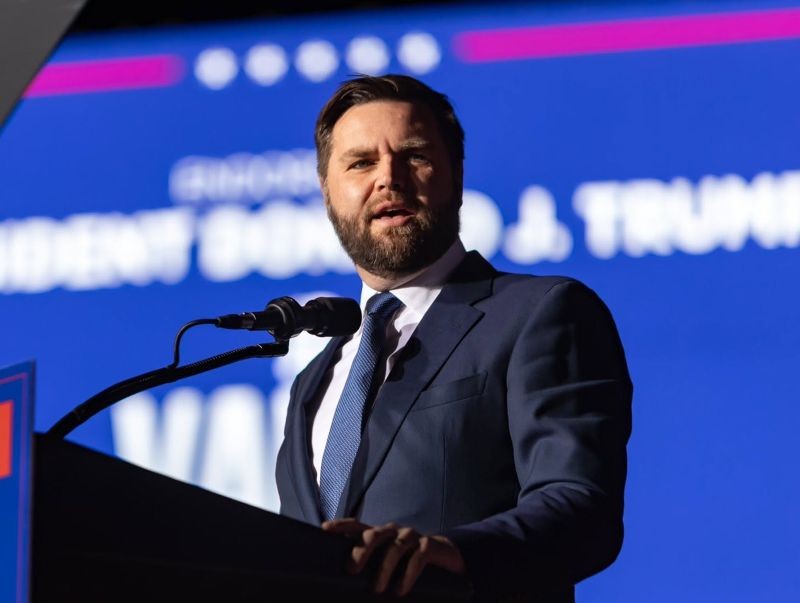
Speaking to journalist Mark Halperin, Vance acknowledged the weight of Trump's endorsement but made clear that he would not intervene in Israel's domestic politics.
“The president has the most influential endorsement in American or international political history,” Vance said.
“I endorse American candidates, and that's where I'm focused on the midterms,” he added, making his position explicit: “So, I'm not getting involved in Israeli elections.”
Vance's remarks come amid growing political debate in the United States over Israel, antisemitism and the Republican Party's approach to its relationship with the Jewish community.
Vance's stance raises questions within Republican circles
Vance's decision to stay out of the Israeli election campaign comes despite his involvement in foreign political contests in the past. Last spring, he campaigned for then-Hungarian Prime Minister Viktor Orban, whose party subsequently lost the parliamentary election.
Within the Republican Jewish community, questions have been raised about Vance's commitment to Jewish Americans and the strategic partnership between Washington and Israel.
Concerns about antisemitism have also intensified across the US political spectrum ahead of the midterm elections.
Republicans have sought to portray Democrats, including Michigan Democratic Senate nominee Abdul El-Sayed, as hostile to Jews and Israel, while facing internal disagreements over their own positions on the issue.
Vance has also faced scrutiny over his association with former Fox News host Tucker Carlson, who drew criticism last year for interviewing Nick Fuentes, a white nationalist known for antisemitic views.
Vance has criticised Netanyahu's approach to Iran
Although Vance has supported the US-Israel relationship, he has openly criticised Israeli government officials over their opposition to the Trump administration's diplomatic efforts and preliminary agreements with Iran.
Vance has argued that Israeli officials risk damaging ties with Washington by challenging the administration's approach to negotiations.
He has also highlighted Israel's reliance on American military assistance, pointing out that a substantial share of its defensive weapons were built in the United States and financed by American taxpayers.
“The problem for Israel is not Donald J Trump, and anybody in Israel who thinks their biggest problem is the president of the United States needs to wake up and smell the reality of the situation that country is in,” Vance said.
In July, Vance accused elements within the Israeli government of attempting to influence American public opinion to derail negotiations and prolong the conflict.
“There are some people within their system that we know beyond a shadow of a doubt are manipulating and trying to change American public opinion to keep the war going on indefinitely,” he said during an appearance on Joe Rogan's podcast.
Tense Vance-Netanyahu call over Iran war
Vance's differences with Netanyahu have also reportedly surfaced in private discussions over the war in Iran.
According to an Axios report cited in the account, Vance had a tense phone conversation with Netanyahu earlier this year, challenging the Israeli leader's assessment of the prospects for regime change in Iran.
A US official told Axios that Netanyahu had presented the conflict to Trump as an operation in which regime change was more achievable than it ultimately appeared. Vance, the official suggested, had taken a more cautious view.
Following the conversation, a US official also alleged that Israel was working to undermine Vance, who has emerged as a key participant in ceasefire negotiations with Iran.
The official accused Israel of being behind reports suggesting Tehran preferred negotiating with Vance because he might be more receptive to a deal.
The allegation was not independently established in the supplied account.
Vance has been involved in negotiations alongside US envoys Steve Witkoff and Jared Kushner, reflecting his growing role in the administration's diplomatic efforts.
US-Israel ties amid political and diplomatic differences
Vance's refusal to endorse Netanyahu highlights a distinction between maintaining the US-Israel strategic partnership and supporting a particular Israeli political leader.
While Trump has publicly backed Netanyahu, Vance has emphasised his focus on American elections and expressed reservations about aspects of Israel's strategy towards Iran.
His comments come as the Republican Party navigates internal debates over foreign policy, antisemitism and the extent of American involvement in overseas conflicts ahead of the US midterm elections.