
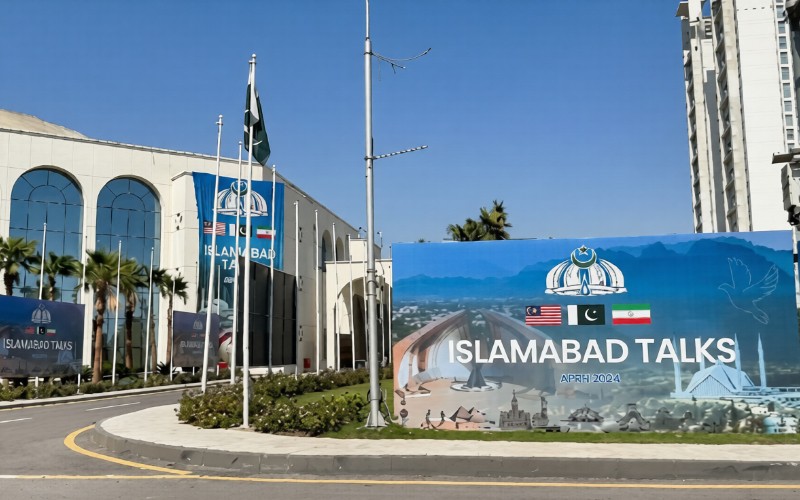
The talks are being facilitated by Pakistan, which has positioned itself as a mediator amid escalating regional tensions.
Officials confirmed that representatives from both countries are seated at the same table, signalling a shift from earlier indirect negotiations that relied on intermediaries.
Delegations led by senior leadership
The American delegation is being led by Vice President JD Vance, while Iran’s side is headed by Mohammad Bagher Ghalibaf and Foreign Minister Abbas Araghchi.
Pakistan’s Army Chief Asim Munir is also reported to be present during the discussions, reflecting Islamabad’s active involvement in facilitating the dialogue.
Prime Minister Shehbaz Sharif is hosting the negotiations and is expected to hold further engagements with both sides.
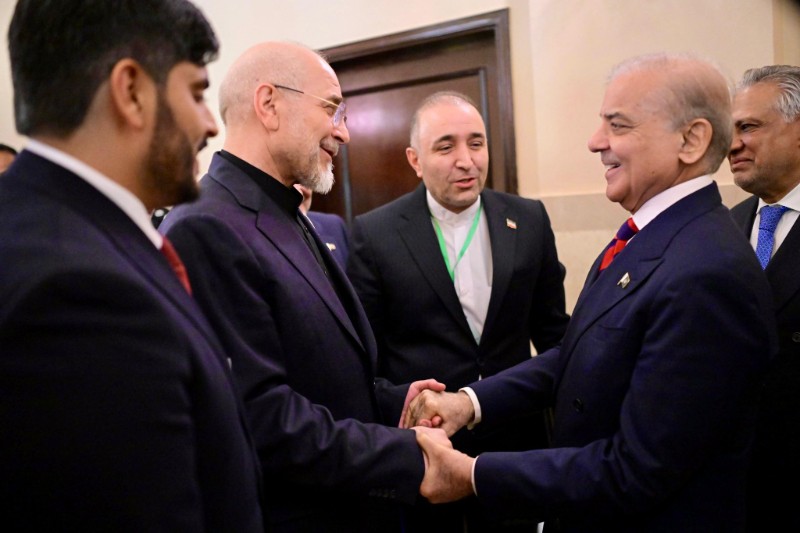 Pakistan PM Shehbaz Sharif holds talks with Iranian delegation led by the Speaker of the Iranian Consultative Assembly, Mohammad Bagher Ghalibaf, in Islamabad. Photo: X/@PakPMO
Multi-stage talks focus on key issues
The first round of talks lasted approximately two hours and was followed by a second phase of technical discussions.
These sessions have been organised around key areas, including security, financial arrangements, and the reopening of the Strait of Hormuz.
A formal dinner hosted by Sharif has been scheduled as part of the diplomatic engagements, providing an additional platform for informal discussions between the delegations.
Iran’s initial demands and US position
Ahead of the main talks, Iranian representatives outlined preliminary demands, including a ceasefire in Lebanon, reparations, and the unfreezing of financial assets.
These conditions were presented during discussions with Pakistani mediators.
The US delegation signalled caution in response.
JD Vance stated that Washington would remain firm in negotiations and would not accept any attempts to leverage the situation.
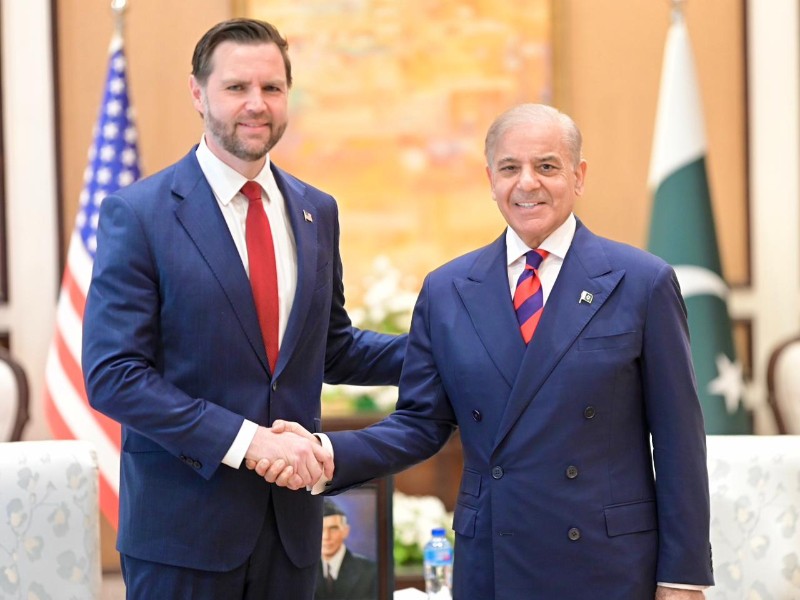 Pak PM holds meeting with US VP J D Vance in Islamabad. Photo: X/@PakPMO
Talks amid continued regional conflict
The negotiations are taking place against the backdrop of ongoing hostilities in Lebanon.
The Israel Defence Forces (IDF) has reported extensive strikes targeting Hezbollah positions, while Hezbollah has launched retaliatory rocket attacks into northern Israel.
Clashes have been reported in multiple locations, including Bint Jbeil, with civilian casualties and infrastructure damage adding to the urgency of diplomatic efforts.
Disputed developments in Hormuz
US President Donald Trump stated that operations were underway to secure navigation through the Strait of Hormuz, claiming that Iranian mine-laying capabilities had been neutralised during recent military campaigns.
However, Iranian authorities have denied these claims and warned that any unauthorised military movement through the strait would face a rapid response.
Additional diplomatic layers and global interest
The talks have drawn international attention, with reports suggesting potential involvement or support from other global actors.
While some sources indicated possible Chinese engagement, officials clarified that communication remains ongoing through diplomatic channels rather than direct participation.
Separately, discussions between Lebanese and Israeli representatives are expected to take place in Washington under US facilitation, focusing on ceasefire arrangements and future negotiations.
Rising tensions within Lebanon
Developments in Lebanon continue to influence the broader diplomatic landscape.
Internal divisions have intensified as military operations have displaced large numbers of civilians and strained political cohesion.
The Lebanese government, led by Prime Minister Nawaf Salam, has been navigating both external pressures and domestic challenges, including disagreements over engagement with Israel.
Meanwhile, senior figures within Hezbollah have signalled increasing opposition to the government’s approach, reflecting growing internal tensions at a critical moment.
High stakes for a diplomatic breakthrough
As discussions continue in Islamabad, the focus remains on whether the talks can produce a viable framework for de-escalation.
With multiple conflict zones, competing demands, and ongoing military activity, the negotiations represent a complex attempt to stabilise a rapidly evolving regional crisis.