
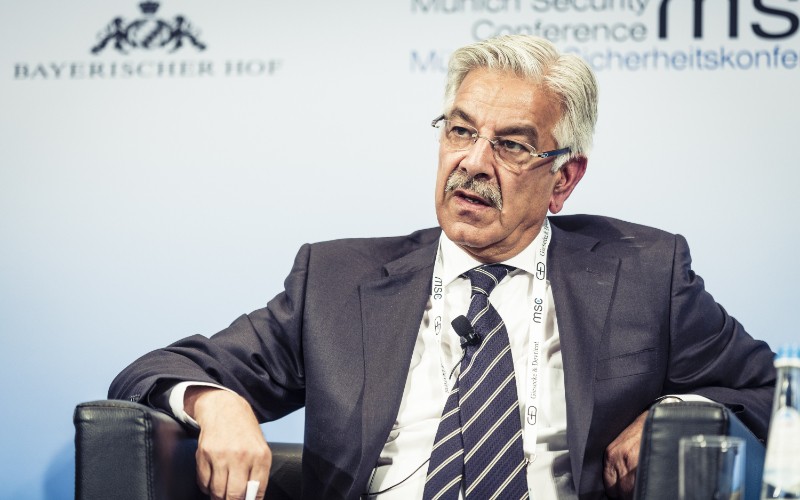
Speaking in Pakistan’s National Assembly, Asif said the country had been “used for a purpose and then thrown away like a piece of toilet paper,” a remark that has triggered sharp political reactions and renewed debate over Pakistan’s foreign policy history.
A rare public admission in Parliament
Addressing lawmakers, Asif conceded that Pakistan has often avoided confronting its past decisions, particularly its role in supporting militant networks during previous decades.
He described the denial of the country’s terror history as a persistent problem and called it a consequence of policies pursued by former military rulers.
Pakistani Defence Minister Khwaja Asif in their National Assembly publicly states that Pakistan has been used by USA as Toilet Paper ever since 70's-80's. pic.twitter.com/7r2b9GPVk3
— Global Watch (@Globalwatchh) February 11, 2026
He acknowledged that Pakistan’s involvement in two Afghan wars had proved disastrous, arguing that the terrorism plaguing the country today is a direct consequence of earlier strategic choices.
He said the violence and instability Pakistan faces are not isolated developments but the “blowback” of past decisions.
Post-1999 realignment with Washington
The defence minister specifically referred to Pakistan’s realignment with the United States after 1999, particularly following the September 11, 2001, attacks.
He said Islamabad’s decision to support Washington in the US-led war in Afghanistan came at an enormous cost.
Asif noted that Pakistan turned against the Taliban during that period in line with US policy objectives.
However, when American forces eventually withdrew from Afghanistan, Pakistan was left grappling with prolonged insurgency, radicalisation and deep economic strain.
“The losses we suffered can never be compensated,” he told Parliament, describing the consequences as “irreversible.”
Challenging ‘religious duty’ narrative
In a striking departure from past official rhetoric, Asif questioned the long-standing narrative that Pakistan’s involvement in Afghan conflicts was driven by religious obligation.
He said many Pakistanis were mobilised under the banner of jihad, but argued that this framing masked geopolitical motivations.
He directly named former military rulers Zia-ul-Haq and Pervez Musharraf, stating that their decisions to join the Afghan wars were not taken “for the sake of Islam,” but to align with a global superpower.
Asif said Pakistan has consistently failed to confront these historical realities.
“We deny our history and do not accept our mistakes,” he told lawmakers, linking the rise of terrorism within Pakistan to policies pursued during those eras.
Impact on society and institutions
Beyond security consequences, the minister also pointed to long-term societal effects.
He claimed Pakistan’s education system was reshaped during those periods to justify military involvement in Afghanistan, embedding ideological narratives that continue to influence society.
Asif said these structural changes have left a lasting imprint on the country’s political and social landscape.
A moment of reflection in Pakistan’s politics
The remarks mark one of the strongest public admissions by a senior Pakistani official regarding the country’s past strategic alignments.
Asif’s speech has reopened debate about Pakistan’s role in regional conflicts and the long-term costs of foreign policy decisions shaped by military regimes.
His blunt assessment underscores growing introspection within sections of Pakistan’s political establishment about the legacy of alliances formed during the Cold War and post-9/11 era, and the enduring consequences that continue to shape the nation’s security environment today.