
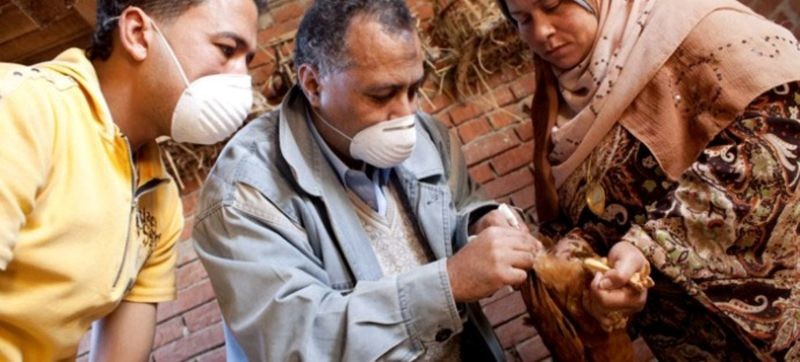
WHO spokesperson Dr. Margaret Harris told reporters in Geneva that the H5N1 virus causing the disease is “not circulating in humans but jumping into humans” who are exposed to poultry or dairy cattle. “We’re not seeing sustained circulation,” she insisted.
Underlying conditions
The man who died of the disease in Louisiana was over 65 and reportedly had underlying medical conditions, Dr. Harris said.
According to the health authorities, he had been exposed to chickens and wild birds. Several dozen people in the US have contracted avian influenza – commonly referred to as bird flu – during the current outbreak, mainly farmworkers in close contact with poultry flocks and cattle herds.
Dr. Harris stressed that WHO’s assessment of the risk to the general population “is still low and remains set”.
The main concern is for people who work in animal industries because they need to be better protected from infection.
The WHO spokesperson added that the United States was continuing to carry out “a lot of surveillance” in the human and animal population, “in the methods we use for farming, for our food production…all those things need to be combined because indeed it always does pose a risk”.
China respiratory virus is not new
Meanwhile, a respiratory virus gaining ground in China, known as the human metapneumovirus, or hMPV, has been sparking media attention in recent weeks, but it does not represent a new or major threat, Dr. Harris insisted.
The UN health agency spokesperson said that such infections are on the rise in China “as expected during winter”, with seasonal influenza being “by far the most common among them”, as reported by the Chinese Center for Disease Control and Prevention.
“China’s reported levels of respiratory infections are within the usual range for the winter season,” Dr. Harris explained. “Authorities report that hospital utilization is currently lower than this time last year, and there have been no emergency declarations or responses triggered,” she added.
As for hMPV, it was first identified in 2001 and “has been in the human population for a long time”, Dr. Harris clarified.
‘Very, very low’ risk
She added that it is a common virus that circulates in winter and spring and usually “causes respiratory symptoms similar to the common cold”.
Like any of the hundreds of common cold viruses known to exist, it can lead to more serious disease in patients with low immunity, particularly but not limited to newborns and the elderly.
Asked about hMPV’s mortality rate, Dr. Harris described it as “very, very low”. It is not a pathogen that normally leads to deaths in humans, save for the most vulnerable, she concluded, recommending “simple” prevention measures, such as wearing a mask, improving ventilation of closed spaces and handwashing.