
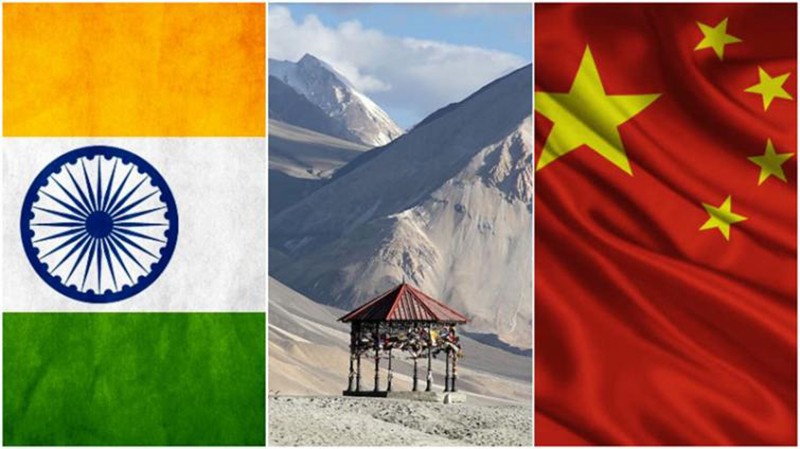
The Ministry of External Affairs (MEA) said both countries remain engaged through existing diplomatic and military mechanisms to address unresolved border issues and prevent misunderstandings along the Line of Actual Control (LAC).
The statement came a day after ITBP Director General Shatrujeet Kapur said face-offs between Indian and Chinese troops were continuing at several locations in Arunachal Pradesh, prompting questions about the government's assessment that the border situation remains stable.
MEA says existing mechanisms remain in place
Responding to questions about Kapur's remarks at a press briefing, MEA spokesperson Randhir Jaiswal declined to comment on the specific incidents and referred queries to the Ministry of Defence.
However, he reiterated India's position that the situation along the border can become unsettled when Chinese forces move away from established patrolling patterns.
Jaiswal said both sides continue to rely on established diplomatic and military channels to resolve outstanding issues and avoid miscalculations along the LAC.
He added that India and China had also agreed to discuss ways to improve their understanding of the LAC in appropriate areas to strengthen border management.
The MEA spokesperson reiterated that maintaining peace and tranquillity in border regions remains essential for the broader development of bilateral relations.
ITBP chief flags face-offs at multiple locations
Kapur made the remarks on Thursday while addressing ITBP personnel at a force base in Rajasthan. The senior officer, who is due to retire at the end of October, said confrontations had occurred at several locations in Arunachal Pradesh in recent days and were still continuing.
He also highlighted the role of the ITBP's newly raised Shaurya commandos, saying the team had demonstrated its capabilities during the ongoing face-offs with China's People's Liberation Army (PLA).
Kapur described the China border as the force's most challenging frontier and stressed the need to strengthen India's technological capabilities to deal with the evolving security environment.
He argued that competing with China through conventional methods alone would be difficult, given Beijing's extensive investment in modernising its military.
Kapur also emphasised the growing importance of drones and anti-drone systems, saying changes in warfare had altered the role of traditional armies.
Subsequently, sources said the ITBP chief's comments referred to routine deployment and operational preparedness along the border and were not linked to any specific incident.
Border situation has remained a sensitive issue since Galwan
The remarks have drawn attention because the government has repeatedly described the situation along the LAC as stable in recent years, following the deadly confrontation in Galwan Valley in eastern Ladakh in June 2020, in which 20 Indian soldiers were killed.
The ITBP, established in 1962, is responsible for guarding India's 3,488-km border with China.
In September, Chief of Defence Staff General NS Raja Subramani told NDTV that the situation along the LAC was stable and said he saw no immediate reason for concern.
The latest comments have renewed focus on the distinction between the overall assessment of the border situation and reports of localised face-offs or changes in patrolling patterns.
Jaishankar says border peace is key to normalising ties
External Affairs Minister S Jaishankar said last week that peace and tranquillity in border areas were essential for normalising relations between India and China. He warned that any disturbance along the frontier would have consequences for bilateral ties.
Speaking at the Bloomberg New Economy Forum in New Delhi, Jaishankar said relations had improved compared with 2025 and were in a better position than in 2024.
At the political level, ties have seen renewed engagement, with Prime Minister Narendra Modi and Chinese President Xi Jinping among the leaders who have met over the past year.
Meanwhile, trade between the two countries continues, with India's imports from China remaining a significant part of their economic relationship.
Despite diplomatic engagement and efforts to stabilise ties, the latest statements underline that border management and the prevention of military misunderstandings remain central challenges for both countries.