
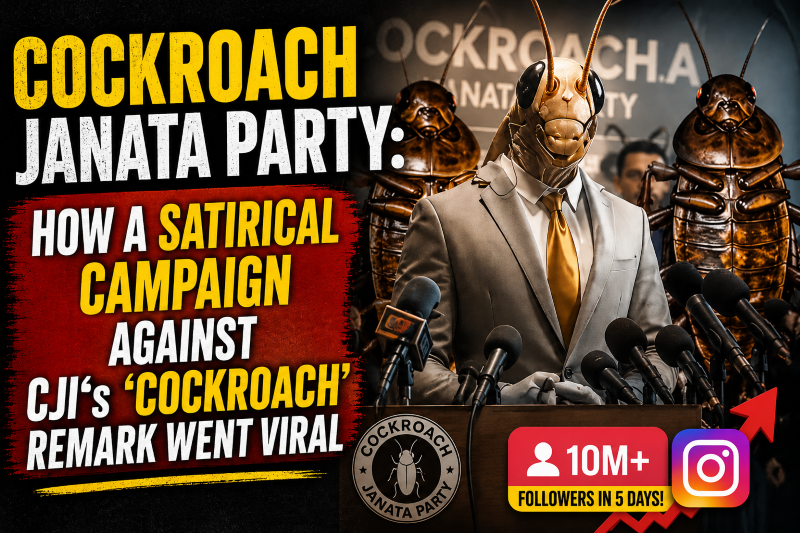
The CJP reportedly crossed 10 million followers within just five days, fuelled by endorsements and support from prominent anti-BJP personalities including Dhruv Rathee, lawyer Prashant Bhushan, and Trinamool Congress MPs Mahua Moitra and Kirti Azad.
What Triggered The CJP Campaign?
On May 15, a bench comprising Chief Justice Surya Kant and Justice Jogmalya Bagchi was hearing a case related to senior advocate designation.
During the hearing, the Chief Justice, referring to the petitioner’s conduct and social media activity, remarked: “There are already parasites of society who attack the system, and you want to join hands with them?”
He further said: “There are youngsters like cockroaches, who don't get any employment or have any place in professions. Some of them become media, some of them become social media, RTI activists and other activists, and they start attacking everyone.”
The petitioner’s counsel later apologised and withdrew the plea.
However, the remarks triggered widespread debate online, with many accusing the Chief Justice of insulting unemployed youth, journalists, activists, and civil society voices.
Who Is Abhijeet Dipke?
Abhijeet Dipke is an Indian political communications strategist and social media activist who founded the viral Cockroach Janata Party campaign in May 2026.
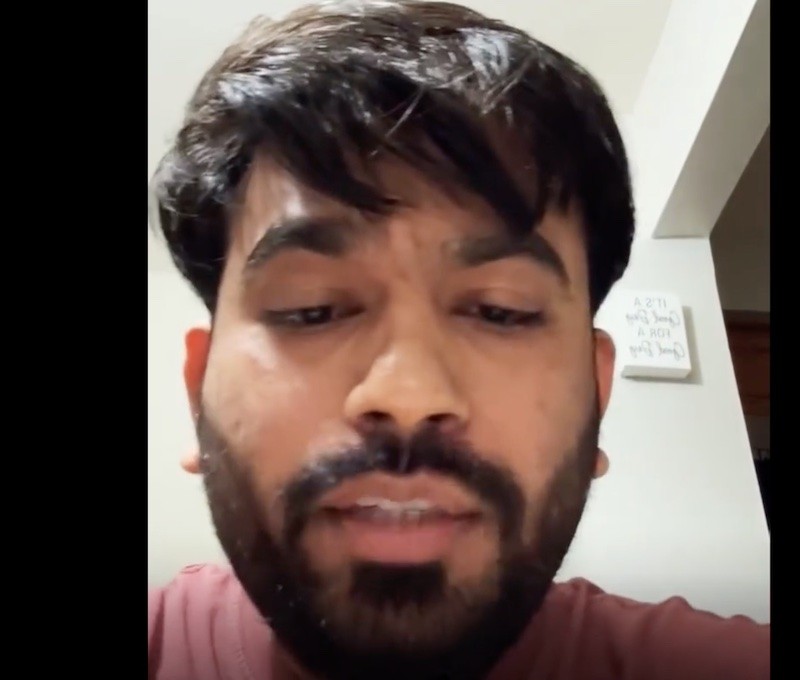 Dipke worked as a volunteer with the social media team of the Aam Aadmi Party between 2020 and 2023. Photo: FB Screenshot
The 30-year-old reportedly studied journalism in Pune and is currently pursuing Public Relations studies at Boston University. Before launching the CJP movement, Dipke worked as a volunteer with the social media team of the Aam Aadmi Party between 2020 and 2023, focusing on meme campaigns and youth outreach.
‘The Remarks Were Hurtful’
Speaking to India Today, Dipke said the comments were especially disturbing because they came from the country’s top judicial authority.
“I think the remarks were more triggering because they came from the Chief Justice of India, who is the custodian of the Constitution, which grants us freedom of expression,” he said.
“Someone who is there to safeguard our freedom of expression is comparing us to cockroaches and parasites just for putting forward our opinions. That was the more hurtful part.”
In interviews, Dipke said the idea was to reclaim the insult and turn it into a form of digital protest.
“Yeah, I am the cockroach. The Chief Justice of India was exactly talking about me,” he told the publication, arguing that young people were being mocked simply for expressing opinions online. He added that if such comments had come from politicians, they may not have triggered such outrage, but hearing them from someone seen as a “custodian of the Constitution” made it more provocative for many youths.
Political Debate Around CJP
Dipke’s previous association with the Aam Aadmi Party has sparked political controversy, with critics alleging that the movement carries opposition leanings.
Dipke, however, has maintained that the Cockroach Janta Party does not seek formal alignment with any political party.
The movement continues to divide opinion online. Supporters view it as a creative and symbolic youth protest against elitism and unemployment, while critics dismiss it as meme-driven activism and political propaganda.
Bots, Foreign Handles, or Real Supporters?
As the “Cockroach Janta Party” trend gathers momentum online with provocative memes, aggressive trolling and highly coordinated comment activity, questions are now being raised over the authenticity of many of its social media supporters. Several users across platforms have alleged that a noticeable section of accounts amplifying the trend appears recently created, anonymous or unusually repetitive in posting behaviour — patterns often associated with coordinated digital campaigns or bot-like activity.
At the same time, some social media users have also claimed that a section of the engagement may be coming from accounts based outside India, including profiles apparently linked to Pakistan and Bangladesh.
However, there is currently no verified public evidence conclusively proving large-scale foreign involvement or organised bot networks behind the trend.
Digital analysts note that viral online movements often attract a mix of genuine users, meme pages, troll ecosystems and algorithm-driven amplification, making it difficult to separate authentic political sentiment from orchestrated engagement without detailed platform-level forensic analysis.
The trend nevertheless highlights a growing concern in India’s political social media landscape — where hashtags, meme wars and anonymous online armies increasingly shape public perception, often blurring the line between organic public opinion and coordinated digital influence operations.