
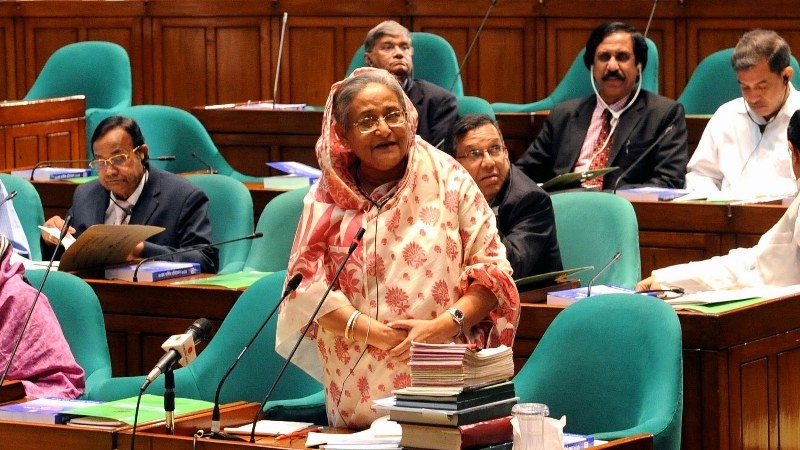
Indicating a possible end to her stay in India, Hasina—the country’s longest-serving prime minister—told Indian broadcaster NDTV, “I want to say clearly: overcoming every obstacle and every conspiracy, I will return to my country this year.”
Expressing confidence in her party, the Awami League, which has reportedly been banned in Bangladesh since her departure, she said the party’s future does not depend on the failure of its political opponents.
“The return of the Awami League does not depend on anyone else’s failure or weakness. The Awami League creates its own path with the people. Public support has always been with us,” she said.
Hasina alleged that anti-Bangladesh forces orchestrated a “carefully planned movement” that led to her government’s removal, claiming a section of the public was misled during the protests. She maintained that the Awami League remains deeply rooted in public support.
Criticising the current political situation, she said Bangladesh is now facing a lack of democracy and rule of law. She also claimed that Awami League leaders and workers are facing severe state persecution.
“People know how to compare. They understand that when the Awami League is in government, the country has stability, development, and security for people’s lives and property,” she said.
Highlighting her government’s economic performance, Hasina cited strong growth figures, including GDP growth of 7.25%, per capita income reaching USD 2,793 in 2023, and a significant rise in foreign reserves and investment.
She also pointed to development indicators such as reduced poverty levels, increased food grain production, improved infant mortality rates, expanded electricity access, higher literacy rates, and greater female workforce participation.
Hasina added that, in her view, Bangladesh’s development trajectory has deteriorated since her departure in 2024.
She further claimed that the Awami League would win in a free and fair election if allowed to contest, accusing the current interim administration and opposition forces of excluding her party from the political process.
“This is the failed-state model that has been established in Bangladesh after August 5,” she said.
She said: " The Awami League would win if allowed to contest in a free, fair, and inclusive election. Yunus and anti-Bangladesh political forces know this very well. That is why illegal interim government knowingly and deliberately banned the activities of the Awami League, kept it outside the election process, and destroyed the democratic political tradition of the country. This is the failed-state model that has been established in Bangladesh after August 5."