
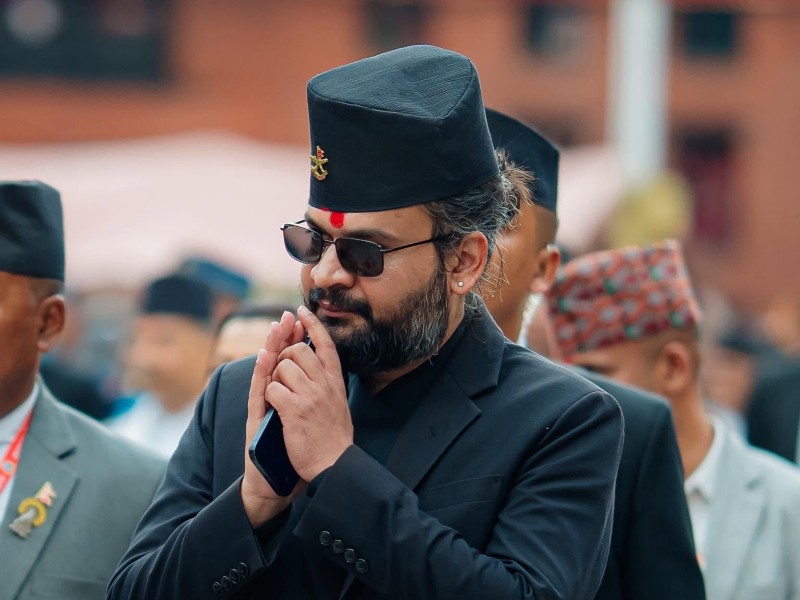
The directive follows months of pressure from opposition parties over Shah's repeated absence from Parliament.
According to the details provided, the prime minister attended only five of the first 39 House sittings after taking office.
Aryal issued the ruling following repeated demands from opposition lawmakers for Shah to appear before the House.
“I rule that the right honourable prime minister attend the meeting of the House of Representatives and answer questions from honourable members,” Aryal said.
The decision brings an end to a 77-day opposition protest centred on Shah's failure to clarify remarks he made regarding the Nepal-India border.
Opposition demanded Shah's presence
Opposition parties had been pressing Shah to attend Parliament since May, accusing the prime minister of avoiding direct parliamentary scrutiny.
Lawmakers also questioned his absence during discussions on communal unrest in Sunsari, where four people were killed in the last week of July.
Nepali Congress whip Nischal Rai had warned that opposition parties would continue their protest unless Shah appeared before the House.
“Has the PM escaped questions and tried to weaken democracy?” Rai asked.
“If the prime minister remains absent, the protest will continue,” he added.
Under House rules, the first hour of one sitting during the first week of every month is reserved for lawmakers to directly question the prime minister.
Border remarks triggered political confrontation
Shah's previous appearance in the House on May 31 became the centre of a separate political dispute after he commented on the Nepal-India border issue.
Responding to a question concerning the border dispute, Shah said: “After becoming PM, I came to know that not only has India encroached on Nepal’s land, but Nepal has also encroached on India’s land.”
He added: “Both sides need to sit down and look into the matter.”
The remarks triggered criticism from opposition parties, which demanded evidence, the withdrawal of the statement and an apology.
Opposition lawmakers argued that Shah's comments could weaken Nepal's position on the disputed areas of Kalapani, Lipulekh and Limpiyadhura.
Opposition rejects clarification
The controversy continued even after Foreign Minister Shishir Khanal explained Shah's remarks in Parliament.
Khanal said the prime minister had been referring to cross-border occupation and encroachment in no-man's-land areas rather than making a formal Nepalese territorial claim over Indian territory.
However, Shram Sanskriti Party lawmaker Harka Rai rejected the clarification and insisted that Shah himself should address the issue.
“The person who made the mistake must come and rectify it,” Rai said.
With the Speaker now directing Shah to attend the August 26 sitting, the prime minister is expected to face lawmakers directly over the issues that have fuelled the prolonged parliamentary confrontation.