
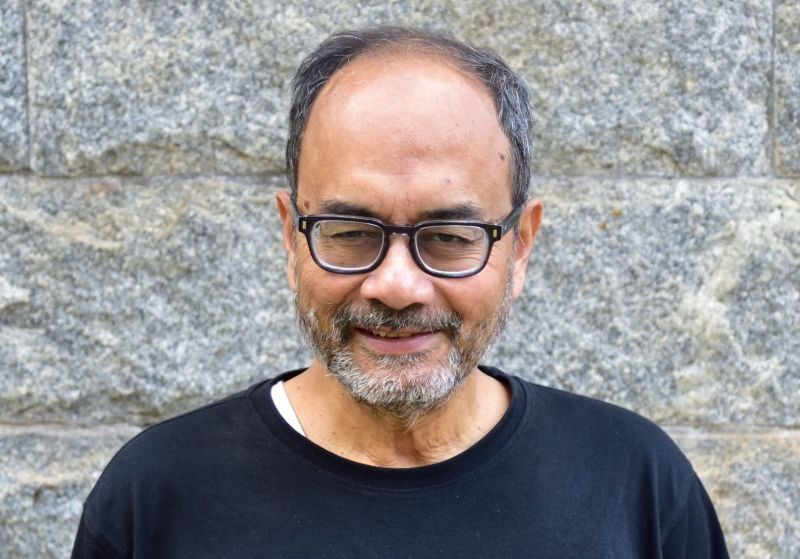
A professor at the Bengaluru-based International Centre for Theoretical Sciences (ICTS), Sen has become the first Indian physicist to receive the honour.
One of India's most distinguished theoretical physicists, Sen is internationally recognised for his pioneering work in string theory, quantum physics and black hole research.
Born in Kolkata, he has made significant contributions to the understanding of fundamental questions about the nature of the universe.
The medal, named after the Swedish theoretical physicist Oskar Klein, is awarded annually by Stockholm University and the Nobel Committee for Physics of the Royal Swedish Academy of Sciences.
Established in 1988, it recognises distinguished contributions to physics. Previous recipients include Nobel laureates Chen-Ning Yang, Steven Weinberg and Hans Bethe, who received the medal in its first three years, respectively.
What is Ashoke Sen famous for?
String theory
String theory explores the possibility that the fundamental building blocks of the universe are tiny, vibrating strings rather than point-like particles. Sen's research has played a major role in advancing the field.
Understanding black holes
Sen's research has helped scientists calculate the microscopic states responsible for black hole entropy, establishing important connections between quantum physics, gravity and thermodynamics.
S-duality
One of Sen's landmark contributions involves S-duality, a mathematical relationship that connects certain theories at strong and weak coupling. His work in this area has significantly advanced research in string theory.
Education and connection to Kolkata
Sen's academic journey began in Kolkata, where he studied at Shailendra Sircar Vidyalaya before graduating from Presidency College in 1975.
He subsequently earned a master's degree from the Indian Institute of Technology (IIT) Kanpur in 1978 and completed his PhD at Stony Brook University in the United States in 1982.
Sen later worked at the Tata Institute of Fundamental Research (TIFR) in Mumbai and the Harish-Chandra Research Institute in Allahabad before joining the International Centre for Theoretical Sciences (ICTS-TIFR) in Bengaluru in 2021.