
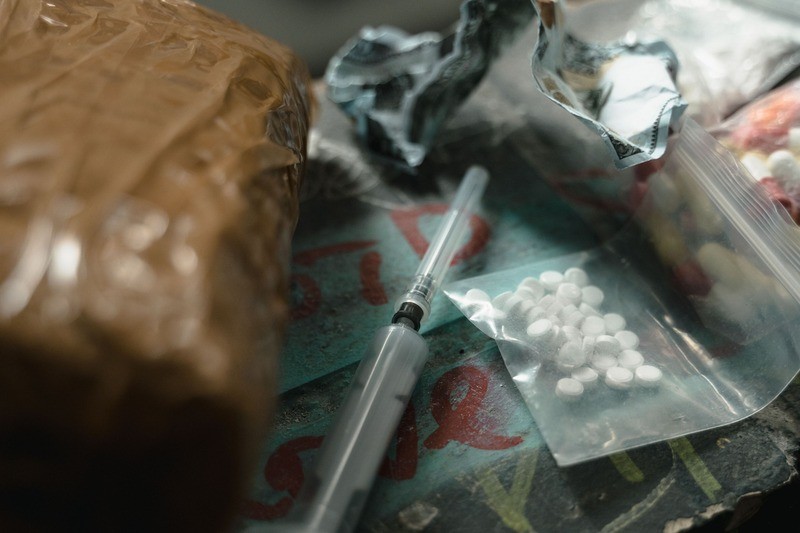
The operation, code-named Operation Trident, was led by the NCB with Mizoram Police and the Enforcement Directorate in the wee hours of Friday, according to a release from the Press Information Bureau.
Officials said 38 composite teams hit pre-identified locations at the same time, aiming to stop suspects fleeing or hiding assets.
What was seized
Officials said the operation uncovered about ₹100 crore in hawala transactions, froze 1,424 bank accounts and attached properties worth ₹17.82 crore.
Investigators also seized 500 detonators and ₹12 lakh in cash, the government said.
Searches covered Aizawl, Champhai and the Indo-Myanmar border trading town of Zokhawthar in Mizoram, as well as Churachandpur in Manipur and the Cachar transit corridor in Assam.
The network
The NCB said the raids followed backward and forward linkage probes by the NCB, Mizoram Police and the ED into a transnational syndicate.
It said the syndicate was led by a Myanmar-based man named Thangcintuang, also known as Chintuang or Tluanga, who is wanted in more than 10 cases under the Narcotic Drugs and Psychotropic Substances Act.
According to the NCB, the group routed methamphetamine and heroin across the Myanmar–Mizoram–Manipur–Assam–Tripura corridor into mainland India and Bangladesh.
Home Minister Amit Shah said in a post on X that the network moved drugs across the borders of India, Myanmar and Bangladesh through what he called the "Death Triangle Corridor."
The NCB said earlier phases of the investigation had already led to the arrest of Thangcintuang in Delhi and of a key facilitator, who was later detained under the PITNDPS Act.
A hawala operator, Lalrampari, was arrested on Aug. 8, 2024, and the NCB said her case exposed nearly ₹100 crore in illicit transactions linked to the network.
Abu Saleh, described as the group's logistics head for the Assam corridor, was arrested from Cachar on Nov. 20, 2025, the NCB said.
The agency said financial profiling and digital forensics from those cases pointed to a wider web of facilitators, shell entities and money mules, which led to the raids.
The government said the operation reflects a shift from seizing drugs to targeting entire networks and their finances, in line with its Vision Document on Narcotics Control for 2026-2029.
Shah said the aim is to end every drug network in India by Dec. 31, 2029, and congratulated the central agencies and state police forces involved.