
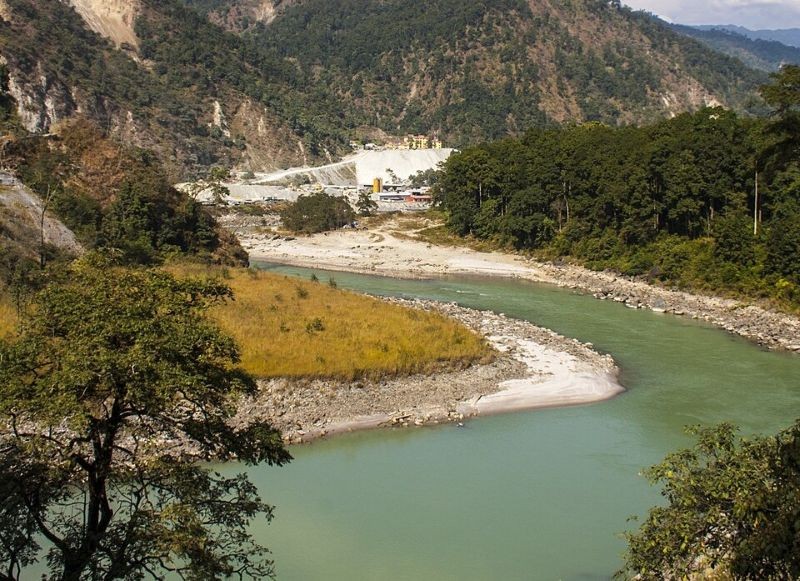
The remarks come amid growing scrutiny from India over Beijing’s involvement in the river development plan, given the Teesta basin’s proximity to the strategically sensitive Siliguri Corridor.
China rejects 'Third-Party influence' concerns
Responding to questions on India’s objections, Chinese Foreign Ministry spokesperson Guo Jiakun said that China-Bangladesh cooperation is strictly developmental in nature.
He stressed that such partnerships do not target any third party and should not be influenced by external pressures.
“China-Bangladesh cooperation does not target any third party and should be free from third-party influence,” Guo said at a media briefing in Beijing.
He further described the Teesta project as a livelihood-focused initiative that holds significant importance for Bangladesh.
Beijing pledges support for Bangladesh’s river project
China said it is prepared to extend technical and developmental assistance for the Teesta River restoration effort, depending on feasibility outcomes.
“The comprehensive treatment and restoration of the Teesta River is a livelihood project to which the Bangladeshi side attaches high importance. China is ready to do what it can to support this project,” Guo added.
He also highlighted broader cooperation between China and Bangladesh across sectors such as water management, trade, and infrastructure development.
Dhaka plans first full technical feasibility study
Bangladesh Foreign Minister Khalilur Rahman confirmed that experts from China and Bangladesh will jointly conduct a technical feasibility study for the Teesta project.
He noted that both sides have moved forward in their coordination compared to earlier discussions, adding that China has expressed readiness to support the project based on study findings.
Officials in Dhaka said the collaboration marks a new phase in river management cooperation between the two countries.
India closely watching strategic implications
India is expected to closely monitor developments surrounding the Teesta project, particularly due to its location near the Siliguri Corridor—often referred to as the “Chicken’s Neck,” a narrow land link connecting India’s northeast with the rest of the country.
Strategic analysts say any increase in external involvement in the region, especially by China, could raise security concerns for India.
The corridor is considered highly sensitive due to its geographic vulnerability and importance for national connectivity.
Growing China-Bangladesh water cooperation
The Teesta initiative gained momentum earlier this year when Bangladesh’s Water Development Board and Chinese state-owned POWERCHINA extended a memorandum of understanding to advance the project.
Officials in Bangladesh have also indicated broader cooperation with China in river management, including multiple transboundary water systems.
While China has framed the project as developmental assistance, the geopolitical sensitivity of the Teesta basin ensures it remains closely watched across South Asia.