
The procedure was performed on a 72-year-old patient who had been experiencing recurrent palpitations for nearly 20 years, with the episodes becoming more severe over the past seven months.
She required three hospital admissions during this period due to heart failure, with one episode also resulting in loss of consciousness. Despite medication, her symptoms continued to recur.
Speaking about the procedure, Dr. Ashesh Halder, Consultant - Cardiologist and Electrophysiologist of Manipal Hospital, EM Bypass, said, "Pulsed Field Ablation is a newer approach that allows us to treat Atrial Fibrillation without using heat or extreme cold. The technology enables us to precisely target the areas responsible for the abnormal rhythm while minimising the impact on the surrounding heart tissue."
The patient was subsequently advised to undergo PFA, a newer non-thermal treatment that uses short electrical pulses to target abnormal cardiac tissue.
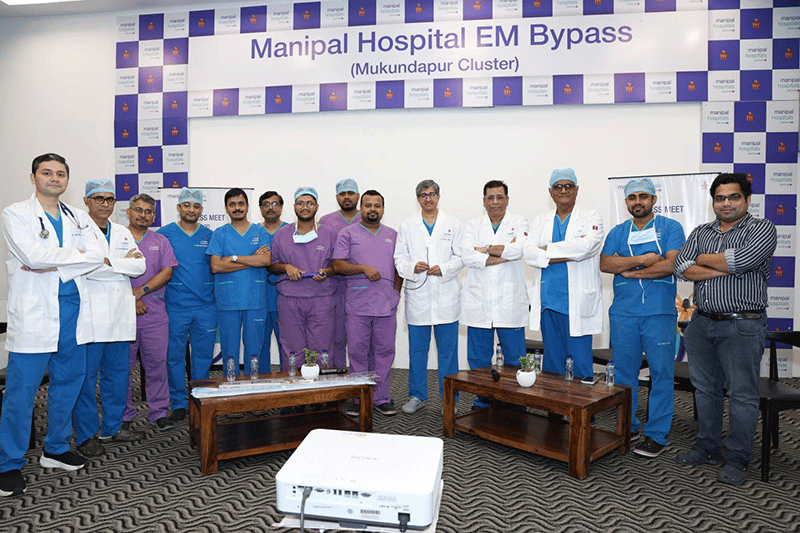
The procedure was performed by Dr Ashesh Halder, Consultant – Cardiologist and Electrophysiologist, with the expertise and support of Dr Dilip Kumar, Director & Senior Consultant – Cardiology, Manipal Hospital, EM Bypass.
"Being able to offer this advanced treatment at Manipal Hospital, EM Bypass is an important addition to our cardiac care capabilities and gives us another option to treat patients with complex rhythm disorders," Dr. Halder added.
In Atrial Fibrillation, abnormal electrical signals commonly originate around the pulmonary veins, which carry blood from the lungs to the heart.
PFA creates a controlled electrical barrier around these areas through a process known as pulmonary vein isolation, preventing abnormal electrical signals from triggering AF.
Dr. Dilip Kumar, Director & Senior Consultant – Cardiology of Manipal Hospital, EM Bypass, said, "For the patient, this was not just about occasional palpitations. After living with the problem for nearly two decades, the episodes had become much more frequent and severe, affecting her overall well-being and even leading to repeated hospitalisations."
Unlike conventional radiofrequency ablation, which uses heat, and cryoablation, which uses extreme cold, PFA uses electrical energy to target heart tissue without relying on thermal energy.
The procedure was completed successfully and the patient was discharged two days later.
"When medicines were no longer providing adequate control, we had to look at a treatment that could address the problem more effectively. In her case, PFA offered us a suitable option, and we are happy to see her recovering well after the procedure," Dr. Kumar added.
The Farapulse system is designed for Pulsed Field Ablation, offering physicians a non-thermal approach to treating cardiac arrhythmias. The procedure marks the introduction of this technology for the treatment of Atrial Fibrillation in Eastern India.
(Reporting by Aaheli Chakraborty)